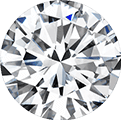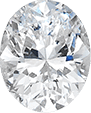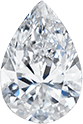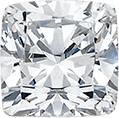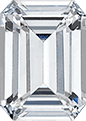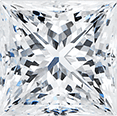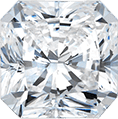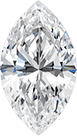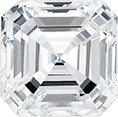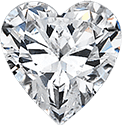

Diamonds are found in almost every color of the rainbow, but "white" (colorless) diamonds remain most popular.
The finest and most expensive diamonds are totally without color, like a drop of distilled water. The rainbow hues a diamond flashes derive from the light it separates into the colors of a spectrum. Diamonds of lesser quality have a yellowish or brownish cast.
When describing the colour of a diamond reference is being made to the degree of colour found in that diamond. The less colour displayed in a diamond the better the colour grade.
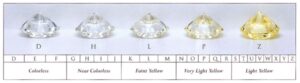
Diamonds can be found in almost every colour of the rainbow, colourless diamonds remain the most popular. When describing the colour of a diamond reference is being made to the degree of colour found in that diamond. The less colour displayed in a diamond the better the colour grade. Diamonds displaying little colour will allow more light to pass though, creating a prism effect , with its spectrum of colours and flash , known as fire. The Gemological Institute of America (GIA) rates the body color in white diamonds from D (colorless) to Z (light yellow). Increasing degrees of body colour are measured on a scale ranging from no colour at all (D) to deeply coloured (Z). Beyond "Z" is the range where the diamond's colour is vivid and rich, called "fancy colours". Diamonds of known colour are used as comparison stones for colour grading. Grading is done by comparing the diamond to be graded against these "master stones" under either artificial or natural north daylight (in the Northern Hemisphere). A machine called the "Colorimeter" can be used for colour grading but there is no substitute for the trained human eye.
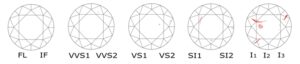
Every diamond is unique. Nature ensures that each diamond is as individual as the person who wears it. Diamond clarity is a quality of diamonds relating to the existence and visual appearance of internal characteristics of a diamond called inclusions, and surface defects called blemishes. Inclusions may be crystals of a foreign material or another diamond crystal, or structural imperfections such as tiny cracks that can appear whitish or cloudy. The number, size, color, relative location, orientation, and visibility of inclusions can all affect the relative clarity of a diamond. A clarity grade is assigned based on the overall appearance of the stone under ten times magnification.
Diamonds with higher clarity grades are more valued, with the exceedingly rare Flawless graded diamond fetching the highest price. Minor inclusions or blemishes are useful, as they can be used as unique identifying marks analogous to fingerprints.
The GIA diamond grading scale is divided into six categories and eleven grades. The clarity categories and grades are:
Nature determines so much about a diamond, but it takes a master cutter to reveal the stone's true brilliance, fire and ultimate beauty.
Based on scientific formulas, a well-cut diamond will internally reflect light from one mirror-like facet to another and disperse and reflect it through the top of the stone. This results in a display of brilliance and fire. Diamonds that are cut too deep or too shallow lose or leak light through the side or bottom, resulting in less brilliance and ultimately, value.
Of all the 4C's, cut is the only one most directly influenced by the human hand. The other three are dictated by nature.
Our most brilliant cut, representing roughly the top 1% of diamond quality based on cut. The highest grades of polish and symmetry allow it to reflect even more light than the standard ideal cut.
Ideal/Excellent cut: Represents roughly the top 3% of diamond quality based on cut. Reflects nearly all light that enters the diamond. An exquisite and rare cut
Very good cut: Represents roughly the top 15% of diamond quality based on cut. Reflects nearly as much light as the ideal cut, but for a lower price.
Good cut: Represents roughly the top 25% of diamond quality based on cut. Reflects most light that enters. Much less expensive than a very good cut.
Fair cut: Represents roughly the top 35% of diamond quality based on cut. Still a quality diamond, but a fair cut will not be as brilliant as a good cut.
Poor cut: Diamonds that are generally so deep and narrow or shallow and wide that they lose most of the light out the sides and bottom.
Diamond proportion refers to the relationship between the size, shape, and angle of each facet of a diamond. A wide range of combinations are possible, ultimately determining the diamond's interaction with light. When light strikes a diamond, approximately 20% immediately reflects off the surface (as glare). Of the 80% that enters, a portion will escape through the bottom of the diamond (where the observer cannot appreciate it). A well proportioned diamond will have each facet properly placed and angled so as to maximize the amount of light that reflects back out of the crown (top) of the diamond, to the eye of the observer. This reflected light is perceived as scintillation, fire and brilliance.
In the diagram below, three common light patterns are shown. When light meets any facet of a diamond, it will either reflect (bounce back) or refract (bend while passing through the facet). The angle that the light hits the facet determines whether the majority of light reflects or refracts, which is why cut is so important.
Grade diamonds Diamond Symmetry refers to how much symmetrical and proportional to the aspect of how a diamond is based vardır.Elmas grader, and even aspects or areas in addition to the existing parallel aspects are alacagiz.Orijinal Also if you are rude.
Poor, Fair, Very Good, Good, and Excellent: There are five categories of GIA Symmetry.
Very Good and Excellent symmetry graded diamonds have no or a very small symmetry under 10x magnification will be problems. A Good symmetry, note the symmetry is clearly visible under 10x magnification features.
Fair or Poor Diamonds significantly affected by symmetry, it is common to make the diamond sparkle and shine to lose is allowed to infiltrate.
A "Hearts & Arrows" cut diamond is the finest cut diamond. Extremely rare, its sentimental charm and mystery are unparalleled. The term Hearts and Arrows is used to describe the visual effect achieved in a round brilliant cut diamond with perfect symmetry and angles that exhibit a crisp and complete pattern of Hearts & Arrows. When viewed under a special magnifying viewer, a complete and precise visual pattern of 8 hearts is seen while looking down through the pavilion and 8 arrows can be seen when viewing the stone in the table up position

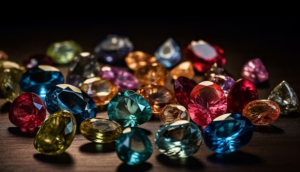
A "fancy colour diamond" is a natural coloured diamond, found in a wide range of hues, including red, green, purple, violet, orange blue and pink. These diamonds are amongst the most rare and beautiful diamonds that nature has to offer. In fact, out of the approximately 80 000 carats of rough diamonds mined every year, only 0.001% are regarded as fancy colours.
Fancy colored diamonds are known worldwide as extremely rare, and thus, are very popular with Hollywood movie stars.
In order to classify diamonds as NATURAL loose colored diamonds, they are certified in a gemological institute.
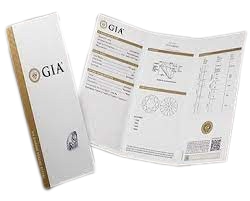
Once a stone has been graded and certified, the natural loose diamond will have its own personal ID which includes an ID number for the loose diamond, measurements of the loose diamond, weight, shape, clarity, polish, symmetry and fluorescence.
When it appears as a single color, the price of the diamond will be considerably more expensive than a diamond with a secondary hue - for example, fancy Brownish Greenish Yellow, fancy Orangey Pink, or fancy Grayish Blue.
The intensity grading system for fancy color diamonds differs than that of white diamonds. Unlike white diamonds, which range from the letter D-Z, fancy color diamonds are graded by Light, Fancy Light, Fancy, Fancy Intense, Fancy Deep , Fancy Dark, and Fancy Vivid. The stronger the color - the higher the price.
Fancy Color begins beyond the grade Z in the color grading scale. While colorless, near colorless, faint and light diamond colors are graded from the face-down position. Laboratory graders assess fancy color diamonds from the face-up or top view of the diamond.
Graders evaluate the hue, tone, and saturation of each diamond.
Hue - A diamond's overall body color
Tone - A diamond's lightness or darkness in relation to body color
Saturation - The intensity or degree of color
Secondary or modifying colors are also assessed, as they impact the overall hue of the fancy color. For example, a yellow diamond may have a green secondary, and will subsequently be graded as "Fancy Greenish Yellow." A blue diamond may have a grey secondary color, and will be graded as "Fancy Greyish Blue" and so on.
Fancy diamond colours are also described by color “overtone” (modifying colour). Modifying color is always listed before the main color.
The color in Fancy color diamonds is built from three parameters:
The main color, and if there is a secondary color, together define the color tone, however the strength of color is defined by the intensity level. The intensity level can be anywhere from a very soft shade to a very strong shade, and the stronger the shade the more valuable the diamond is. GIA developed an intensity grading scale in order to categorize the intensity levels in the diamond. The nine grades in the scale are;
Fancy Intense – Fancy intense color diamonds exhibit a moderate tone, with a stronger saturation.
Fancy Vivid – Fancy vivid color diamonds are graded as having a moderate tone, with a strong saturation. These diamonds exhibit an intense, vibrant hue and are considered especially rare and valuable
For example, the following image depicts the full scale of color intensity in Pink, Blue, and Green color Diamonds. It is clearly shown that the intensity scale begins with very soft colors and progressively displays a richer color stone.
Fluorescence is a characteristic that makes some diamonds appear to change color when they are exposed to the ultraviolet light that surrounds us every day in sunlight and in the light produced by fluorescent light bulbs.
Diamond grading reports reveal whether or not a diamond fluoresces, and if it does, how much -- faintly, weakly, moderately, strongly or very strongly.
Diamond grading reports also disclose the color produced by a diamond's fluorescence -- it's usually blue, yellow or white.
If a yellowish diamond fluoresces blue, the effect could be strong enough to mask the yellowish tint when viewed under a jewelry store's fluorescent bulbs. You might be surprised by the diamond's true (yellowish) color when you look at it at home under different lighting.
The reverse is true for diamonds that fluoresce yellow. They can appear more white under incandescent lights, but acquire a yellowish tint in ultraviolet light.
Some retailers will tell you that fluorescence is bad...is a negative, but many consumers actually prefer diamonds with fluorescence! The truth is that fluorescence rarely affects a diamond's sparkle and brilliance, and in warmer or lower colored diamonds, fluorescence makes them look whiter or more colorless. Diamonds with fluorescence should be graded case by case. You may not even notice fluorescence in your diamonds, unless you are at a nightclub with black lights...Have fun and enjoy the blue glow!
About a third of diamonds exhibit fluorescence, like the fluorescent minerals you have seen in natural history museums or the novelty shop toys under the black (UV) light. The effect is like a white shirt in a discotheque. Fluorescence can be faint to very strong, and the most common fluorescent color is blue. As blue is the complimentary color to yellow, the most common tinted color in diamonds, blue fluorescence can make yellowish diamonds look white or colorless.
A strong yellow fluorescence bring diamond prices down, sometimes quite a bit, since yellowish tinted diamonds are generally less desirable than whiter stones.
A blue fluorescence can help increase the prices of diamonds with yellowish tones.
It's important for you to be happy with the diamonds you buy. Ask your jeweler to show you examples of fluorescence and try to look at diamonds in many types of light before you make a decision, especially if you are considering diamonds with no grading documentation.
What are Certified Diamonds? Loose diamonds (not pre-set in a ring or other setting) that have been certified by Gemological Laboratory.
A certificate is a "blueprint" of a diamond, it tells you the diamond's exact measurements and weight, as well as the details of its cut and quality. It precisely points out all the individual characteristics of the stone. Certificates also serve as proof of the diamond's identity and value.
A certificate is not the same thing as an appraisal. A certificate describes the quality of a diamond, but it does not place a monetary value on the gem. An appraisal places a monetary value on your diamond, but does not certify the quality of the diamond.
There are many diamond labs that issue certificates, but the Gemological Institute of America (GIA) and the American Gem Society (AGS) are the two most widely regarded and recognized diamond grading labs in the world.
And while there are many other diamond grading labs in operation Such as IGI, HRD, EGL, VGR, CGL, DGL, PGS. Different labs have different grading standards, and some labs will be more lenient with their standards than others. Therefore, we recommend buying from a diamond jewelry store that offers GIA or AGS certified diamonds, as these labs have consistently demonstrated their commitment to high standards. If you do elect to buy non GIA- or AGS- certified diamonds, always ask for credentials of the certifying lab.
Shopping for certified diamonds allows you to make an informed choice about your diamond selections and to comparison shop among various diamond merchants. You can compare one diamond with a particular weight and quality with other diamonds of similar weight and quality to determine which diamond is the better value -- or which merchant has the best prices.
The physical characteristic of diamond is adamantine -- brilliant light-reflecting and transmitting properties -- to waxy.
The luster of diamond is 'adamantine to waxy' -- a description of the scientific physical characteristic.
Luster is the clarity and refractivity of a particular stone. Not all diamonds are created equal. Flawless diamonds are extremely rare and prohibitively expensive for most of us. In jewelry, we usally have VVSI (very very slightly included), to SI2 (slightly included 2): the latter being generally the lowest grade for gem-quality diamonds. Inclusions can be any imperfection.
Luster refers to how well an object shines or reflects light. It is a property that can be used to describe rocks, etc.
In this case it is referring to how well a diamond reflects the light.
Luster is a mineral's refractiveness. Its ability to bounce back available light from inside. This can be affected by the color, cut or clarity of a gem-stone quality diamond. (Only 20% of all diamonds are gem-stone quality.)
The physical characteristic of diamond, the mineral, is adamantine – brilliant light-reflecting and transmitting properties -- to waxy
Diamond treatments is performed on natural diamonds (usually those already cut and polished into gems), which are designed to improve the gemological characteristics — and therefore the value — of the stone in one or more ways. These include clarity treatments such as laser drilling to remove inclusions, application of sealants to fill cracks, color treatments to improve a white diamond's color grade, and treatments to give fancy color to a white or off-color diamond.
Clarity enhanced: diamonds are occasionally laser drilled to eliminate dark inclusions. Occasionally some diamonds are fracture filled with a foreign substance, which has good stability except during repair. Fracture filled is the process by which a substance of the same optical density as that of a gemstone is pressure filled into a fracture of that gemstone. These diamonds are called clarity enhanced and must be disclosed.
Irradiation: irradiation of diamonds has been around for a long time and uses a nuclear reactor or linear accelerator to create fancy colored stones. These are generally over colored and then annealed or heated to soften the shade back to a desirable and permanent color. Such treatments need to be disclosed by merchants/vendors as well as labs, it is illegal not to.
HPHT process: this process, using a high pressure/high temperature process (HPHT), changes inexpensively brown diamonds into near colorless white diamonds worth more than twice as much.
Diamond cutting is the practice of changing a diamond from a rough stone into polished diamond (faceted gem). Cutting diamond requires specialized knowledge, tools, equipment, and techniques because of its extreme difficulty.
The diamond cutting process includes these steps; planning, cleaving or sawing, bruting, polishing, and final inspection.
Planning is a crucial step in diamond manufacturing because during this stage the size and relative value of the cut stones that the rough will produce are determined. A person called a planner decides where to mark the diamond rough for fashioning into the most profitable polished gem(s). The planner must consider the size, clarity and crystal direction when deciding where to mark the diamond rough. Incorrectly marking a diamond by a fraction of a millimeter can make a difference of thousands of dollars in some cases. In addition, if one attempts to cleave a diamond in the wrong position, the diamond could shatter and become worthless.
The process of maximizing the value of finished diamonds, from a rough diamond into a polished gemstone, is both an art and a science. The choice of cut is influenced by many factors. Market factors include the exponential increase in value of diamonds as weight increases, referred to as weight retention, and the popularity of certain shapes amongst consumers. Physical factors include the original shape of the rough stone, and location of the inclusions and flaws to be eliminated.
The weight retention analysis studies the diamond rough to find the best combination of finished stones as it relates to per carat value. For instance, a 2.20 carat (440 mg) octahedron may produce (i) either two half carat (100 mg) diamonds whose combined value may be higher than that of (ii) a 0.80 carat (160 mg) diamond + 0.30 carat (60 mg) diamond that could be cut from the same rough diamond.
Even with modern techniques, the cutting and polishing of a diamond crystal always results in a dramatic loss of weight, about 50%.Sometimes the cutters compromise and accept lesser proportions and symmetry in order to avoid inclusions or to preserve the weight. Since the per-carat price of a diamond shifts around key milestones (such as 1.00 carat), many one-carat (200 mg) diamonds are the result of compromising Cut quality for Carat weight.
In colored diamonds, cutting can influence the color grade of the diamond, thereby raising its value. Certain cut shapes are used to intensify the color of the diamond. The radiant cut is an example of this type of cut.
Natural green color diamonds most often have merely a surface coloration caused by natural irradiation, which does not extend through the stone. For this reason green diamonds are cut with significant portions of the original rough diamond's surface (naturals) left on the finished gem. It is these naturals that provide the color to the diamond.
The other consideration of diamond planning is how quickly a diamond will sell. This consideration is often unique to the type of manufacturer. While a certain cutting plan may yield a better value, a different plan may yield diamonds that will sell sooner, and thereby returning the investment sooner.
Cleaving is the separation of a piece of diamond rough into separate pieces, to be finished as separate gems. Once the planner decides where the diamond should be cut, the diamond is either manually cleaved or sawed. Sawing is the use of a diamond saw or laser to cut the diamond rough into separate pieces. can be done with a diamond-coated rotary saw or a laser.
Bruting is the process whereby two diamonds are set onto spinning axles turning in opposite directions, which are then set to grind against each other to shape each diamond into a round shape. Bruting forms the basic face-up outline of a round diamond to prepare it for faceting. During the bruting phase the diamond being bruted is spun on a rotating lathe while another diamond is forced against it, gradually forming the rounded outline. Essentially, one diamond is used to shape the other. This can also be known as girdling.
Polishing is the final stage of the cutting process, giving the diamond its finished proportions. The first and perhaps most crucial polishing stage is blocking. This step lays the foundation for the potential of the diamond's performance because it establishes the diamond's basic symmetry. During the blocking stage, the first 17 or 18 facets are made, creating a single cut. For some very small diamonds, the process stops here. Larger diamonds go on to the brillianteering stage. In this process a specialist called a brillianteer, polishes the final facets. It is this stage that will determine how much brilliance and fire a diamond displays. Minor inconsistencies in symmetry and proportions can make the difference between a gorgeous diamond and a dull, lifeless stone. The Hearts and Arrows in our beautiful diamonds are the result of a skilled and mastered brillianteer.
A diamond's cost is based on the characteristics known as the "4 C's". Clarity, Colour and Cut (proportion) are the quality elements which together with the Carat Weight determine the value of a stone. The closer a diamond grades to the left of one or all of these scales the rarer and the more costly it will be. While clarity is frequently assumed to be the most important factor of all the "C's", in fact, colour and cut (especially cut) have a more profound affect on the visual appearance of a diamond.
You cannot copy content of this page
Join our list for early access to new collections, and unlock your welcome code — plus complimentary gift packaging.