Why Are Diamonds Used in Wedding Rings?
Diamonds are used in wedding rings because they rate 10 on the Mohs scale and survive daily wear. Which shapes suit a band, and the honest costs.
Diamonds are used in wedding rings for one practical reason above all others: a diamond is the hardest natural material known, rated 10 on the Mohs scale, so it survives daily wear on a ring worn for decades. The symbolism followed the practicality. A stone that cannot be scratched by anything but another diamond became an obvious emblem of a permanent promise.
Why are diamonds used for wedding rings?
Diamonds are used for wedding rings because they are the only common gemstone hard enough to be worn every day without visibly dulling. On the Mohs scale of mineral hardness, a diamond sits at 10. Sapphire and ruby sit at 9, emerald around 7.5 to 8, and ordinary household dust contains quartz at 7 — which is why softer stones go cloudy and scratched on a ring worn constantly. A wedding band is knocked against door handles, keyboards, trolley handles and steering wheels thousands of times a year. Diamond is the stone that does not mind.
What does the diamond in a wedding ring symbolise?
The diamond in a wedding ring symbolises permanence, because it is the one part of the ring that will not wear away. Gold thins over decades of wear, engraving softens, and a band can be resized and reshaped. The diamond in it will look the same at the golden wedding anniversary as it did on the wedding day. Jewellers have leaned on that fact for centuries, and the Greek root of the word — adamas, meaning unconquerable — long predates any modern marketing. It is a rare case of a symbol resting on a genuine physical property.
When did diamonds start appearing on wedding rings?
Diamonds appeared on wedding rings much later than on engagement rings. For most of European history the wedding band was a plain circle of metal, and the diamond belonged to the betrothal ring — the ring given at the promise, not at the ceremony. Diamond-set wedding bands became widely available only once cutting and setting techniques could hold many small stones securely in a narrow band, and once the diamond supply made small stones affordable. For the full timeline, see our account of how the wedding ring originated.
Do wedding rings have to have diamonds?
No. A wedding ring does not need diamonds, or any stones at all. In the UK a plain band is still the most traditional form of wedding ring, and it remains the most practical choice for anyone who works with their hands, wears gloves, or lifts weights. Diamonds add sparkle, and they also add setting edges that can catch on knitwear and gloves. There is nothing second-best about a plain band — it is the original form of the ring, and it is the one that needs the least maintenance over a lifetime.
Which diamond shapes work best in a wedding band?
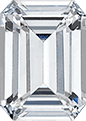
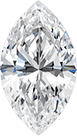
The diamond shapes that work best in a wedding band are the ones that sit low and lie in a straight line. This table compares the shapes we set into bands and how each behaves in daily wear.
| Shape | How it sits in a band | Everyday practicality |
|---|---|---|
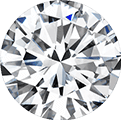
| Round brilliant | Sits neatly in a channel or claw row; the default | Excellent — no corners to chip |
| Baguette | Rectangular step cut, lies flat and butts edge to edge | Very good — low profile, clean line |
| Emerald | Step cut with a long table, gives a glassy flash rather than fire | Good — protect the corners in a bezel or channel |
| Marquise | Pointed ends, reads longer on the finger | Fair — the points are the vulnerable part |
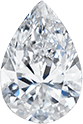
| Pear | One point, one round end; usually used in shaped bands | Fair — the point needs a protective claw |
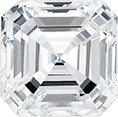
| Asscher | Square step cut with cropped corners | Good — cropped corners are stronger than sharp ones |
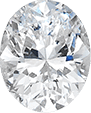
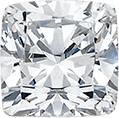
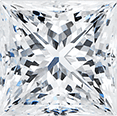
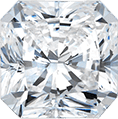
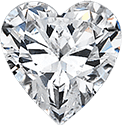
In our own stock the counts are: Round 20, Pear 11, Emerald 6, Marquise 6, Baguette 4, Hexagon 4, Cushion 3, Oval 3, Heart 2, Radiant 2, Rose Cut 2 and Asscher 1. We do not stock princess cut or Old European cut. If you want either, we make bespoke at no extra design cost.
Are lab-grown diamonds as hard as mined diamonds in a wedding ring?
Yes. A lab-grown diamond is the same material as a mined diamond — pure crystallised carbon with the same atomic structure — so it has the same hardness of 10 on the Mohs scale, the same refractive index and the same resistance to scratching. The difference is where it was formed, not what it is. That matters in a wedding ring because hardness is the whole practical argument for using a diamond. Every centre stone we set comes with a free IGI certificate stating the grades, so the claim is checkable rather than a promise.
What does a diamond wedding band cost, and what do we set?
Diamond-set wedding bands at CarbonstoneUK start in the high £600s and rise with the number of stones and the amount of the band that is set. The Twisted Round Cut Half Eternity Band is £657, the Pave Baguette Cut Wedding Band is £690, and the Stackable Emerald Cut Half Eternity Band is £770. Prices are correct at the time of writing. All are hand-made in solid gold or platinum in North Harrow, London, with free insured UK delivery and 30-day returns. Browse the full wedding ring collection or the baguette cut designs if you want that long, architectural line.
Frequently asked questions
Why are diamonds used for wedding rings rather than other stones?
Diamonds are used because they are the hardest natural material, rated 10 on the Mohs scale, and a wedding ring is worn constantly. Sapphire and ruby at 9 are the only other stones a jeweller would recommend for daily wear. Softer gems such as emerald and opal scratch and chip on a ring worn every day.
Do wedding bands have to have diamonds?
No. A plain metal band is the older and more traditional form of wedding ring, and it needs the least upkeep. Diamonds are a choice, not a requirement. Anyone whose work involves gloves, tools or heavy lifting is usually better served by a plain or bezel-set band than a claw-set one.
Will the diamonds in a wedding band scratch my engagement ring?
They can. Diamond is hard enough to abrade gold, so a diamond-set band worn tight against an engagement ring will slowly wear the metal on the neighbouring ring’s edge. A shaped or curved band, or a small gap, prevents most of it. We check for this when a band is made to sit with an existing ring.
How many diamonds are in a typical wedding band?
It depends entirely on the width, the stone size and how much of the band is set, so there is no standard number. A half eternity band in 1.5 mm round stones commonly holds somewhere in the region of 11 to 15 diamonds across the front. We confirm the exact count for any design before it is made.
Are diamonds in a wedding band certificated?
Centre stones come with a free IGI certificate. The very small stones used across a band, known in the trade as melee, are not individually certificated by anyone — that is normal industry practice, not a shortcut, because the cost of certifying a 1.5 mm stone would exceed the stone. We state the quality range we set.
Does a diamond wedding band need more cleaning than a plain one?
Yes, a little. Soap and skin oils collect under the stones and behind the claws, which dulls the sparkle long before anything is wrong with the ring. Warm water, a drop of washing-up liquid and a soft toothbrush once a fortnight keeps a diamond band bright. A plain band needs only an occasional polish.
Is a lab-grown diamond wedding band a compromise?
No, not in any measurable way. A lab-grown diamond has the same hardness, the same optical behaviour and the same chemical composition as a mined one, and it is graded on the same 4Cs by the same laboratories. The honest difference is price and origin, which is why the same budget buys a wider, better-set band.
If a diamond band is what you are after, start with width and how it will sit against your engagement ring, then choose the stone shape. Everything in our wedding ring range is hand-made to order, and if the shape you want is not on the page we will make it bespoke at no extra design cost.
More guides on this topic
Ready to find your perfect ring?
Explore our lab-grown diamond collection or book a virtual appointment with our team.