What Wedding Band Goes With a Pear Shaped Engagement Ring?
Curved or chevron? A plain-English guide to choosing a wedding band that fits a pear shaped engagement ring without gaps or rocking.
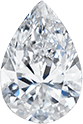
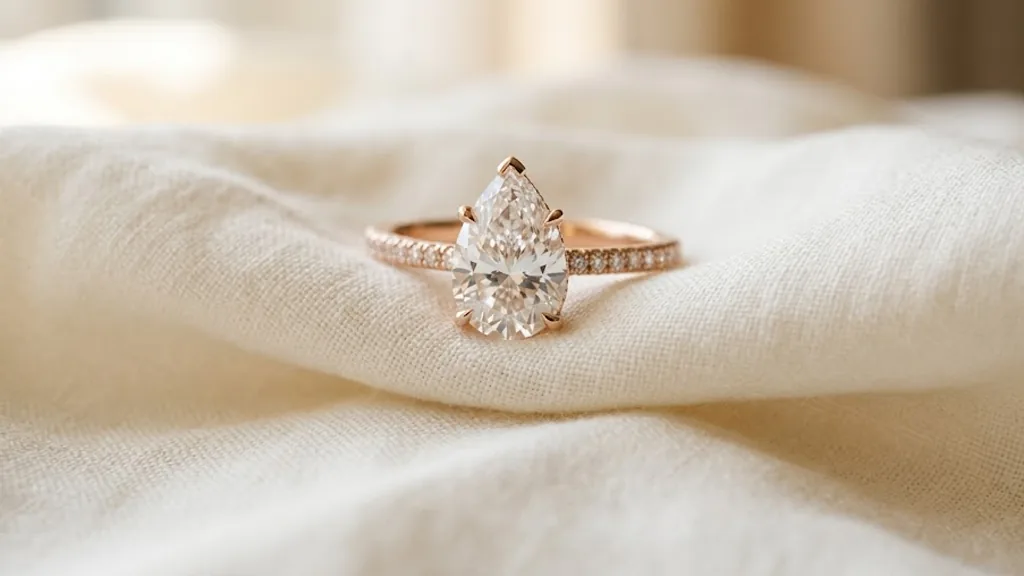
A pear shaped diamond has one rounded end and one sharp point. It is one of the most flattering shapes on the hand, and one of the trickiest to pair with a wedding band. The point is the problem: a flat, straight band will either bump into it or leave a gap you can see from across the room.
Here is how to choose a band that works, explained without jargon, with real examples you can look at.
Why a pear needs thinking about
Most engagement rings sit inside a neat outline. A pear does not. The pointed tip sticks out beyond the width of the band, and on most settings it also sits slightly lower than the rounded end.
Push a straight band up against it and one of two things happens. Either the band stops short, leaving a wedge-shaped gap under the point, or it touches the tip and rocks back and forth every time you move your hand. Neither is comfortable, and constant rocking wears the metal.
There is also the tip itself. The point of a pear diamond is the most vulnerable part of the stone. A band knocking into it repeatedly is not something you want.
The short answer
A curved band or a chevron band is the standard answer for a pear shaped engagement ring.
- A curved band (sometimes called a contoured band) has a gentle U-shaped dip in the middle. The dip cradles the rounded end of the pear, or curves away from the point, so the two rings meet along their whole length.
- A chevron band has a V-shaped dip instead of a curve. Two straight arms angle down and meet in a point. This mirrors the tip of the pear exactly, which is why it looks so deliberate.
Which one depends on which way your pear points, and we will come to that.
Which way does your pear point?
Most people wear a pear with the point facing towards the fingernail. This makes the finger look longer, and it means the wedding band meets the rounded end of the stone.
That matters. If the point faces your nail, the band has to accommodate a curve, so a softly curved band works well. If you wear the point facing your knuckle, the band has to accommodate the tip, so a chevron with a sharp V is the better match.
Try both orientations before you buy a band. It takes ten seconds and it changes the answer.
Band styles that suit a pear
Chevron band
The most decisive choice. The V sits under the point of the pear and gives the whole pairing a designed, finished look. Our Chevron Pear Cut Wedding Band in Rose Gold uses pear cut stones along the V, so the band repeats the shape of your centre diamond in miniature. Worn together they read as one piece rather than two.
Curved band
Softer and quieter than a chevron. The Curved Round Cut Wedding Band in Yellow Gold has a gentle dip set with small round diamonds. It nests against the rounded end of a pear without drawing attention to itself, and it also works worn on its own.
Matched bridal set
A bridal set is an engagement ring and wedding band designed together and sold as a pair. It removes the guesswork entirely, because the band has been shaped to that exact ring in the workshop.
The Curved Pear Cut Bridal Set is the most straightforward example: a pear solitaire with a band curved to fit it. If you want more detail, the Tiara Pear Cut Bridal Set in Platinum lifts the centre stone slightly with a crown-like setting, and the band tucks underneath.
You can see the full selection in our bridal sets.
Straight band
A straight band can work with a pear, but only in specific circumstances. It works when the engagement ring is set high enough that the whole stone clears a flat band, or when the pear is small relative to the band width. It also works if you are happy to wear the band on the other side of the engagement ring, away from the point.
If you like the clean look of a straight band, the 7 Stone Pear Cut Wedding Band keeps the pear theme going while staying straight across the top.
Two slim bands, one either side
Framing the engagement ring with a thin band above and below solves two problems at once. The rings stop spinning, and the shape of the centre stone matters less because neither band is fighting for the same space. It does sit higher on the finger, so try it on before you commit.
Ring shape and band shape at a glance
| Centre stone | Best band | Reason |
|---|---|---|
| Pear, point towards nail | Curved | The band meets the rounded end, so a soft curve nests neatly |
| Pear, point towards knuckle | Chevron (V) | The V mirrors the tip and keeps the band off the point |
| Pear in a high setting | Straight | The stone clears the band entirely, so no shaping needed |
| Pear with a halo | Curved, made to fit | The halo widens the outline, so the dip needs to be deeper |
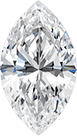
| Marquise | Chevron | Two points instead of one, so both ends need a V |
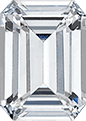
| Emerald cut | Straight | The stone edge is a straight line already |
Metal and width
Match the metal of the band to the engagement ring unless you are mixing deliberately. The same metal means the two rings wear at the same rate and keep the same colour over time. White gold with white gold, yellow with yellow, platinum with platinum.
On width, 1.8mm to 2.5mm suits most pear engagement rings. A pear is a long, elegant shape, and a chunky band shortens it visually. If you want a wider band, put it on the other side of the engagement ring rather than under the point.
All our rings are hand-made in solid gold or platinum with lab-grown diamonds, and every centre stone comes with a free IGI certificate.
How to check the fit properly
When you try a band with your engagement ring, look for three things:
- No rocking. Hold the pair together and press gently. If the band pivots, it is only touching at one point, and it will wear a groove over time.
- No pressure on the tip. The band should never push against the point of the pear. If it does, you need a deeper curve.
- Look from the side, not just from above. Many pairings look perfect from the top and show a gap from the side, because the engagement ring sits higher than the band.
If nothing fits, a band can be shaped to your exact ring. We design bespoke pieces at no extra design cost at our workshop in North Harrow, London. Send a photograph of your ring next to a ruler and we will tell you what will work.
Frequently asked questions
Can I wear a straight band with a pear ring?
Sometimes. It depends on how high your centre stone sits and how far the point extends past the band. If there is a visible gap or the band rocks, choose a curved or chevron band instead.
Do I need to buy the band at the same time as the engagement ring?
No. Buying later is completely normal. Just keep the details of the engagement ring, and if it was made for you, we keep the specification on file so a matching band can be made whenever you want one.
Which side should the wedding band go?
Traditionally the wedding band sits below the engagement ring, closest to the heart. With a pear this often works out well anyway, because the point usually faces up towards the nail.
Will a curved band fit any pear ring?
Not automatically. Curves vary in depth. A band curved for a slim solitaire will not fit a pear with a halo, because the halo makes the outline wider. Always check the specific pairing.
Can the two rings be joined together?
Yes. Soldering the engagement ring and band into one piece stops rocking and spinning entirely, and it keeps the pear pointing the right way. The downside is that you can no longer wear them separately, and resizing becomes more involved.
Reading about other shapes
Every diamond shape has different rules. These guides cover the rest:
- How to Wear a Pear Shaped Ring With a Wedding Band — orientation, stacking and everyday wear
- What Wedding Band Goes With an Emerald Cut Engagement Ring?
- What Wedding Band Goes With an Oval Engagement Ring?
- What Wedding Band Goes With a Marquise Engagement Ring?
Browse our pear shaped rings or the full range of wedding rings. UK delivery is free and insured, and you have 30 days to return anything that is not right.
More guides on this topic
Ready to find your perfect ring?
Explore our lab-grown diamond collection or book a virtual appointment with our team.