How Much Do Lab Diamonds Cost Per Carat?
Guidance ranges for lab-grown diamond prices per carat, what a 1 carat costs, and the factors that move the number.
Lab-grown diamond pricing confuses people, and with good reason. Quotes you find online can differ by a factor of five for what sounds like the same stone, and prices published two or three years ago are already out of date. This is a fast-moving market.
So rather than give you one number that will be wrong by next season, here is how the pricing actually works, what drives it up and down, and where a 1 carat lab-grown diamond realistically sits today.
First, what a carat is
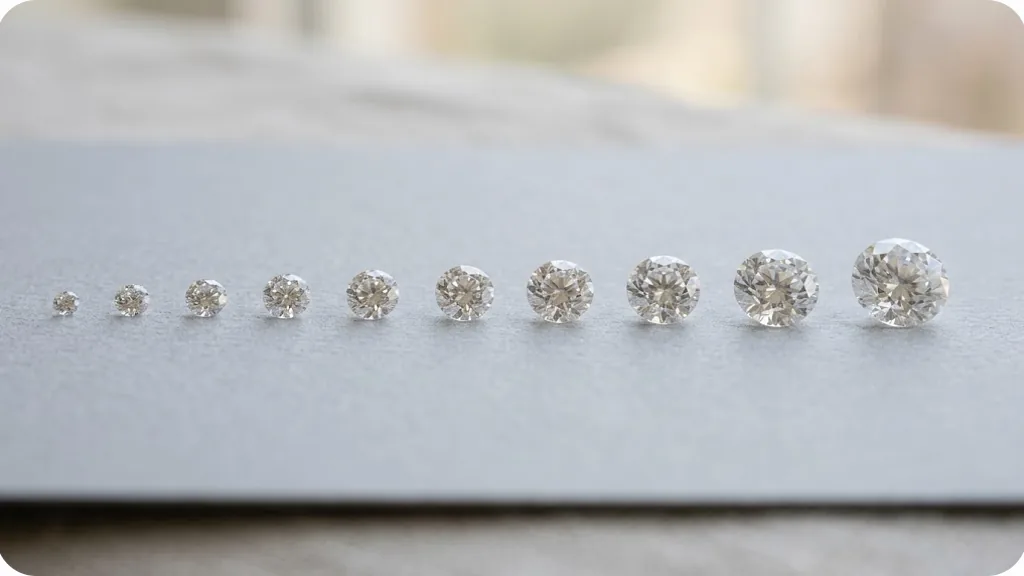
A carat is a unit of weight, not size. One carat equals 0.2 grams. It is written as ct, and fractions are common — 0.50ct, 0.75ct, 1.25ct and so on.
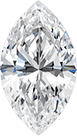
This trips people up constantly. Two 1 carat diamonds can look quite different in size depending on how they are cut. A shallow-cut stone spreads wider and looks bigger; a deep-cut stone hides weight underneath the setting where you cannot see it. Elongated shapes like oval, pear and marquise look larger than a round of the same weight because more of their surface faces upward.
Price also does not rise in a straight line with weight. A 2 carat diamond costs considerably more than twice a 1 carat one, because larger rough is rarer and harder to grow well. And prices jump at the round numbers — 1.00ct, 1.50ct, 2.00ct — because that is where demand clusters. A 0.90ct stone is meaningfully cheaper than a 1.00ct and almost impossible to tell apart on a hand.
What actually sets the price of a lab-grown diamond
Weight is only the starting point. Four other things move the number, sometimes dramatically.
Cut quality. How well the stone was shaped and polished. Graded Excellent, Very Good, Good, Fair and Poor for round brilliants. Excellent costs more and is worth it — it is the only grade that changes how the diamond looks every single day.
Colour. Graded D through Z, where D is completely colourless and Z has a clearly visible pale tint. D, E and F are colourless; G and H are near colourless and look white to the eye; I and J carry faint warmth that often disappears in yellow gold. Each step up the scale costs more.
Clarity. A measure of the tiny natural marks inside a diamond, called inclusions. The scale runs FL and IF (flawless and internally flawless), then VVS1 and VVS2, VS1 and VS2, SI1 and SI2, then I1 to I3 where inclusions are visible without magnification. Prices climb steeply near the top.
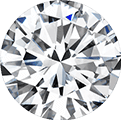
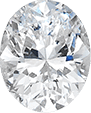
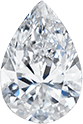
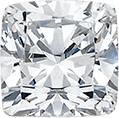
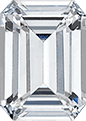
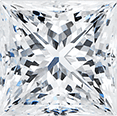
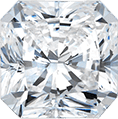
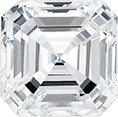
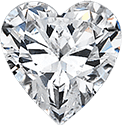
Shape. Round brilliants cost the most per carat, because cutting a round wastes the most rough material and because demand is highest. Fancy shapes — oval, pear, emerald, marquise, cushion — generally cost less per carat for equivalent grades.
Guidance ranges — please read the caveat
The figures below are broad guidance for loose lab-grown stones, not finished rings, and they reflect the market at the time of writing. Lab-grown prices have fallen a great deal over recent years as growing capacity expanded, and they continue to move. Treat these as orders of magnitude, not quotations.
| Weight | Typical quality | Broad guidance range (loose stone) |
|---|---|---|
| 0.50ct | Excellent cut, G–H, VS2 | Low hundreds of pounds |
| 1.00ct | Excellent cut, G–H, VS2 | Several hundred pounds up to around £1,000 |
| 1.50ct | Excellent cut, G–H, VS2 | Roughly £800 to £2,000 |
| 2.00ct | Excellent cut, G–H, VS2 | Roughly £1,200 to £3,000+ |
| 3.00ct | Excellent cut, G–H, VS2 | Several thousand pounds and up |
Notice how wide those bands are. That width is real, not hedging. Push the colour up to D and the clarity to VVS1 and you can double the figure. Drop to J colour and SI1 and you can halve it. Buy a fancy shape rather than a round and you save again.
So how much does a 1 carat lab-grown diamond cost?
This is the question people actually type into a search box, so here is the direct answer.
For a loose 1 carat lab-grown diamond in the quality most people want — Excellent cut, G or H colour, VS2 clarity, IGI certified — you should expect to spend somewhere from a few hundred pounds up to around a thousand, depending on shape, seller and exactly where the grades land. That is a genuine range, and anyone quoting you a single figure is quoting one particular stone.
Two things to bear in mind when you compare that with prices you see elsewhere.
A loose stone is not a ring. A finished piece includes the metal — solid gold or platinum is a real material cost that moves with the bullion market — plus the setting stones, the workmanship, and the certification. Comparing a loose stone price against a finished ring price is comparing two different things.
Older articles are misleading. Lab-grown prices have fallen substantially and repeatedly. An article written a few years ago will quote figures that are now far too high. Check the date on anything you read, including this page.
Why two lab-grown diamonds of the same weight cost different amounts
Beyond the four Cs, three practical factors explain most of the spread you will see between sellers.
Growing method. Lab-grown diamonds are made either by CVD (chemical vapour deposition, where carbon is deposited layer by layer from a gas) or HPHT (high pressure high temperature, which recreates the conditions deep underground). Both produce real diamond. Yields, run times and post-growth treatment differ, and that feeds into cost.
Certification. An independent laboratory report costs money and adds confidence. Uncertified stones are cheaper and much harder to compare. We include a free IGI certificate on every centre stone precisely so this is not a variable you have to worry about.
How many hands the stone passes through. Every step between the grower and you adds margin. A jeweller who buys close to source and sets the stone themselves can price differently from one buying finished goods through several intermediaries.
What that means for a finished ring
At CarbonstoneUK, complete hand-made rings in solid gold and platinum currently start from a little over £500, which gives you a sense of how far lab-grown pricing has moved. Our Minimalist Round Cut Engagement Ring starts from around £587 — a clean band and a single stone, with the budget going almost entirely into the diamond.
The Solitaire Round Cut Engagement Ring sits from around £657 and is the classic six-claw silhouette most people picture when they think of an engagement ring.
If you want visible size for the money, a fancy shape stretches the budget further. Our Three Stone Oval Cut Engagement Ring starts from around £1,021 and uses three elongated stones to cover far more of the finger than a single round of similar total weight.
Browse the full engagement ring collection, or narrow down to the round diamond range if you already know the shape you want.
How to get more diamond for your money
- Buy just under a milestone weight. 0.90ct instead of 1.00ct, or 1.40ct instead of 1.50ct. The price drop is real; the size difference is not visible.
- Choose a fancy shape. Oval, pear and marquise cost less per carat and look larger face-up than a round.
- Settle at G or H colour. These look white to the eye. D costs considerably more for a difference only a grader sees.
- Settle at VS2 clarity, or SI1 in a brilliant cut you have looked at. Both are eye clean in normal use.
- Consider yellow or rose gold. Warm metal masks faint colour, so you can drop a grade or two.
- Never economise on cut. It is the only grade that changes what you see daily.
Frequently asked questions
Are lab-grown diamonds real diamonds?
Yes. They are the same material — pure crystallised carbon, same hardness, same optical behaviour, same grading scales. The only difference is that they were grown in a controlled environment over weeks rather than formed underground over a very long time. They are not simulants like cubic zirconia or moissanite, which are different materials entirely.
Will lab-grown prices keep falling?
Nobody can promise that. Prices have fallen substantially as growing capacity has expanded, and it would be reasonable to expect continued pressure, but this is a market and markets do unexpected things. What we can say is that current prices put sizes and qualities within reach that were not reachable a few years ago.
Does a bigger lab-grown diamond cost proportionally more?
More than proportionally. Doubling the carat weight typically more than doubles the price, because large, clean rough is harder to grow and cut. The steepest jumps sit right at the round-number weights.
Is a cheap lab-grown diamond a bad diamond?
Not necessarily — it may simply be a lower colour or clarity grade, a fancy shape, or an uncertified stone. What matters is that you know which. Always ask for an independent certificate so you are comparing the same thing.
What does a CarbonstoneUK ring include?
A lab-grown centre stone with a free IGI certificate, hand-made construction in solid gold or platinum from our North Harrow, London workshop, free insured UK delivery and 30 days to return it. Bespoke work carries no extra design cost, so if you want a specific carat weight and grade combination we can build it to order.
The best way to use all of this is not to chase a per-carat figure but to decide what you want the ring to look like, set a budget, and let the grades flex to fit. Tell us what matters most to you and we will tell you honestly where the money should go.
Ready to find your perfect ring?
Explore our lab-grown diamond collection or book a virtual appointment with our team.