The True Cost of Cutting a Diamond
What it really costs to cut a diamond, why the weight lost matters more than the labour, and how it changes what you pay.
Every diamond you have ever admired started as a dull, greasy-looking lump. Rough diamond does not sparkle. It looks a bit like a piece of frosted glass or a boiled sweet that has been left in a pocket. Everything you actually love about a diamond — the brightness, the flashes of colour, the way it catches a room — is put there by a cutter.
So what does that work cost, and how much of the price of a finished diamond is really the cutting? It is one of the least understood parts of the trade, and it explains a great deal about why some diamonds cost more than others.
The biggest cost is not labour — it is the diamond you throw away
This is the single most important thing to understand about cutting costs.
A cutter starts with a rough crystal of a fixed weight. The finished stone will always weigh less. Everything ground away becomes dust, and that dust was paid for at the same price per carat as the rest of the crystal.
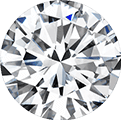
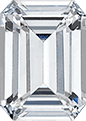
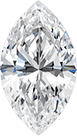
The trade term is yield: the percentage of the rough weight that survives into the finished stone. For a round brilliant, yield has long been reckoned at roughly half — meaning around half the crystal you bought ends up as nothing. Shapes with more elongated or angular outlines, such as marquise, pear and emerald cuts, sit at the friendlier end because they fit the natural crystal shape better.
| Shape | Typical yield from rough | Effect on finished price per carat |
|---|---|---|
| Round brilliant | Lowest | Highest |
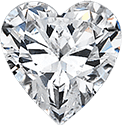
| Heart | Low | High |
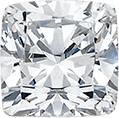
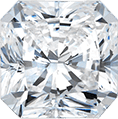
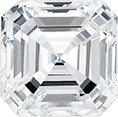
| Cushion, radiant, Asscher | Moderate | Middle |
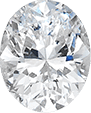
| Oval | Good | Lower |
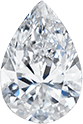
| Emerald, pear | Good | Lower |
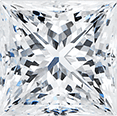
| Marquise, princess | Best | Lowest |
So when people ask “how much does it cost to cut a diamond”, the honest answer is that the labour is only the visible part of the bill. The invisible part — the material sacrificed — is far larger.
What the cutting process actually involves
The work happens in stages, and each one costs skilled time.
Planning. Before anything is touched, the rough is scanned and mapped in three dimensions. Software models thousands of possible finished stones inside the crystal, weighing size against clarity against shape. A planner then decides which one to chase. This decision is worth more than every other stage combined, and getting it wrong is expensive.
Cleaving or sawing. The rough is split, historically by cleaving it along a natural grain line with a precise tap, today usually with a laser. Lasers are faster and safer but they also vaporise a thin slice of diamond, which is more weight gone.
Bruting. The stone is spun against another diamond to grind the basic outline — the round circle, or the oval, or the pear. Only diamond can shape diamond.
Blocking and brillianteering. The facets go on. Blocking places the main ones — the table (the big flat facet on top), the crown (the sloping sides above the widest point) and the pavilion (the cone underneath that acts as a mirror). Brillianteering adds the smaller facets that create the sparkle. A round brilliant has 57 or 58 facets, each one placed to a fraction of a degree.
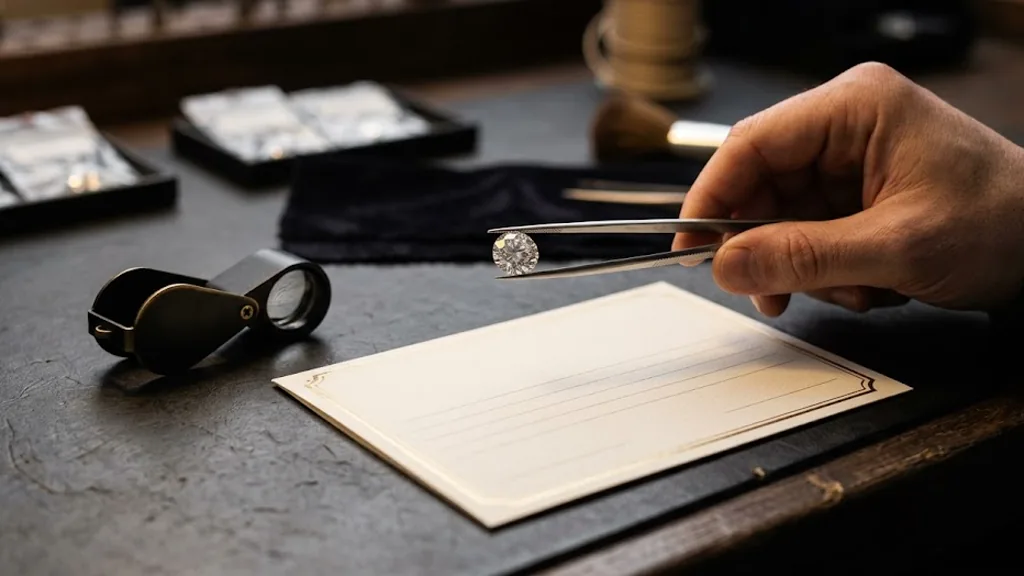
Polishing and inspection. Every facet is polished on a rotating cast-iron wheel charged with diamond powder, then the stone is checked, corrected and checked again.
A single stone can pass through several pairs of hands over days. On small stones the process is heavily mechanised; on larger or unusual stones it remains genuinely hand work.
So what does cutting cost per carat?
Cutting fees are quoted per carat of finished stone, and they vary widely by size, shape, difficulty and where the work is done. Rather than invent a number, here is what actually moves it:
- Size. Larger stones cost far more per carat to cut, because a mistake destroys more value and the work takes longer.
- Shape. A plain round is the most standardised and therefore the most efficient to produce. Fancy shapes, and anything with points or hand-cut proportions, cost more per carat.
- Target grade. Chasing an Excellent cut grade rather than a Good one means slower work, more measurement, and accepting a smaller finished weight to hit the right angles. That trade-off — weight versus beauty — is the daily decision in a cutting house.
- Clarity of the rough. Awkward inclusions force the cutter to work around them, sometimes abandoning the largest possible stone in favour of a cleaner smaller one.
As a proportion of a finished diamond’s price, cutting labour on an ordinary commercial stone is a modest slice. The dominant costs are the rough material itself and the weight lost getting to the finished shape.
Can I have my own diamond recut?
Sometimes, and it is worth asking about if you have inherited a piece.
Recutting is used to remove a chip, to improve a badly proportioned old stone, or to change an antique cut to a modern one. It is charged per carat, and you must accept that the stone will come back lighter — often noticeably so. A 1.10ct stone might return as 0.95ct.
Whether it is worth doing depends on the maths. Removing a visible chip from a stone with sentimental value usually is. Recutting a genuine antique cut into a modern round usually is not, because you destroy the character that made it interesting. In many cases the better answer is to keep the stone as it is and rebuild the ring around it — something we do regularly as bespoke work at no extra design cost.
Does cutting cost the same for lab-grown diamonds?
Yes, and this is a point that surprises people.
A lab-grown diamond is the same material with the same hardness, cut on the same wheels by the same cutters to the same standards. The cutting bill does not shrink because the stone was grown in a reactor rather than dug from the ground. Nor does the setting, the goldsmithing, the hallmarking or the certification.
What falls is the cost of the rough. That is where the whole saving lives — and it is why lab-grown prices have dropped so far while finished jewellery prices have not dropped by nearly as much. Roughly speaking, as the stone becomes less of the bill, the craftsmanship becomes more of it.
There is a happy consequence. Because lab-grown rough costs less, cutters can afford to prioritise beauty over weight retention. Sacrificing a few points of carat weight to reach ideal proportions is a much easier decision when the rough is not the dominant cost. That is a large part of why well-cut lab-grown stones are so widely available.
You can see the results of that in pieces where cut quality is doing the work, such as our Solitaire Round Cut Engagement Ring, or where dozens of small precisely matched stones have to sparkle in unison, as in our Stackable Round Cut Full Eternity Band.
Why this matters when you are buying
Understanding cutting costs reframes the whole purchase. It explains why round brilliants cost more, why a well-cut stone is worth paying for, and why “more carats for the money” often means a stone that has been cut for weight rather than beauty.
If a diamond looks slightly dull for its grades, the reason is almost always that the cutter chose weight over proportion. It was a commercial decision made long before the stone reached a shop window, and no setting will fix it. Buying on cut grade is buying the cutter’s judgement.
Frequently asked questions
How much weight does a diamond lose when it is cut?
A large proportion. For a round brilliant the loss has long been reckoned at around half the rough weight, with other shapes retaining more. The exact figure depends entirely on the individual crystal.
Is cutting the most expensive part of a diamond’s price?
No. The rough material, and the material lost during cutting, cost far more than the labour. Cutting fees are a modest share of a commercial stone’s final price.
Can a badly cut diamond be improved?
Often yes, but it will lose weight and the cost may exceed the gain in value. It is usually worth it for damage repair or for a stone with sentimental meaning, and rarely worth it purely for grade.
Does hand cutting cost more than machine cutting?
Yes. Small stones are cut with a high degree of automation; larger and unusual stones still involve substantial hand work and judgement, which is reflected in the price.
Does the certificate tell me how well a stone was cut?
For round brilliants, yes — there is an overall cut grade from Excellent down to Poor. For fancy shapes the report grades polish and symmetry but leaves overall cut to your eye. Every centre stone we sell comes with a free IGI certificate so you can see exactly what you are getting.
If you would like to see well-cut stones rather than read about them, browse our round diamond pieces or the full engagement ring collection. Every piece is hand-made in solid gold or platinum in London, delivered free and insured anywhere in the UK, with 30 days to change your mind.
Ready to find your perfect ring?
Explore our lab-grown diamond collection or book a virtual appointment with our team.