Can You Tell If a Diamond Is Lab Grown? And Does Anyone Mind?
Nobody can tell by looking, only from the certificate. An honest guide to spotting lab-grown diamonds and whether it matters to her.
Two questions arrive together in almost every conversation we have about lab-grown diamonds. Can anyone tell? And would she mind if they could?
They deserve honest answers rather than sales answers, so here are both — including the parts that are less comfortable.
The short answer on telling them apart
No. Not by eye, not across a table, not by a jeweller holding a loupe, and not with the pen-style diamond tester most high street shops keep behind the counter.
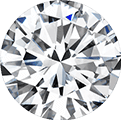
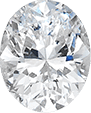
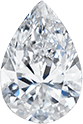
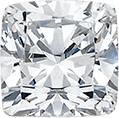
That is not clever marketing. A lab-grown diamond is carbon arranged in exactly the same crystal structure as a mined diamond. Same hardness, same refractive index, same sparkle, same way of scratching glass and surviving daily wear. It is a diamond that formed in a machine instead of in the ground.
| Mined diamond | Lab-grown diamond | |
|---|---|---|
| Chemical make-up | Crystallised carbon | Crystallised carbon |
| Hardness (Mohs scale) | 10 | 10 |
| Sparkle and fire | Identical | Identical |
| Graded on the 4Cs | Yes | Yes, by the same laboratories |
| Passes a standard diamond tester | Yes | Yes — because it is a diamond |
| Where it formed | Deep in the earth over a very long time | In a growth chamber over weeks |
So how do the laboratories tell?
They can, reliably, but not by looking at sparkle. They look for traces of how the crystal grew.
- Growth patterns. A mined diamond grows outwards in an octahedral pattern. A CVD lab diamond grows in flat layers, and an HPHT lab diamond grows in a distinctive cube-and-octahedron pattern. Specialist instruments reveal these.
- Fluorescence and phosphorescence. Under certain ultraviolet light, lab-grown stones often glow, and keep glowing, in patterns that mined stones do not show.
- Tiny inclusions. HPHT stones can contain minute traces of the metal used in growth. Mined stones sometimes contain fragments of other minerals. Neither is visible without magnification.
All of this needs laboratory equipment that costs more than most jewellery shops will ever spend. It is not something a friend, a valuer at a party, or a shop assistant with a tester can do.
The easiest way to tell, and it is deliberate
There is one method that works instantly, and the industry built it on purpose: read the girdle.
The girdle is the thin edge running around the widest part of a diamond. Certified lab-grown diamonds are laser-inscribed there with the report number and, in plain words, that the stone is laboratory-grown. Under a ten-times loupe you can read it.
The certificate says so too. A lab-grown stone receives a “Laboratory-Grown Diamond Report”, not a diamond report with something quietly left off.
So the accurate way to put it is this: a lab-grown diamond is impossible to identify by its appearance, and trivially easy to identify by its paperwork. Nothing is hidden. Every centre stone we set comes with a free IGI certificate, and it says exactly what it is.
Do women care whether a diamond is lab-grown?
Here we have to be careful, because this is where a lot of jewellery writing invents numbers. We are not going to quote you a survey percentage, because we do not have a reliable UK figure to quote and neither, in most cases, do the sites that publish them.
What we can tell you is what we actually see across the counter and in emails, described as what it is — our own experience, not research.
Opinions genuinely split into three camps, and they do not divide neatly by age or budget:
| View | What sits behind it | What tends to help |
|---|---|---|
| Actively prefers lab-grown | Wants to know where the stone came from. Likes getting a larger or cleaner diamond for the same money | Nothing — this buyer usually arrives already decided |
| Does not mind either way | Cares about the ring, the design and the moment, not the geology | Choosing a design she will love wearing |
| Would rather have mined | Attached to the idea of something ancient and rare, or worried about resale | An honest conversation before you buy, not after |
The third group is real and it is not silly. If rarity is what a diamond means to someone, a lab-grown stone will not deliver that feeling, and no amount of explaining the chemistry changes it. That is a matter of meaning, not fact, and meaning is the whole point of an engagement ring.
The one piece of advice that matters most
Tell her.
Every awkward story we have heard about lab-grown diamonds comes from the same root: someone bought one, said nothing, and she found out later from the certificate in the box. The problem was never the stone. It was finding out second-hand.
Handled the other way round it is a non-event, and often a good one — “I chose lab-grown, which meant I could get you a bigger, cleaner stone in solid gold.” That is an easy sentence to say and a pleasant one to hear.
If you genuinely do not know how she feels, ask indirectly long before you shop. Show her a ring online. Her reaction will tell you everything.
The honest bit about value
Lab-grown diamonds do not hold their price the way people hope, and prices for lab-grown stones have fallen over recent years as production capacity has grown. We have written more about that in our guide to whether lab-grown diamonds are getting cheaper.
What often goes unsaid is that mined diamonds bought at retail do not perform brilliantly on resale either. Almost all jewellery, of every kind, sells second-hand for a good deal less than it cost new. If you need a stone that behaves like an investment, jewellery of any sort is the wrong place to look.
Buy a ring because you want to wear it every day for decades. That is the return.
Frequently asked questions
Will a jeweller be able to tell when I take it in for cleaning?
Only by reading the laser inscription on the girdle or looking at the certificate. Visually and on a standard tester it reads as a diamond, because it is one.
Do lab-grown diamonds cloud, dull or change colour over time?
No. They are the same material as a mined diamond and they behave the same way for life. Any dulling on any diamond is a film of soap, hand cream and skin oil, and it washes off in warm soapy water with a soft brush.
Are lab-grown diamonds “real” diamonds?
Yes. They are chemically and physically diamond. That is different from a simulant such as cubic zirconia or moissanite, which are other materials that look diamond-like.
Does the certificate say it is lab-grown?
Yes, clearly, on the front. It is issued as a Laboratory-Grown Diamond Report and the stone itself is inscribed. There is no version of this that hides the origin.
Will she be able to tell if I do not say anything?
Not by looking. But the certificate comes in the box, and finding out that way is far worse than being told. Say it out loud.
Have a look for yourself
The best way to settle this is to see what the money actually buys. Our Solitaire Round Cut Engagement Ring in Rose Gold is £1,007, and both the Hidden Halo Oval Cut Engagement Ring and the Three Stone Oval Cut Engagement Ring are £1,021 — prices correct at the time of writing.
You can browse the full engagement ring collection or narrow it to oval cut designs. Everything is hand-made in solid gold or platinum in North Harrow, London, with free insured UK delivery and 30 days to return it.
Ready to find your perfect ring?
Explore our lab-grown diamond collection or book a virtual appointment with our team.