Is Zirconium Good for Wedding Rings?
Zirconium wedding bands explained: why they go black, what cannot be resized or repaired, and why zirconium is not cubic zirconia.
Before anything else, a correction that saves a lot of confusion. Three things share a similar name and they are not related in the way people assume:
| Name | What it is | Where you meet it |
|---|---|---|
| Zirconium | A grey metal. In jewellery it is usually treated to grow a hard black surface. | Plain black or grey wedding bands |
| Cubic zirconia (CZ) | A man-made clear stone. Not a diamond, and chemically nothing like one. | Costume jewellery and cheap “diamond look” rings |
| Zircon | A natural gemstone, mined, often blue or golden. | Coloured gemstone jewellery |
If you searched for zirconium because you were looking at a black wedding band, the first row is what you want. If you searched because a ring was described as “zirconia”, read the section further down — that is a stone, not a metal, and the difference matters a great deal.
Is zirconium a good wedding ring metal?
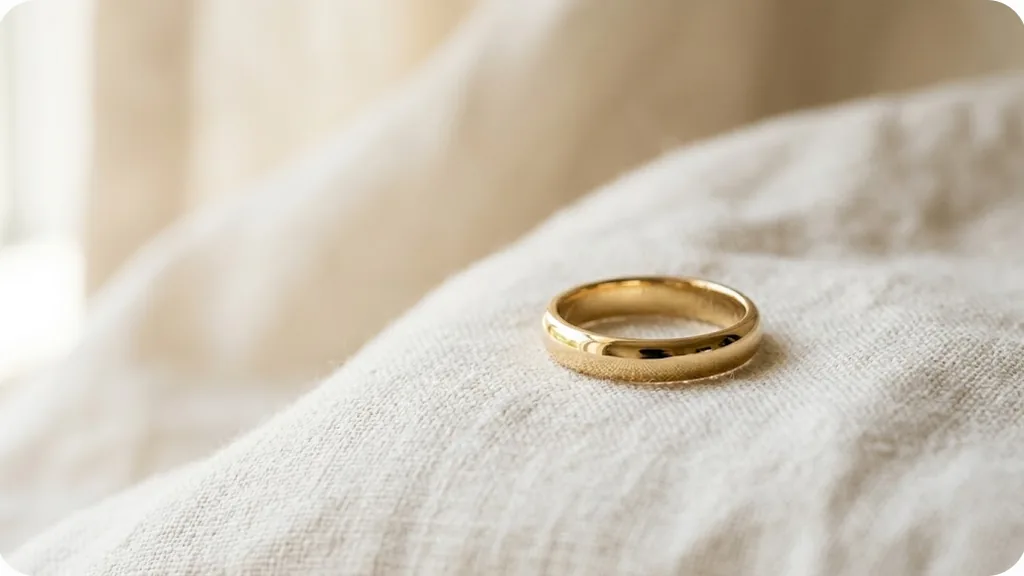
For a plain black band, zirconium is one of the better options available. It is a genuinely reasonable choice for the right person. It is a poor choice if you want stones, if your finger size is likely to change, or if you want something repairable.
What zirconium is, and why it goes black
Zirconium is a light grey metal. On its own it looks a lot like titanium. The reason it appears in jewellery at all is what happens when you heat it.
Heated in air, the surface of zirconium converts into zirconium oxide — a hard black ceramic. This is not a coating applied on top of the metal. It is the metal’s own surface, chemically transformed. That is the crucial selling point, and it is a real one: unlike black plating, there is no separate layer sitting on the surface waiting to flake off at the edges.
It is still, however, a thin layer. Deep enough to survive normal wear, not deep enough to survive a serious gouge. If something cuts through it, the grey metal underneath shows.
The advantages
- A true black that is part of the metal. Nothing else in jewellery gives you black quite this way. Black rhodium plating on gold, by comparison, is a surface finish that thins with wear and needs redoing.
- Very well tolerated by skin. Like titanium, zirconium is used in medical implants. It contains no nickel and no copper.
- Hard-wearing surface. The oxide layer resists scratching well.
- Light and comfortable. Heavier than titanium, considerably lighter than gold or platinum.
- Inexpensive. It is not a precious metal and is priced accordingly.
The drawbacks, stated plainly
It cannot be resized
This is the same limitation you get with titanium and tungsten. Zirconium cannot be cut and soldered using normal jewellery techniques, and heating it to work on it would alter the black surface anyway. If your finger changes size, the ring is replaced rather than adjusted.
It cannot be repaired
A scratch through the black layer cannot be polished out at home without exposing more grey. Some makers will refinish their own rings; many will simply replace them. There is no equivalent of the routine repair work a gold or platinum band receives over decades.
Almost no stone-setting options
Setting diamonds means bending metal over the stone. Doing that to a zirconium band would crack the black oxide surface exactly where it is most visible. In practice, zirconium rings are plain, inlaid, or set with an insert of another metal. If you want a diamond band, this is the wrong metal.
No hallmark, no metal value
UK hallmarking covers gold, silver, platinum and palladium. Zirconium is not included, so there is no assay mark inside the band. There is also no meaningful metal value if you ever sell it.
Zirconium against the other “alternative” metals
| Zirconium | Titanium | Tungsten carbide | |
|---|---|---|---|
| Colour | Grey, or true black | Grey | Grey, often dark |
| Weight | Light to medium | Very light | Heavy |
| Resizable | No | Essentially no | No |
| Brittleness | Not brittle | Not brittle | Brittle — can shatter if dropped hard |
| Emergency removal | Cut with ring cutters | Cut with ring cutters | Cracked with vice grips |
If you are weighing zirconium against titanium specifically, our guide to whether titanium is good for a wedding ring covers the same ground from the other side.
Cubic zirconia is a completely different subject
This is worth spelling out, because people arrive at zirconium rings after seeing “zirconia” somewhere and assume they are related.
Cubic zirconia is a clear, man-made stone created to look like a diamond. It is not a diamond, it is not a lower grade of diamond, and it is not chemically similar to one. Three practical consequences:
- It is much softer. On the Mohs hardness scale, diamond sits at 10 and cubic zirconia at roughly 8 to 8.5. That gap is far larger than it looks, because the scale is not evenly spaced. In everyday terms, a CZ worn daily gradually abrades along its edges and loses its crispness.
- It clouds. A CZ in an engagement ring typically looks noticeably duller after a few years of washing up, hand cream and general life. A diamond does not.
- It has no certificate and no value. There is nothing to grade.
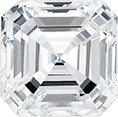
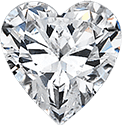
A lab-grown diamond is a genuinely different thing. It is carbon, crystallised in the same structure as a mined diamond, with the same hardness, the same optical behaviour, and the same 10 on the Mohs scale. It is grown rather than dug up, which is what makes it more affordable — not any difference in what it is. That is what we set in every ring we make, and every centre stone comes with a free IGI certificate.
What we make, honestly
We do not make zirconium rings, and we do not use cubic zirconia. Everything we make is hand-made in solid gold or platinum and set with lab-grown diamonds. We would rather tell you that than send you to a page that does not exist.
If the appeal of zirconium is the dark, quiet, modern look, the closest thing we make is a clean band in white gold or platinum — the Pave Baguette Cut Wedding Band (£690, correct at the time of writing) has that architectural, unfussy character. For something plainer still, the Tiara Round Cut Wedding Band (£707) keeps the detail low.
And if you specifically want a diamond that will still look the way it does now in thirty years, a simple piece like the Solitaire Round Cut Engagement Ring in White Gold (£563) will outlast any simulant. The full range is in our wedding ring collection.
Frequently asked questions
Will a black zirconium ring stay black?
The colour will not fade, flake or wear off in patches the way plating does, because it is the metal’s own oxidised surface. What can happen is a deep scratch cutting through to the grey beneath. Normal wear tends to give the ring a slightly softer, less glossy black over time.
Can a zirconium ring be cut off in an emergency?
Yes. Standard ring cutters used in A&E will go through it. It is tungsten carbide that behaves differently, and even that is removed easily enough by cracking rather than cutting.
Is zirconium the same as zirconia?
No. Zirconium is the metal your band is made from. Cubic zirconia is a clear imitation-diamond stone. They share a root name because zirconia is an oxide of zirconium, but as products they have nothing to do with each other.
Is a zirconium ring suitable as a main wedding ring?
It can be, if you go in with clear eyes: plain design, no resizing, no repairs, replace rather than restore. Plenty of people are perfectly happy on those terms, particularly for a hard-working hand. If you want the ring to be adjusted, re-set or passed on, choose a precious metal.
Does zirconium irritate sensitive skin?
It is unlikely to. It contains no nickel and no copper, which are the two usual culprits. Platinum is the precious-metal equivalent for the same reason.
Where to go from here
If you are still working through metals, take your time — it is the one choice you cannot revise later without starting again. Our wedding rings and bridal sets are all made by hand in North Harrow, with free insured UK delivery and 30-day returns, and bespoke design carries no extra design cost if nothing on the shelf is quite it.
Ready to find your perfect ring?
Explore our lab-grown diamond collection or book a virtual appointment with our team.