
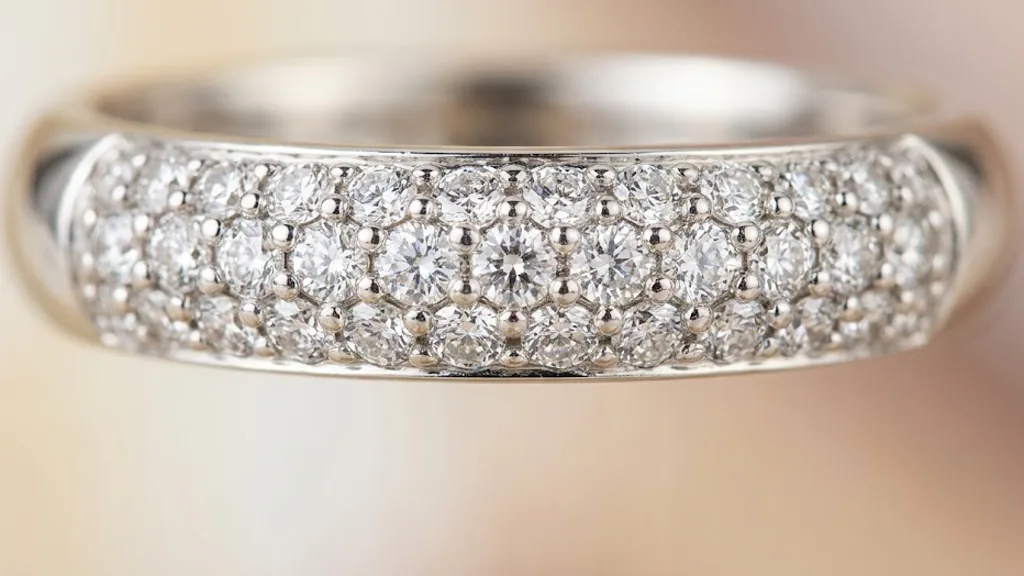
How to Clean a Pave Diamond Ring Safely at Home
A five-minute soap-and-water method for pave rings, how often to do it, and the cleaning mistakes that loosen small stones.
A pavé ring goes dull faster than a plain diamond ring, and it goes dull in a way that creeps up on you. There is no single day when it stops sparkling. It just gradually stops, and because you see it every day you do not notice until you clean it and it looks new again.
The good news is that cleaning pavé properly takes five minutes, costs almost nothing, and needs no special products. The important part is knowing what not to do.
Why pavé dulls faster than a single stone
A diamond sparkles because light enters through the top, bounces around inside and comes back out. Anything on the surface interrupts that. Hand cream, soap residue, cooking oils and the natural oil from your skin all form a thin film.
On a large centre stone, that film is thin relative to the size of the stone, so a light haze still lets plenty of light through. On a pavé stone measuring one millimetre across, the same film is proportionally much thicker, and it also fills the tiny gaps between the stones. That is why the band goes flat first while the centre stone still looks reasonable.
There is a second problem specific to pavé. Grime does not just sit on top; it packs into the spaces between the stones and underneath them. Wiping the surface with a cloth does nothing about that, which is why polishing cloths alone never really work on pavé.
The five-minute method that works
This is what we recommend for any pavé ring in gold or platinum with diamonds only.
- Fill a small bowl with warm water. Warm, not hot. Water you would happily put your hands into.
- Add one drop of ordinary washing-up liquid and stir it in. One drop is enough; more just means more rinsing.
- Put the ring in and leave it for 15 to 20 minutes. This softens the film so you do not have to scrub it off.
- Take a soft toothbrush, the softest you can buy, and brush gently along the paved rows, then across them, then along the inside of the band and underneath the centre stone.
- Rinse in clean warm water. Do this in a bowl of water, not under a running tap over an open plughole.
- Pat dry with a lint-free cloth, then leave the ring to air dry completely for half an hour before wearing or putting it away.
That last step matters more than people expect. Water trapped under stones and inside a setting will leave marks as it dries, and on white gold it can dull the finish over time.
How often
| How you wear it | How often to clean |
|---|---|
| Worn daily, hand cream and soap most days | Every one to two weeks |
| Worn daily, minimal cosmetics | Every two to four weeks |
| Worn occasionally | After each period of wear |
| Before a photograph or event | The day before, so it has time to dry fully |
A professional clean and setting check once a year is worth booking regardless. The clean is the smaller part of the value; the check is what stops a loose bead becoming a lost stone.
What not to do
These are the things that cause actual damage, in rough order of how often we see them.
Do not use toothpaste. It is abrasive. It will not scratch a diamond, but it will scratch gold and platinum, and it dulls a polished finish permanently.
Do not use bleach or any chlorine-based cleaner. Chlorine attacks the alloys in gold. It weakens the metal over time, and thin pavé beads are the first place that weakness shows.
Do not use a pin, needle or anything metal to dig out dirt. This is the single most common way people lever a bead open and lose a stone. If dirt will not come out with a soft brush and a soak, it needs a jeweller.
Be careful with ultrasonic cleaners. They are excellent at removing grime and they are also excellent at shaking a stone that is already slightly loose right out of its seat. If any stone is loose, an ultrasonic will find it. Only use one if you know the setting is sound, and never on a ring that has already lost a stone.
Do not clean over an open sink. A ring can slip out of wet fingers in an instant. Put the plug in, or work in a bowl on a table.
Cleaning by metal
Diamonds are diamonds, but the metal around them behaves differently.
Platinum takes soap and water without complaint. Over years it develops a soft satin surface called patina, which some people love and others have polished back.
White gold is plated with rhodium to make it bright white. Soap and water is fine, but abrasives and harsh chemicals wear the plating and let the slightly warmer gold underneath show through, usually first on the underside of the band. Re-plating every few years is normal maintenance rather than a fault.
Yellow and rose gold are the most forgiving. Rose gold contains copper, which is why it can look slightly darker over many years. Gentle cleaning keeps it even.
Sterling silver tarnishes, which is a chemical reaction rather than dirt, and soap will not remove it. Use a proper silver cloth on the plain metal and keep it away from the stones.
Habits that keep it clean longer
- Put the ring on after hand cream, perfume and hairspray, not before.
- Take it off before washing up, and before applying fake tan, which is remarkably good at staining a setting.
- Take it off for the gym, gardening and DIY. This protects the setting as well as keeping it clean.
- Keep it in a box rather than loose in a drawer, so it collects less dust in the first place.
If your ring is proving hard to keep bright and you are considering something lower maintenance, our guide to how durable pavé rings really are covers the alternatives honestly.
Frequently asked questions
Can I use vodka, or the other internet remedies?
Alcohol will cut grease, so it does something, but it is no better than washing-up liquid and considerably more expensive. Warm water and detergent is what most jewellers use.
Is jewellery cleaning solution better than washing-up liquid?
Not meaningfully, for diamonds in gold or platinum. Commercial solutions are convenient and some contain ammonia, which brightens well but should be kept away from soft stones and pearls. If your ring is diamond only, soap and water is genuinely enough.
My pavé still looks cloudy after cleaning. What now?
Either the film has hardened and needs a longer soak, or dirt is packed underneath the stones where a brush cannot reach, or one of the stones has an abraded surface from wear. A jeweller can tell you which within a minute of looking at it.
Do I need to clean the hidden halo too?
Yes, and it is the place most often missed because you cannot see it from above. Tilt the ring while brushing so the bristles reach into the collar under the centre stone. Our guide to hidden halos explains where those stones sit.
Should I clean it before selling or valuing it?
Yes. A clean ring is easier to assess accurately, and a valuer would rather look at the diamond than at a fortnight of hand cream.
If you are looking at pavé designs and want to see how they are put together, our Pave Hexagon Cut Engagement Ring at £1,078 and our Vintage Round Cut Engagement Ring in Yellow Gold at £1,051, both correct at the time of writing, show the setting in two different weights of design. The full engagement ring collection is here, all hand-made in North Harrow, London.
More guides on this topic
Ready to find your perfect ring?
Explore our lab-grown diamond collection or book a virtual appointment with our team.











