What Is Re-Tipping a Claw on a Ring?
Re-tipping adds new metal to the worn tip of a ring claw so it grips the stone again. Claws thin with daily wear, so have them checked every 12 months.
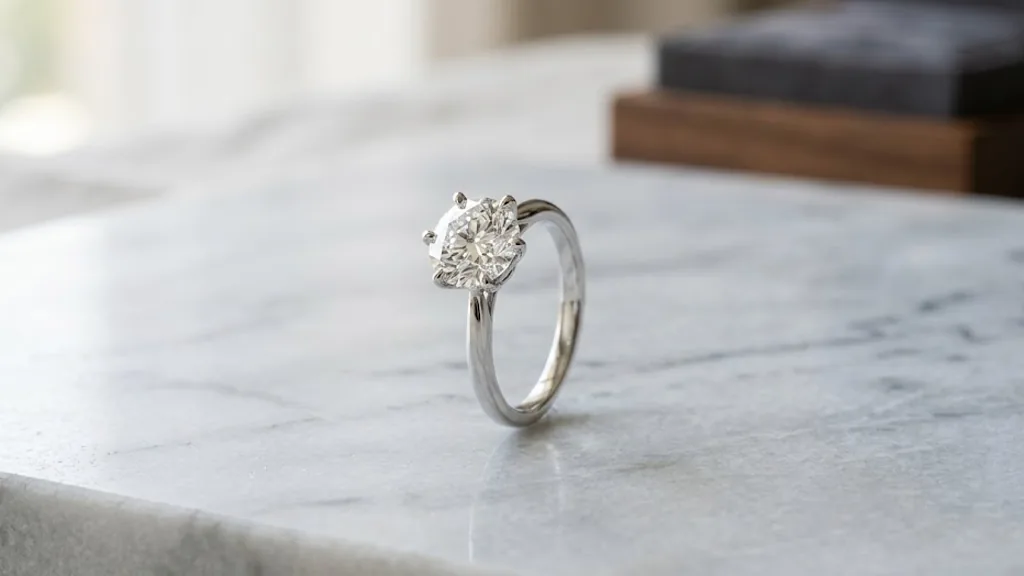
Re-tipping a claw means a jeweller adds a small bead of new metal to the worn tip of a claw (also called a prong) and shapes it back over the stone. It restores the grip on the diamond, often without taking the stone out. Claws thin a little with daily wear, so most rings should have their claws checked every 12 months.
How does a jeweller re-tip a claw?
A jeweller re-tips a claw by cleaning the worn tip, adding new metal of the same alloy, then shaping and polishing it. An 18ct gold claw gets 18ct gold, and a 950 platinum claw gets platinum, so the repair matches in colour and hardness. The metal is added with a laser welder or a fine torch, and the new tip is then filed down over the edge of the stone.
How do you know a claw needs re-tipping?
You know a claw needs re-tipping when its tip looks flat, thin or shiny, or when you can see more of the diamond’s edge than you used to. Other signs are a ring that suddenly snags on jumpers, or a stone that ticks when you tap the ring. A jeweller confirms it under a 10x loupe in a minute or two.
Claw counts, such as 4 against 6, are covered in our guide to solitaire engagement rings, and pear-point claws in how many claws a pear diamond needs. If a stone has already gone, read what to do if a diamond falls out.
Does a high setting catch on clothes?
A high setting can catch on clothes a little more than a low one, because the claws stand further from the finger. But a ring that has worn well for years and suddenly starts snagging usually has a lifted or sharp claw, not a height problem. A jeweller can tell which with a 10x loupe. Lifted claws are pushed back down, and worn ones are re-tipped.
How often should engagement ring claws be checked?
Engagement ring claws should be checked by a jeweller every 12 months as a rule of thumb, and every 6 months if you work with your hands, garden, climb or lift weights at the gym. Claws wear slowly, so a yearly look catches thinning long before the stone itself is at any risk. Have it checked straight away after any hard knock.
Clean the ring first; our guide to cleaning a diamond ring explains how.
Is re-tipping the same as re-clawing or resetting?
Re-tipping is not the same as re-clawing or resetting, although the three are often confused. Re-tipping adds metal to the tip only. Re-clawing replaces a whole claw, from base to tip, when it is cracked or worn too far to build up. Resetting takes the stone out and puts it into a new head, the set of claws that holds it, or into a different mount.
The table compares the three repairs in plain words, so you know which one a jeweller is describing.
| Repair | What is replaced | When it is needed |
|---|---|---|
| Re-tipping | The worn tip of a claw | The claw is sound but thin at the top |
| Re-clawing | The whole claw, base to tip | The claw is cracked, snapped or worn too far |
| Resetting | The head or mount holding the stone | Several claws are worn, or you want a new design |
Our Solitaire Round Cut Engagement Ring in Rose Gold at £1,007 is a classic claw-set solitaire, and our Solitaire Dutch Marquise Cut Engagement Ring at £932 uses claws to guard its points. Prices are correct at the time of writing. At CarbonstoneUK in North Harrow, London, every centre stone comes with a free IGI certificate. Browse our engagement ring collection.
Frequently asked questions
Does re-tipping harm a lab-grown diamond?
No, not when it is done properly. A lab-grown diamond is the same carbon crystal as a mined one, so it handles heat in exactly the same way. Jewellers protect the stone with a coating or use a laser welder, which heats only a tiny spot. The stone’s IGI grades are not changed by a careful re-tip.
Can every worn claw be re-tipped?
No. Re-tipping only works when the body of the claw is still sound and just the tip has worn. If a claw is cracked at its base, bent badly or worn down to a thin wire, it needs re-clawing instead. A jeweller will usually check all 4 or 6 claws and repair any that are worn equally at the same time.
Will a re-tipped claw look different from the others?
No, not once it is shaped and polished. The new metal is the same alloy, so it matches in colour. White gold claws need rhodium plating again after the repair to look bright white, which jewellers often do every 1 to 3 years anyway. Platinum and yellow or rose gold need only a polish.
Which metal claws wear the fastest?
Claws in 18ct gold, which is 75% pure gold, are softer than 9ct gold at 37.5%, so they tend to wear down faster. Platinum 950 is dense and tends to move rather than wear away, which helps it keep holding the stone for longer between repairs.
How can I check my ring claws at home?
Look at each claw with a magnifier or a phone camera zoomed in, and compare the tips: a flat or thin one stands out. Run the ring lightly over a pair of tights to see if it snags, and tap it near your ear to listen for a ticking stone. Any of these signs means a jeweller should look.
Should a ring be checked before it is resized?
Yes. A resize puts heat and pressure through the band, and a weak claw can loosen during the work. A good jeweller checks every claw first and re-tips any worn ones in the same visit. It is also sensible to have a ring checked after 12 months of daily wear, even if nothing feels wrong.
More guides on this topic
Ready to find your perfect ring?
Explore our lab-grown diamond collection or book a virtual appointment with our team.