Can You Buy a Promise Ring for Yourself? Yes, and Here Is How to Choose One
Buying your own promise ring is completely normal. What it can mean, designs that will not be mistaken for an engagement ring, and how to spend well.
Yes, you can buy a promise ring for yourself, and a good number of people do. There is no rule that a promise ring must be given by someone else, no etiquette that says otherwise, and no superstition against it. If you want to wear one, buy one.
The more useful questions are what a self-bought promise ring is actually for, how to choose one that will not be misread, and how to spend sensibly on a ring you will wear every day. This guide covers all three.
What a self-bought promise ring means
It means whatever you decide it means, and there are several honest versions:
- A promise to yourself. Sobriety, finishing a degree, leaving a job that was making you ill, getting through a year that nearly finished you. A ring is a durable way to mark something that other people may never have seen.
- Marking your own commitment in a relationship. Some people want to wear something for a partner without waiting to be given anything.
- A deliberate rejection of the waiting. If you want a ring on your finger and have no intention of waiting for someone else to decide when that happens, buying it yourself is the direct solution.
- Simply wanting the ring. Not everything needs to symbolise something. A well-made ring is a good object to own.
All four are legitimate. Nobody inspects the reason.
Choosing something that will not be misread
The one practical complication is other people. In the UK, a solitaire diamond on the left ring finger is read as an engagement ring, so if you do not want to field questions or corrections, either choose a different finger or a design that does not follow the classic bridal shape.
Designs that read clearly as jewellery rather than as an engagement:
| Style | Why it works | Example from our range |
|---|---|---|
| Stacking band | Slim, sparkles along the finger, no single focal stone | Stackable pear cut ring, £503 |
| Baguette eternity band | Rectangular stones read as modern and architectural | Baguette cut half eternity band, £672 |
| Bezel-set solitaire | The rim of metal changes the whole character; nothing to catch | Bezel hexagon cut ring in rose gold, £1,078 |
| Plain or textured band | Impossible to misinterpret; wears indefinitely | Minimalist round cut wedding band, £687 |
Prices correct at the time of writing.
Which finger to wear it on
Most people buying for themselves choose the right ring finger, the middle finger, or the index finger. Any of them is correct. The only finger that carries a fixed public meaning in Britain is the left ring finger, so it is worth being deliberate about that one either way — including if the whole point is to claim it for yourself.
Practical note: the index and middle fingers take more knocks in daily life. A flat or bezel-set design survives there better than raised claws.
How much to spend on a ring for yourself
There is no convention here, which is liberating. The rules of thumb people repeat about spending a set number of months’ salary are trade conventions attached to engagement rings, not measured facts, and they have never applied to a ring you buy for yourself.
What we would suggest instead is to spend where it affects how long the ring lasts:
- Solid metal over plated. A small solid gold ring outlives a large gold-plated one many times over. Plating wears through and exposes the base metal underneath.
- The right size over the right moment. A ring that spins will eventually be lost. Get measured properly rather than guessing.
- A certified stone if there is a stone. Our centre stones come with a free IGI certificate, which means an independent laboratory graded the colour and clarity rather than the seller describing it.
Lab-grown diamonds make this much easier at a self-purchase budget. They are chemically and optically the same material as mined diamonds, graded on the same scale, and cost significantly less for the same size and quality — so a modest budget buys a genuine diamond in solid gold rather than an imitation stone in plated metal.
Buying it well: a short checklist
- Get your finger measured, ideally at the end of the day when hands are at their largest, and in normal temperatures rather than in the cold.
- Decide the metal by how hard your hands work, not by what photographs best.
- Check whether the piece can be resized later. Gold, silver and platinum can; titanium and tungsten generally cannot.
- Check the returns period before ordering, and remember that engraved pieces are often non-returnable.
- If you are marking something specific, have the date or a few words engraved inside. It costs very little and it is the part you will notice in ten years.
Shape, and why it matters more than carat weight
When you are buying for yourself, you get to skip the received wisdom about what is classic and choose the shape you actually like looking at. Diamond shapes behave quite differently on the hand, and the difference is more noticeable than a small change in size.
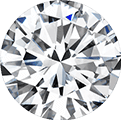
- Round returns the most light and is the shape most people picture. It is also the most common, so it says the least about your taste.
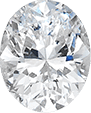
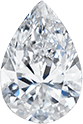
- Oval, marquise and pear are elongated, which makes the finger look longer and makes a given weight of diamond cover more surface area.
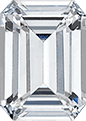
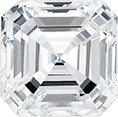
- Emerald and asscher are step cuts: instead of scintillation they give broad flashes of light, a calmer and more architectural effect. They also show inclusions more readily, so clarity matters more in these.
- Hexagon and other geometric shapes are unusual enough that a small stone still gets noticed, which is useful at promise ring sizes.
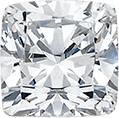
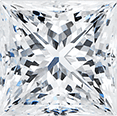
Our stock is deepest in round and pear, with smaller numbers of emerald, marquise, cushion, oval, hexagon, heart, radiant, baguette, rose cut and asscher. Two shapes we do not stock at all are princess and old European cut; if either is what you want, we will make it bespoke rather than sell you something adjacent and hope you do not notice.
How long the ring should last
A ring bought to mark something personal usually gets worn constantly, which is harder on it than occasional wear. Three decisions determine whether it survives that.
Setting height. Anything that sits high catches on clothing and eventually loosens. Bezel and flush settings are the most robust; pavé is next; tall claw settings are the most vulnerable.
Band thickness. Very fine bands look delicate in photographs and bend in real life. If you want something slim, look for a band that is at least reasonably deep even if it is narrow across the top.
Servicing. A rule of thumb in the trade, not a measured figure: have set stones checked every couple of years so claws can be tightened before anything is lost. It takes minutes and costs very little.
If nothing you have seen is right
A ring bought to mark something personal is exactly the situation where an off-the-shelf design can feel close but not quite correct. We design bespoke pieces at no extra design cost and hand-make them in solid gold and platinum from our workshop in North Harrow, London, so building something around a specific idea, a specific stone or an inherited piece is a normal request rather than an unusual one.
Frequently asked questions
Is it sad or strange to buy your own promise ring?
No. Buying your own fine jewellery is completely ordinary now, and a ring you chose yourself is a ring that actually fits your taste.
Will people assume I am engaged?
Only if you wear a classic solitaire on your left ring finger. Any other finger, or any design that is not a single raised stone, avoids the assumption.
Can I still be given one later?
Of course. Many people end up wearing both, which is one of the reasons slim stacking bands are so popular in this category.
Should I buy silver or gold if the budget is tight?
Sterling silver is a real precious metal and the cheapest way in, but it is soft and tarnishes, so it needs regular polishing. If the ring will be worn daily and never taken off, a small solid gold piece is the better long-term buy.
Can I use a stone I already own?
Yes. Resetting an inherited or existing stone into a new design is one of the most common bespoke jobs we do.
To see the full range of shapes and settings, browse our stone-set ring collection, or the band and eternity ring collection for plainer designs. Free insured UK delivery, 30-day returns, and every centre stone certified.
Ready to find your perfect ring?
Explore our lab-grown diamond collection or book a virtual appointment with our team.