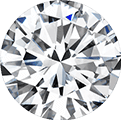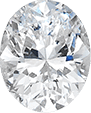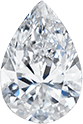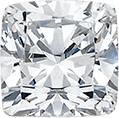
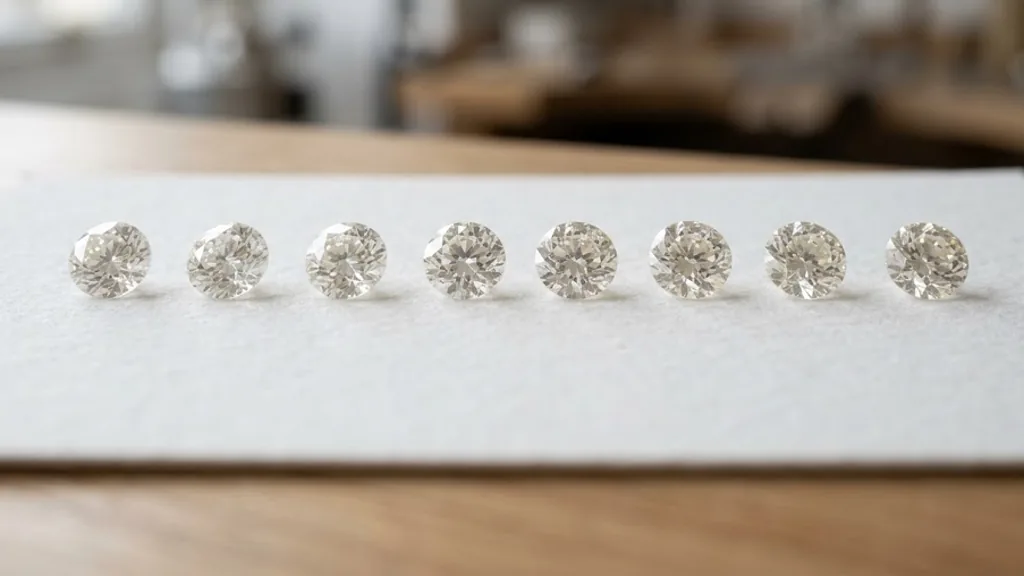
What Colour Is a Diamond’s Streak?
A diamond's streak is white, or colourless. Why the streak test cannot be done on diamond, and which tests actually identify one.
A diamond’s streak is white — properly described as colourless. Streak is the colour of the fine powder a mineral leaves when it is rubbed across an unglazed porcelain plate, and diamond leaves either nothing at all or a faint white mark. In practice the test cannot be performed on diamond, because diamond is far harder than the plate and scratches it instead of powdering.
What does “streak” mean in mineralogy?
Streak is the colour of a mineral in powdered form, and it is one of the oldest identification tests in geology. A mineral specimen is dragged across a streak plate — a square of unglazed white porcelain — and the trail of powder left behind is examined. The point of the test is that a powdered mineral often shows a truer, more consistent colour than a whole crystal does, because surface effects, impurities and light reflection stop interfering. Streak is a property of the mineral, not of the individual specimen.
Why is a diamond’s streak white even when the diamond is yellow or blue?
A diamond’s streak is white regardless of the diamond’s own body colour because diamond is pure carbon and its colour comes from very small quantities of other elements or from defects in the crystal lattice. Nitrogen produces yellow. Boron produces blue. Structural distortion produces pink and brown. These effects are visible when light travels a long path through an intact crystal, but they vanish in powder, where the path length is microscopic. So a fancy yellow diamond and a colourless one leave the same white mark.
Can you actually perform a streak test on a diamond?
You cannot get a useful streak from a diamond. A porcelain streak plate sits at roughly 6.5 to 7 on the Mohs hardness scale, and diamond sits at 10 — the top. Any mineral harder than the plate will cut into it rather than crumble against it, so what you produce is a scratch in the porcelain and a smear of white porcelain dust, not diamond powder. Mineralogists describe this by saying diamond, corundum and other very hard minerals “have no streak” or “leave a colourless streak”. Both statements mean the same thing in practice.
Is the streak test a way to tell a real diamond from a fake?
The streak test cannot identify a diamond and should never be used to try. Every hard, colourless imitation behaves in almost the same way: cubic zirconia at about 8 to 8.5 on the Mohs scale and moissanite at about 9.25 will also refuse to powder against porcelain. Worse, dragging a set stone across a rough ceramic surface risks damaging the metal, loosening claws and scratching the polish on the girdle. There is nothing to be gained and something real to lose.
What tests actually identify a diamond?
Identification of a diamond is done by measuring properties that separate it from every look-alike, and by reading the paperwork. This table sets out what works, what it proves, and what it does not.
| Test | What it measures | What it proves | Limits |
|---|---|---|---|
| Streak plate | Colour of powdered mineral | Nothing useful for diamond | Diamond is harder than the plate; simulants behave the same way |
| Thermal conductivity tester | How fast heat moves through the stone | Separates diamond from cubic zirconia and glass | Moissanite can also register as diamond on older testers |
| Combination diamond and moissanite tester | Thermal plus electrical conductivity | Separates diamond from moissanite as well | Cannot tell laboratory-grown from mined |
| Laboratory report and girdle inscription | Full grading plus origin determination | Identity, quality and whether the stone is laboratory-grown | Requires the stone to have been certified |
| Specific gravity | Density of the stone | Narrows down loose, unset stones | Impractical for mounted stones |
Does a laboratory-grown diamond have the same streak as a mined one?
A laboratory-grown diamond has exactly the same streak as a mined diamond: white, or no streak at all. Both are crystallised carbon with the same structure, the same hardness of 10 on the Mohs scale, the same refractive index and the same density. No physical test carried out with ordinary equipment separates them, which is precisely why origin is established by laboratory analysis and then stated in writing on a grading report rather than tested for at a shop counter.
Why do diamond and graphite leave different streaks if both are carbon?
Diamond and graphite are both pure carbon, yet graphite leaves a grey-black streak and diamond leaves a white one, because the atoms are arranged completely differently. In diamond each carbon atom is bonded to four others in a rigid three-dimensional lattice, giving hardness of 10 and transparency. In graphite the atoms sit in flat sheets that slide over one another, giving hardness of about 1 to 2 and an opaque dark grey appearance — which is why graphite works in a pencil and diamond does not. It is the clearest demonstration in mineralogy that structure, not composition, decides a mineral’s properties.
What does the streak test tell you about other gemstones?
Streak is genuinely useful for softer, opaque minerals rather than for gemstones. Hematite looks metallic grey but leaves a distinctive red-brown streak, which is how it is identified in the field. Pyrite — fool’s gold — looks like gold but leaves a greenish-black streak, while real gold leaves a yellow one. For transparent gemstones the test is nearly useless, because almost all of them are harder than the plate and almost all of them powder white. Gemmologists reach for refractive index, specific gravity and magnification instead.
Frequently asked questions
What colour streak does a diamond leave?
A diamond leaves a white or colourless streak. Most mineral references list diamond’s streak as white, and some list it as “none”, because diamond is harder than a standard porcelain streak plate and cannot be powdered against one. Any dark mark you see after rubbing a diamond on porcelain is porcelain dust or metal from the setting, not diamond.
Does a coloured diamond have a coloured streak?
No. Yellow, blue, pink, brown and black diamonds all have a white streak. The colour in a diamond comes from trace elements such as nitrogen or boron, or from distortions in the crystal lattice, and those effects only become visible when light travels through a reasonable thickness of stone. Ground to powder, the effect disappears and the material reads white.
Is streak the same as the colour grade on a diamond certificate?
They are unrelated. Streak is the colour of powdered mineral and is the same for every diamond. The colour grade on an IGI or GIA report is a letter from D to Z describing how much visible body tint an intact, polished stone has when compared with master stones under controlled lighting. Streak tells you what the mineral is; the colour grade tells you what your stone looks like.
Can I test my engagement ring at home with a streak plate?
Please do not. You will learn nothing, because diamond and every convincing imitation are all harder than the plate and none of them will powder. You may also scratch the polished girdle, mark the metal and loosen claws by pressing a set stone against a rough ceramic surface. If you want to know what your stone is, a jeweller can check it in minutes with a tester and a microscope.
Do cubic zirconia and moissanite have white streaks too?
Both are described as having white or colourless streaks, and neither will genuinely powder against a standard porcelain plate. Cubic zirconia sits at roughly 8 to 8.5 on the Mohs scale and moissanite at about 9.25, so both are harder than the plate. This is exactly why the streak test is worthless as a diamond test — it gives the same non-result for the real thing and for the imitations.
Why is the streak test still taught if it does not work on diamond?
Because it works extremely well on the minerals it was designed for. Streak is quick, free, needs no equipment beyond a tile, and reliably separates metallic-looking minerals that confuse the eye, such as hematite, pyrite, magnetite and galena. It was never intended as a gemstone identification method. Its appearance in diamond fact lists is a side effect of mineral databases recording the same set of properties for every mineral.
What is diamond’s hardness compared with the streak plate?
Diamond is 10 on the Mohs scale and a porcelain streak plate is roughly 6.5 to 7. The Mohs scale is ordinal rather than linear, so the real gap is far wider than the numbers suggest: diamond is dramatically harder than corundum at 9, which is itself much harder than quartz at 7. That is why diamond cuts porcelain effortlessly and why diamond grit is used industrially to cut almost everything else.
Judge a diamond by the report, not by a party trick
CarbonstoneUK is a lab-grown diamond jeweller based in North Harrow, London. Every centre stone we set carries a free IGI certificate with a report number laser-inscribed on the girdle, which is the one check that actually settles what a stone is and where it came from — no home test comes close. If you would like to see how a certified centre stone looks in a simple setting, the Solitaire Round Cut Engagement Ring in Platinum is £657 and the Solitaire Emerald Cut Engagement Ring is £672, while the Minimalist Round Cut Engagement Ring at £587 is our plainest setting for showing a stone on its own. Prices correct at the time of writing. Browse the full range of lab-grown diamond engagement rings or narrow to round brilliants. Hand-made in solid gold and platinum, free insured UK delivery, 30-day returns, and bespoke design at no extra design cost.
More guides on this topic
Ready to find your perfect ring?
Explore our lab-grown diamond collection or book a virtual appointment with our team.