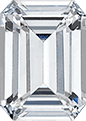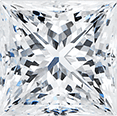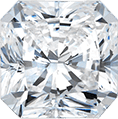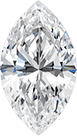
What Is a Portrait Cut Diamond?
A portrait cut diamond is a very thin, flat slice you see straight through. What it looks like, how it wears, and what we stock instead.
A portrait cut diamond is an extremely thin, flat slice of diamond with a very large table and almost no depth, cut so that you can see straight through it like a pane of glass. The style takes its name from Mughal and Georgian jewellery, where such slices were laid over miniature painted portraits. It is chosen for its clear, windowed look rather than for sparkle.
What does a portrait cut diamond look like?
A portrait cut diamond looks like a flat transparent tile rather than a conventional gemstone. It has one broad polished top facet — the table — that covers nearly the whole face of the stone, a narrow bevelled edge, and a flat or very shallow back. Depth is measured in fractions of a millimetre where a normal brilliant would be several millimetres deep. Because there is no pavilion beneath to bounce light back at you, you look through a portrait cut and see the skin or the setting behind it, which is exactly the effect it is prized for.
Where does the portrait cut come from?
The portrait cut originates in Indian and Mughal lapidary work, where flat diamond slices were used as protective, transparent covers over painted miniatures set into rings and pendants. The same idea reached European jewellery in the seventeenth and eighteenth centuries, where flat “table cut” and portrait-style stones were laid over enamel work, hair mementoes and painted portraits. The style has come back into fashion with modern designers who want a diamond that reads as quiet and architectural rather than sparkly.
Does a portrait cut diamond sparkle?
A portrait cut diamond barely sparkles, and that is deliberate. Sparkle in a diamond comes from light entering the top, striking angled facets in the pavilion below, and being thrown back at the eye. A portrait cut has almost no pavilion and almost no facets, so most light passes straight through instead of returning. What you get instead is a glassy sheen, a bright edge where the bevel catches light, and a soft flash when the stone tilts. If sparkle is what you want, a portrait cut is the wrong choice and a round brilliant is the right one.
How big does a portrait cut diamond look for its carat weight?
A portrait cut looks dramatically larger than its carat weight suggests, because nearly all of the material is spread across the face rather than hidden under the setting. Carat is weight, not size, and a shallow stone spends its weight on width. A portrait cut can cover the face-up area of a stone several times its weight in a conventional cut. That is the single strongest practical argument for the style: maximum visible diamond for minimum weight, and therefore for a lower price per millimetre of coverage.
Is a portrait cut diamond durable enough for everyday wear?
A portrait cut diamond is hard but not tough, and it needs a protective setting. Diamond scores 10 on the Mohs hardness scale, so a portrait cut will not scratch. What it can do is chip, because the stone is thin and its edges are unsupported. Diamond has cleavage planes along which a sharp knock can split it, and there is far less material to absorb that knock than in a deep brilliant. Set in a rub-over or full bezel that wraps the whole edge in metal, a portrait cut wears perfectly well. Set in open claws, it is exposed.
What colour and clarity should a portrait cut diamond be?
Colour and clarity both show more in a portrait cut than in almost any other style, so grade for them carefully. You are looking through the stone rather than at reflected light, which means inclusions sit in plain view like marks on a window. A brilliant cut hides an SI1 inclusion behind its own sparkle; a portrait cut displays it. The same is true of body colour. If you want a portrait cut to look clean, aim higher on clarity than you would for a round, and accept that this narrows the choice and raises the price per stone.
How does a portrait cut compare with a rose cut or a step cut?
Portrait cuts, rose cuts and step cuts are all “low-sparkle” alternatives to a brilliant, but they behave differently. This table sets out how each one actually reads on the hand.
| Cut | Back of the stone | Light behaviour | Hides inclusions? | Face-up size for the weight |
|---|---|---|---|---|
| Portrait cut | Flat, almost no depth | Transparent, glassy, you see through it | No — shows everything | Very large |
| Rose cut | Flat, with a domed faceted top | Soft, glowing, candlelit flashes | Poorly | Large |
| Step cut (emerald, asscher, baguette) | Angled, with long parallel facets | Broad “hall of mirrors” flashes | Poorly | Moderate |
| Round brilliant | Deep, 58 facets | Maximum sparkle and fire | Well | Small for the weight |
Can you get a portrait cut in a lab-grown diamond?
Portrait cuts can be produced in laboratory-grown diamond, and the shallow shape actually suits how lab-grown rough is made, particularly the flat plates that come out of chemical vapour deposition growth. CarbonstoneUK does not stock portrait cut diamonds as a standard line, and we will not pretend otherwise. If you want one, we make bespoke pieces at no extra design cost, and we would source and set the stone for you. Be prepared for a longer lead time than an in-stock ring, because thin slices are cut to order.
What do we stock instead?
The closest style we hold to a portrait cut is the rose cut, which shares the flat back and the soft, non-brilliant character while being a little more forgiving to wear. We currently stock two rose cut designs. If a portrait cut appeals because of the antique, understated look rather than the transparency specifically, a rose cut is worth handling before you commit to a bespoke slice.
Frequently asked questions
Is a portrait cut the same as a diamond slice?
They overlap but are not identical. A diamond slice is simply a thin cut taken through a rough crystal, often left with natural texture, visible inclusions and an irregular outline. A portrait cut is a slice that has been properly shaped, polished to a clean geometric outline and given a bevelled edge, so it reads as a finished gemstone. Every portrait cut is a slice; not every slice is a portrait cut.
Is a portrait cut the same as a table cut?
They are closely related. A table cut is one of the oldest diamond cuts, made by grinding a flat top onto an octahedral crystal, and it still has real depth beneath. A portrait cut takes the same flat-topped idea much further, removing nearly all the depth so the stone becomes transparent. Historic pieces sometimes use the terms loosely, so check the actual measurements rather than the label.
Why do portrait cut diamonds cost less per carat?
They cost less per carat mainly because they weigh so little for their face-up area, and because the cutting yield from suitable rough can be good. That does not automatically make them cheap: high clarity is essential in a see-through stone, the cutting is specialist, and the bezel setting needed to protect the edge takes more metal and more bench time than a simple claw head. Judge the cost of the finished piece, not the price per carat.
Can a portrait cut diamond be used in an engagement ring?
Yes, and it makes a striking one, provided the setting protects the edge and both of you understand the trade-off. It will not sparkle like a brilliant, it will show every inclusion, and it needs a rub-over or bezel setting for daily wear. For someone who wants something quiet, flat against the finger and unlike anything else in the room, that trade-off is the whole point.
How should a portrait cut diamond be set?
A full bezel or rub-over setting, where a continuous collar of metal wraps the entire edge of the stone, is the standard and the sensible choice. It supports the thin perimeter where chips start, sits flat against the finger, and suits the architectural look. Open claws leave the vulnerable edge exposed and are best avoided for a stone this shallow.
Do portrait cut diamonds come with certificates?
They can be certified like any other diamond, and a report will state the measurements, colour and clarity. One thing to expect: unusual and shallow cuts are not given a cut grade in the way a round brilliant is, because the standard cut-grading system is built around brilliant proportions. Judge a portrait cut on measurements, clarity and your own eyes rather than on a cut grade.
Do portrait cut diamonds get dirty faster?
They show dirt sooner rather than gather it faster. Because you look through a portrait cut, a film of hand cream or soap on the back is visible immediately, where a brilliant would hide it behind its own sparkle for weeks. Warm water, washing-up liquid and a soft brush once a fortnight keeps one looking as it should.
If a quieter diamond appeals
CarbonstoneUK is a lab-grown diamond jeweller based in North Harrow, London, hand-making in solid gold and platinum. If the flat, antique character of a portrait cut is what draws you, our rose cut pieces are the nearest thing we hold: the Bezel Rose Cut Eternity Band in Sterling Silver at £1,611 shows exactly how a bezel protects a shallow stone, and the Stackable Rose Cut Wedding Band in Sterling Silver at £489 is the easiest way to try the look. For a rose cut as a centre stone, the Vintage Pear Rose Cut Engagement Ring at £1,237 pairs the flat back with a pear outline. Prices correct at the time of writing. Browse all engagement rings or our wedding rings and bands. Free IGI certificate on centre stones, free insured UK delivery, 30-day returns, and bespoke design at no extra design cost if you want a genuine portrait cut made for you.
Ready to find your perfect ring?
Explore our lab-grown diamond collection or book a virtual appointment with our team.