How Big Can Lab-Grown Diamonds Get? 3-5 Carat Sizes and Prices
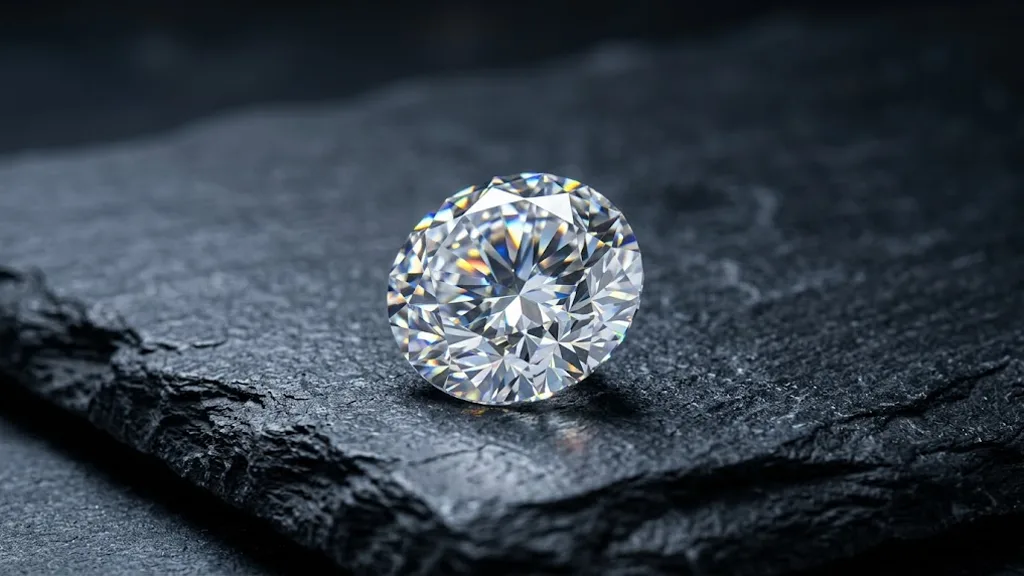
Lab-grown diamonds can be grown well past 5ct. Genuine 3-5ct centre stones are available, and per-carat cost climbs sharply across that range.
Lab-grown diamonds have no fixed size ceiling the way mined stones effectively do, since growers control the process rather than relying on what nature happened to form. In practice, 3-5 carat centre stones are genuinely available and typically cost a fraction of an equivalent-quality natural diamond, though price still climbs sharply per carat as clean, gem-quality rough gets rarer at larger sizes.
How big can a lab-grown diamond actually get?
A lab-grown diamond’s size is set by the growing process, not a hard physical limit, since growers control temperature, pressure and gas mix for as long as a run continues. Crystals well beyond 5 carats have already been grown successfully. Everyday availability is limited by practicality: longer runs risk strain or inclusions forming part-way through, so fewer of each batch survive clean enough to cut into a large stone. Very large diamonds, mined and lab-grown, do exist, but no verifiable public record names the largest lab-grown diamond made.
How much does a 3 carat lab-grown diamond cost?
A 3 carat lab-grown diamond costs a small fraction of an equivalent natural stone of matching colour and clarity, though the exact figure depends on quality. We do not hold 3 carat centre stones as a fixed listing; a design such as our solitaire emerald cut engagement ring is built around one to order, priced separately from its standard listing, at no extra design cost. Colour, clarity and cut still move the price at this weight, the same as any carat.
For a full breakdown of what actually drives a 3 carat price up or down, including real lab-grown and natural guide figures by quality tier, see our dedicated guide to how much a 3 carat emerald cut diamond costs. The same logic carries across shapes, not just emerald cuts.
How much does a 4 carat lab-grown diamond cost?
A 4 carat lab-grown diamond costs noticeably more than a 3 carat stone of matching quality, because clean rough gets harder to grow at this size. This is a single centre stone for an engagement ring, a different idea from our separate guide to a 4 carat wedding ring, where four carats is the combined weight of many small stones set around a band, not one large stone. A 4 carat centre stone is sourced and quoted individually, not held as stock.
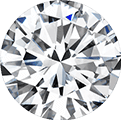
Size on the hand matters as much as the number on the certificate at this weight. A well-cut round brilliant close to 4 carats measures roughly 10.4mm across, noticeably larger than the 9.4mm typical of a 3 carat round, and browsing our round cut lab-grown diamonds gives a feel for how that proportion sits in a finished ring even before a centre stone this size is added.
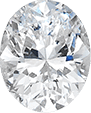
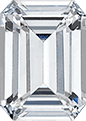
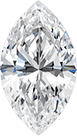
The table below sets out the approximate face-up diameter for a well-cut round brilliant at 3, 4 and 5 carats, so you can picture the size before pricing it; an emerald, oval or marquise cut of the same weight will generally look larger across the finger.
| Carat weight | Approximate diameter |
|---|---|
| 3 ct | 9.4mm |
| 4 ct | 10.4mm |
| 5 ct | 11.2mm |
How much does a 5 carat lab-grown diamond cost?
A 5 carat lab-grown diamond costs more again than a 4 carat stone of matching quality, for the same rarity reasons that separate every carat step above about 2 carats. A heavier stone also needs a sturdier setting, which is one reason a solitaire round cut engagement ring in platinum is a sensible starting design for a stone this size, built to order around it rather than sold with it fixed. Platinum holds a large stone more securely than a thinner gold claw of similar visual weight.
Why does price rise so sharply between 3 and 5 carats?
Price rises so sharply between 3 and 5 carats because clean, gem-quality rough gets rarer the larger the target size, in both lab-grown and natural diamonds. A lab-grown crystal must sit in a stable growing environment far longer to reach 5 carats than 3, and the longer that run continues, the greater the chance of strain or trapped carbon forming. A natural stone faces the same problem, built up over geological time instead of weeks. Our 1.5 carat emerald cut size guide shows this curve starting below 3 carats.
Fewer clean crystals survive each large growth run than a small one, so every large stone that does come out eye-clean is effectively carrying the cost of the attempts that did not. Shape changes this curve too: elongated cuts use rough more efficiently than round brilliants at any weight, which our guide to which diamond cut looks the smallest sets out in full.
Are larger lab-grown diamonds still classed as real diamonds?
Yes, a larger lab-grown diamond is still a real diamond regardless of carat weight, because it shares the same carbon crystal structure, hardness and optical properties as a mined stone; only its origin differs. A 3-5 carat lab-grown stone raises exactly the same certification question as any smaller size, and our separate guide on whether GIA grades lab-grown diamonds covers what to expect on the paperwork. We include a free IGI certificate on centre stones as standard, whatever the carat weight.
Should you buy the largest carat weight you can afford?
Buying the largest carat weight you can afford is not automatically the right call, because the setting has to be built to carry that stone safely, and the metal it sits in is the other half of the budget. Gold purity is a genuine factor here alongside the centre stone itself; our guide to whether 18ct gold suits a wedding ring explains why softer, higher-purity golds need thicker claws under a heavier stone.
A 3-5 carat stone also changes daily practicalities worth thinking through before committing the budget, including travel. If you are planning to wear a ring this size through an airport, our guide to wearing a wedding ring through airport security explains whether a larger stone is treated any differently at the scanner.
Every ring we make is hand-finished in our North Harrow workshop, and a bespoke centre stone of any carat weight carries no extra design fee. You can see ready-made starting points, such as a solitaire round cut engagement ring in rose gold, across our full engagement ring collection, with free insured UK delivery and 30-day returns on everything we make.
Frequently asked questions
Is a 5 carat lab-grown diamond real?
Yes, a 5 carat lab-grown diamond is a real diamond in every measurable sense. It shares the same carbon crystal structure, hardness and sparkle as a mined 5 carat stone, and it is graded on the same colour and clarity scales by independent laboratories such as IGI and GIA.
How much is a 3.5 carat lab diamond?
It sits between the 3 and 4 carat price points rather than exactly halfway, because cost accelerates with size rather than rising in a straight line. We do not hold a fixed 3.5 carat listing; a stone this weight is sourced and quoted individually, based on colour, clarity and cut.
What is the biggest lab-grown diamond grown?
No reliable, independently verifiable public record exists for the single biggest lab-grown diamond ever grown. Growers have produced rough well beyond 5 carats, but claims of a single largest stone are not something we can confirm from a citable source, so we do not repeat a figure.
Does carat size affect diamond quality?
No, carat weight does not set colour, clarity or cut, which are graded on their own scales regardless of size. A large stone is not automatically lower quality. However, inclusions and colour tints are easier to see in a bigger stone, which is why buyers often choose a higher clarity grade from 3 carats upward.
Can you get a 10 carat lab-grown diamond?
Yes, growth at that scale exists among specialist producers, though we cannot point to a citable public record for exactly how large lab-grown crystals have reached. A 10 carat centre stone sits well outside standard bespoke sizes and needs a dedicated sourcing conversation rather than a standard quote.
Is a 4 carat diamond too big for daily wear?
No, not inherently. A well-set 4 carat centre stone can be worn daily, but its extra height and weight mean the claws and shank need to be built more substantially than for a small stone, which is a setting decision made at the design stage.
Ready to find your perfect ring?
Explore our lab-grown diamond collection or book a virtual appointment with our team.