How to Clean a Diamond Eternity Ring Without Loosening the Stones
A safe five-minute method for cleaning a diamond eternity ring at home, plus the cleaning methods that can loosen small stones.
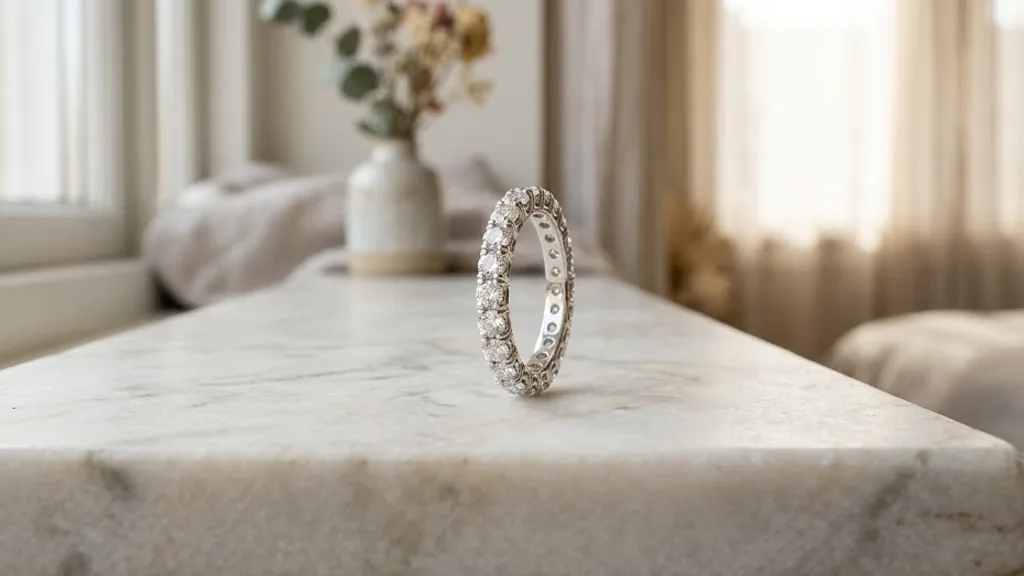
An eternity ring gets dirty faster than almost any other ring you own, and it is harder to clean properly. Dozens of small stones, dozens of small gaps, and settings that hold on to soap and hand cream. The good news is that the job takes five minutes with a soft toothbrush. The bad news is that a few popular cleaning methods can genuinely loosen stones.
Why eternity rings dull so quickly
Diamonds attract grease. Not metaphorically — the surface of a diamond is lipophilic, meaning oil clings to it readily. Hand cream, soap residue, cooking fat and skin oil build a thin film that scatters light instead of returning it.
On a solitaire, one large stone catches the light from a wide surface and a film shows gradually. On an eternity ring, every gap between every stone becomes a trap. Grime collects underneath, where you cannot see it, and the whole ring looks flat long before you notice why.
This has nothing to do with the diamonds being lab-grown. A lab-grown diamond is chemically the same material as a mined one and behaves identically. They do not cloud over, ever — what you are seeing is dirt.
The method that works
You need warm water, ordinary washing-up liquid, a soft-bristled toothbrush kept only for this, and a lint-free cloth.
- Block the plughole. Do this first, every time. More rings are lost to drains than to thieves.
- Mix the bath. A small bowl of warm — not hot — water with a few drops of washing-up liquid.
- Soak for 20 to 30 minutes. This loosens the film so you barely have to scrub.
- Brush gently. Work the toothbrush over the top of the stones, then underneath the band and behind the settings. The underside is where the dirt is.
- Rinse in a bowl of clean warm water, not under a running tap.
- Dry properly. Pat with a lint-free cloth and leave it to air for a few minutes. Water sitting between stones leaves marks.
Once a month is plenty for most people. Once a fortnight if you use a lot of hand cream.
What not to do
Do not use an ultrasonic cleaner on a claw-set eternity ring. This is the one that causes real damage. Ultrasonic machines work by driving high-frequency vibrations through liquid. On a ring with dozens of small stones held by fine claws, those vibrations can shift a stone that was already slightly loose. Bezel and channel settings tolerate ultrasonics much better, but if you are unsure of the setting type, do not risk it.
Do not use toothpaste. It is abrasive. It will scratch gold and, over time, dull the polish on the band.
Do not use bleach or chlorine. Chlorine attacks the alloys in gold and can weaken solder joints and claws. This includes swimming pools and hot tubs — take the ring off.
Do not use boiling water. Sudden temperature change is unnecessary and does nothing helpful.
Do not scrub with anything stiff. A hard brush will not clean better and will scratch the metal.
| Method | Verdict |
|---|---|
| Warm water and washing-up liquid | Safe, effective, use this |
| Soft toothbrush | Safe and necessary for the gaps |
| Ultrasonic cleaner | Risky on claw settings; ask your jeweller first |
| Toothpaste | Abrasive — avoid |
| Bleach or chlorine | Damages gold alloys — never |
| Steam cleaner | Professional use only |
Check the stones while you are there
Cleaning is the natural moment to inspect the ring, and on an eternity band this matters more than on any other design. There are simply more stones to lose.
Hold the ring close to your ear and tap it gently. A faint rattle means a stone has moved. Then run a fingernail lightly along the row — a stone that is proud of its neighbours, or one that catches, needs attention.
Look at the claws under good light. Worn claws look thin and rounded rather than crisp. That is normal after years of wear and is a straightforward repair, but only if it is caught before a stone drops out.
Settings differ enormously here. A bezel rose cut eternity band, where a rim of metal wraps each stone, needs far less watching than a fine claw-set pavé design.
Metal-specific notes
White gold is plated with rhodium to give it its bright white finish. That plating wears, and on a stone-set band it wears fastest on the edges. When the ring starts looking faintly warm or yellowish, it needs re-plating, not cleaning. Every few years is normal.
Platinum does not need plating. It develops a soft matt patina from thousands of tiny scratches. Many people prefer it; if you do not, a jeweller can re-polish it.
Yellow and rose gold hold their colour permanently. A gentle polish with a jeweller’s cloth restores shine, but keep the cloth off the stones and settings.
Sterling silver tarnishes. A silver polishing cloth handles it, though you need to work carefully around the settings. A band such as our baguette cut half eternity band in sterling silver will need more regular attention than a gold equivalent.
When to take it off
The cheapest maintenance is prevention. Take the ring off for swimming, gardening, gym sessions with weights, deep cleaning with bleach-based products, and applying hand cream or fake tan.
Put it in the same place every time. Most rings are lost at home, not out.
Professional cleaning and checks
Have an eternity ring checked professionally once a year. A jeweller will inspect every setting under magnification, tighten anything that has moved, and clean it far more thoroughly than you can at home. This is routine and inexpensive, and it is the single most effective way to avoid losing a stone.
Our rings are hand-made in North Harrow in solid gold, platinum or sterling silver, with lab-grown diamonds and a free IGI certificate on centre stones. If a band needs attention, talk to us.
A weekly two-minute version
The full soak is a monthly job. Between times, a quicker routine keeps a band from ever getting properly dirty.
Run warm water over the ring for a few seconds while rubbing it gently with your fingers, then dry it thoroughly with a soft cloth, paying attention to the underside of the stones. That is genuinely enough to stop the film building. Most rings that look dull have simply never had this done.
Keep the ring off until any hand cream has fully absorbed. Cream applied over a ring goes straight underneath the stones, which is the one place you cannot easily reach.
Storage between wears
Diamonds scratch everything, including other diamonds and every metal you own. An eternity ring thrown into a dish with other jewellery will scuff the gold on whatever it lands against, and pick up marks itself.
Store it separately — a soft pouch, or a lined box with individual slots. Keep it away from the bathroom, where humidity and drains are both hazards, and away from the kitchen sink for the same reason.
If you take the ring off during the day, one consistent spot beats a different safe place each time. Most rings are lost at home rather than out.
Frequently asked questions
How often should I clean my eternity ring?
Roughly once a month at home, plus a professional check once a year. More often if you use hand cream daily.
Can I use an ultrasonic cleaner on a diamond eternity ring?
Only if the stones are bezel or channel set and you know the settings are sound. On fine claw-set pavé, the vibration can loosen a stone that was already slightly weak. When in doubt, do not.
Why does my eternity ring look cloudy?
Almost always a film of soap and skin oil, particularly underneath the stones. Lab-grown diamonds do not cloud, discolour or lose brilliance over time. A proper soak and brush will fix it.
Is it safe to clean around loose stones?
No — stop and take it to a jeweller. Brushing around a loose stone is a good way to lose it down the sink.
Can I clean a full eternity ring the same way?
Yes, and pay extra attention to the underside, which sits against your palm all day and collects the most residue.
For more on the material itself, see our guide to cleaning lab-grown diamonds. To see how different settings compare in person, browse our eternity and wedding band collection or the emerald cut bands.
More guides on this topic
Ready to find your perfect ring?
Explore our lab-grown diamond collection or book a virtual appointment with our team.