Are Pear Cut Diamonds More Expensive? An Honest Price Guide
Pear cut diamonds usually cost less per carat than round. Here is why, when a pear ring still costs more, and what to check before you buy.
Short answer: no. Pear cut diamonds are usually cheaper than round diamonds of the same weight and quality, not more expensive. That surprises a lot of people, because pears look dramatic and unusual, and we tend to assume unusual means costly.
But “cheaper per carat” is not the same as “cheaper ring”. There are real reasons a pear ring can end up costing more than you expected, and they have nothing to do with the price of the stone. This guide walks through both sides honestly.
What a pear cut actually is
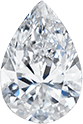
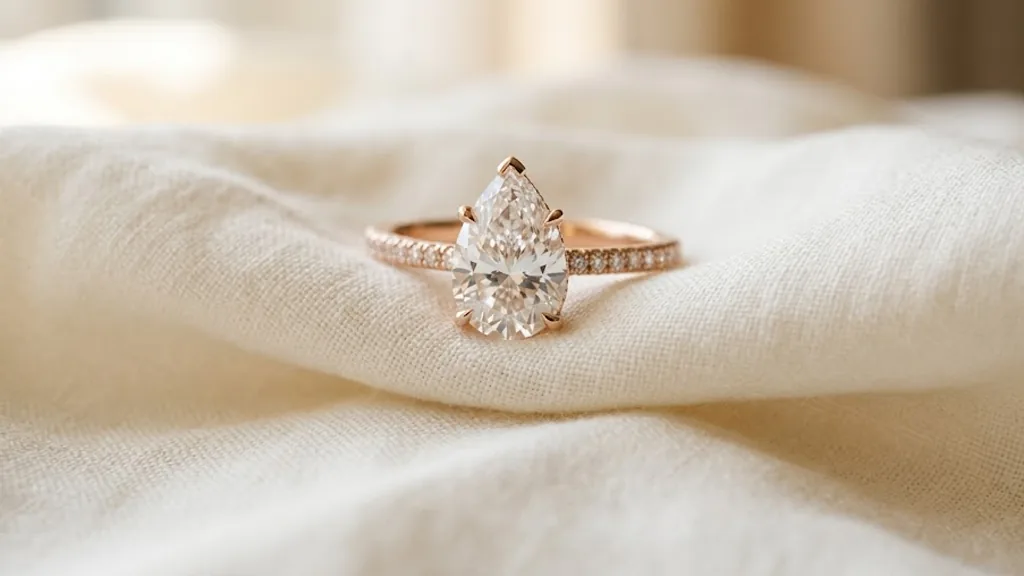
A pear cut — also called a teardrop — is a diamond with a rounded end and a single point. It is essentially a round brilliant and a marquise blended together. It has the same faceting family as a round, which is why it sparkles brightly rather than flashing in broad steps like an emerald cut.
Pears belong to a group jewellers call fancy shapes, which simply means any shape that is not round. That single fact explains most of the pricing.
Why pear cuts cost less per carat than rounds
Two reasons, and both are about the rough crystal the stone is cut from.
Waste. Cutting a round brilliant throws away a very large share of the original rough — more than half is common. Fancy shapes such as pears, ovals and marquises are designed to follow the natural shape of the rough more closely, so less material is lost. Less waste means a lower cost per finished carat.
Demand. Round is by far the most requested shape in Britain and always has been. High demand supports a higher price. Pears are loved but they are a minority choice, and minority choices are priced accordingly.
Put those together and, as a rule of thumb in the trade, a pear of the same carat weight, colour and clarity will typically be priced below a comparable round. This is a long-standing pattern, not a measured figure, and it applies to both lab-grown and natural stones.
Where pears look bigger for the same money
This is the part that matters most to a first-time buyer.
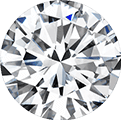
Carat is a measure of weight, not size. A pear spreads its weight along a long axis, so it covers more finger than a round of the same weight. A one carat round measures roughly 6.4mm across. A one carat pear is typically somewhere around 10mm long and 6.5mm wide — noticeably longer on the hand.
So a pear gives you two savings at once: a lower price per carat, and more visible size from each carat you buy. If your goal is maximum presence for a set budget, pear is one of the strongest shapes in the whole catalogue.
So when does a pear ring cost more?
Three situations, and they are all about the setting rather than the stone.
- The point needs protecting. A pear has one sharp tip, and that tip is the most vulnerable part of the ring. It needs a V-shaped prong (a small metal claw shaped like a V) to shield it. That is extra work compared with the four simple prongs on a round.
- Symmetry has to be perfect. A pear is not symmetrical top to bottom, so any wobble in the shoulders is obvious. Setting one dead straight on the finger takes more care, and a badly set pear looks crooked forever.
- Wedding bands are harder. A pear points down the finger, so a straight wedding band often will not sit flush against it. Many people need a curved or chevron band, which is a more complex piece to make than a plain one.
None of these are enormous costs, but they explain why two rings with identical stones can carry different prices.
Pear versus round: the honest comparison
| Pear cut | Round brilliant | |
|---|---|---|
| Price per carat | Generally lower | Generally the highest of any shape |
| Size on the finger per carat | Larger — spreads lengthways | Compact |
| Sparkle | Bright, with a lively flash toward the point | The brightest of all shapes |
| Setting complexity | Higher — needs a V-prong on the tip | Lowest — simple prongs |
| Wedding band fit | Often needs a curved or chevron band | Straight band sits flush |
| Things to watch | Bow-tie shadow, crooked symmetry, chipped point | Very little — the most forgiving shape |
The one flaw to check on every pear
Elongated shapes can show a dark band across the middle of the stone, shaped like a bow tie. It is caused by the facets blocking light in the centre. Every pear has one to some degree; the question is whether you can see it.
A faint bow tie that appears only at certain angles is normal and fine. A heavy dark band that you notice immediately is a badly cut stone, and no certificate will warn you about it — bow ties are not graded. Always look at the actual stone or a real photograph, never an illustration.
The second thing to check is the outline. Hold the pear so the point faces you and see whether the two shoulders match. Uneven shoulders are the most common flaw in cheap pears.
Our pear rings and what they cost
All prices below are correct at the time of writing, and every ring is hand-made with lab-grown diamonds and comes with a free IGI certificate on the centre stone.
| Ring | Style | Price |
|---|---|---|
| Stackable Pear Cut Engagement Ring | Slim, pavé set, wears well beside other rings | £503 |
| Toi et Moi Pear Cut Engagement Ring in White Gold | Two stones side by side — “you and me” | £685 |
| Cluster Pear Cut Engagement Ring in Sterling Silver | Vintage cluster of small pears | £729 |
Compare those against the round rings in the same collection and you will see the pattern hold: pear designs sit at or below the equivalent round designs. Pear is our second deepest shape after round — around eleven designs. Browse them all in our pear cut collection, or see the wider range in engagement rings.
How to buy a pear well
- Decide your outline first. Pears vary from short and plump to long and slender. Neither is better, but they look very different on a hand. Look at several before choosing.
- Insist on a V-prong. If a pear ring does not protect the point, walk away. The tip is the thinnest part of the stone and the easiest to chip.
- Do not over-buy clarity. An eye-clean VS2 or SI1 looks identical to a flawless stone once set, and costs far less.
- Plan the wedding band early. If you want a matching band, choose the engagement ring and band together so they fit properly.
- Choose lab-grown. The stone is chemically and optically identical to a mined diamond, at a fraction of the price. That saving is the easiest one available.
Frequently asked questions
Are pear cut diamonds more expensive than round?
No. Weight for weight and quality for quality, pears are usually priced below rounds, because they waste less rough when cut and are in lower demand. A finished pear ring can still cost more than a plain round ring if the setting is more complex, but the stone itself is normally the cheaper of the two.
Do pear cut diamonds look bigger?
Yes, for the same carat weight. A pear spreads its weight along its length, so it covers more finger than a round. That is one of the main reasons people choose it.
Are pear cut diamonds hard to look after?
Not hard, but they need a sensible setting. The point must be covered by a V-prong. After that, a pear needs the same care as any diamond ring: take it off for heavy work, and have the prongs checked every year or two.
Which way should the point face?
Traditionally the point faces the fingertip, which makes the finger look longer. Some people prefer it facing the wrist. There is no rule — wear it the way you like it, and tell your jeweller before the ring is made.
Can you make a pear ring that is not on your website?
Yes. We design and hand-make bespoke rings in solid gold and platinum with no extra design cost. If you have a particular outline, carat weight or setting in mind, send it over and we will price it properly.
Pear is the shape people choose when they want something recognisable but not identical to everyone else’s. Every order comes with free insured UK delivery and 30 days to return, so you can see how the outline sits on the hand before you commit.
More guides on this topic
Ready to find your perfect ring?
Explore our lab-grown diamond collection or book a virtual appointment with our team.