What Are the Types of Diamond Cuts? A Plain-English Guide
There are only three families of diamond cut. Choose the family first and fourteen shapes narrow to three. Every shape compared.
Diamond shopping throws a lot of words at you very quickly: brilliant, step, mixed, radiant, Asscher, rose, cushion, lozenge. Most guides list them and leave you no wiser about which one you want.
So let us do it differently. There are really only three families of diamond cut, and once you know which family you like, choosing a shape within it is easy and enjoyable rather than daunting.
First, clear up “cut” — it means two things
This trips everyone up, because the jewellery trade uses the same word for two different ideas.
- Cut as shape. The outline of the stone when you look down at it: round, oval, pear, emerald. This is what people usually mean by “what cut is it?”
- Cut as quality. A grade on the certificate describing how well the stone was cut — its angles, proportions and finish. This decides how brightly it performs. We cover it separately in our guide to what “ideal cut” means.
This article is about the first meaning: the shapes and the faceting patterns behind them.
The three families
1. Brilliant cuts — made to sparkle
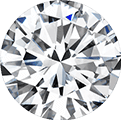
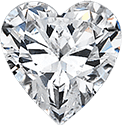
Brilliant cuts use dozens of small triangular and kite-shaped facets arranged to bounce light straight back at you. They produce fine, fizzy sparkle and lots of coloured flashes.
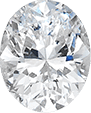
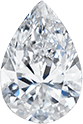
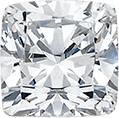
Shapes in this family: round, oval, pear, marquise, heart, radiant, cushion and most trillion cuts.
If someone says “I want it to sparkle”, this is the family they mean.
2. Step cuts — made to look clean
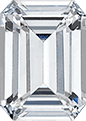
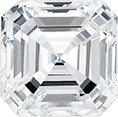
Step cuts have long, straight, parallel facets running around the stone like a staircase. Instead of hundreds of tiny flashes, you get broad, calm flashes of white light, and a clear view down into the stone.
Shapes in this family: emerald, Asscher, baguette, and antique cuts such as the French cut. We look at these in detail in our guide to step cut diamonds.
If someone says “I want something elegant and understated”, this is the family.
3. Rose and antique cuts — made to glow
The rose cut has a flat bottom and a domed, faceted top. There is no pointed pavilion at all. It gives a soft, watery glow rather than flash, and it looks old, because it is old — the pattern dates from the sixteenth century.
If someone says “I don’t want it to look like everyone else’s ring”, start here.
Every shape, at a glance
| Shape | Family | Character | In our collection |
|---|---|---|---|
| Round | Brilliant | Maximum sparkle. The benchmark for every other shape | 20 designs |
| Pear | Brilliant | Teardrop. Elongates the finger, looks large for its weight | 11 designs |
| Emerald | Step | Long rectangle with cut corners. Calm, architectural | 6 designs |
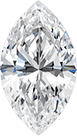
| Marquise | Brilliant | Pointed oval. Covers more finger per carat than anything else | 6 designs |
| Baguette | Step | Small rectangle. Used in rows for clean, linear detail | 4 designs |
| Hexagon | Mixed | Six-sided and geometric. Modern and unusual | 4 designs |
| Cushion | Brilliant | Soft square with rounded corners. Warm, romantic | 3 designs |
| Oval | Brilliant | Round sparkle in a stretched outline. Looks larger than a round | 3 designs |
| Heart | Brilliant | Unmistakable. Needs precise cutting to look right | 2 designs |
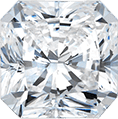
| Radiant | Brilliant | Squarish outline with brilliant faceting. Very lively | 2 designs |
| Rose cut | Rose | Flat back, domed top. Soft antique glow | 2 designs |
| Asscher | Step | Square step cut with clipped corners. Art Deco elegance | 1 design |
| Lozenge | Step | Diamond-shaped outline. Rare and graphic | Held in a small number of designs |
| Dutch marquise | Mixed | A distinctive variation on the pointed marquise outline | Held in a small number of designs |
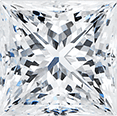
Two honest notes. We do not stock princess cut or old European cut diamonds, so if you have your heart set on either, we would rather tell you now than send you hunting through the collection. And if a shape is not in that table, we do not currently hold it — but we design bespoke pieces at no extra design cost, so it can still be made.
Choosing a shape: four questions that actually help
How much sparkle do you want? Maximum means round. A lot, with a different outline, means radiant, cushion or oval. Calm and clean means emerald or Asscher.
How much size do you want for the money? Elongated shapes — marquise, pear, oval — spread wider for the same carat weight. Compact shapes look smaller. We go through the numbers in our guide to which diamond cut looks the smallest.
How much does clarity matter to you? Step cuts are see-through by design, so small inclusions show up more readily. With an emerald or Asscher, put money into clarity. Brilliant cuts hide inclusions well, so you can be more relaxed.
How rough is life on your hands? Pointed shapes — pear, marquise, heart — have tips that need protecting with a well-designed setting. Round, oval, cushion and emerald have no vulnerable points.
Three good places to start
If you want to see the three families in one glance, these are the clearest examples in the collection:
- Brilliant: the Solitaire Round Cut Engagement Ring at £657 — nothing between the stone and the light.
- Elongated brilliant: the Solitaire Oval Cut Engagement Ring at £557 — round sparkle, more presence on the finger.
- Step: the Solitaire Emerald Cut Engagement Ring at £672 — quiet, linear and confident.
All prices correct at the time of writing. You can also filter the shop by shape directly: round, pear, emerald and the rest, or browse the whole engagement ring collection.
Frequently asked questions
What is the difference between a diamond cut and a diamond shape?
Shape is the outline — round, oval, pear. Cut, on a certificate, is a quality grade describing how well the stone was made. The trade uses “cut” loosely for both, which is why the two get confused.
Which diamond cut is the most popular?
Round, by a wide margin, and it has been for decades. It returns the most light and it suits almost every setting style. It is also the shape we hold the most of, with twenty designs.
Which cut gives the most diamond for the money?
Elongated shapes such as marquise, pear and oval spread wider for their carat weight, so more of what you paid for is visible from above.
Are some cuts harder to look after?
Pointed shapes need the most care, because a tip is the thinnest part of the stone and can chip if knocked. A good setting protects it. Round, oval, cushion and emerald cuts are the most forgiving day to day.
Can I have a shape you do not stock?
Yes. We design bespoke pieces at no extra design cost, so an unusual shape or a specific setting can be made rather than substituted for something similar.
Start with the family, not the name
If you remember one thing, make it this: decide whether you want sparkle, clean lines or an antique glow. That single choice narrows fourteen shapes down to three or four, and from there it becomes a pleasure rather than a decision.
Everything we make is hand-made in solid gold or platinum in North Harrow, London, with a free IGI certificate on the centre stone, free insured UK delivery and 30 days to return it if it is not right.
More guides on this topic
- What Is a Portrait Cut Diamond?
- What Is the Best Girdle Thickness for a Round Diamond?
- Zendaya’s Engagement Ring: The East-West Cushion Cut Explained
- Who Invented the Princess Cut? The Real, Slightly Tangled Story
- How Was the First Diamond Cut? A Short History of Diamond Cutting
- Can a Marquise Diamond Be Recut? What It Costs You
Ready to find your perfect ring?
Explore our lab-grown diamond collection or book a virtual appointment with our team.