How to Wear Stackable Wedding Rings (and Two Bands with One Engagement Ring)
Build a wedding ring stack that sits flat: ring order, two bands with one engagement ring, sizing, mixing metals and eternity band choices.
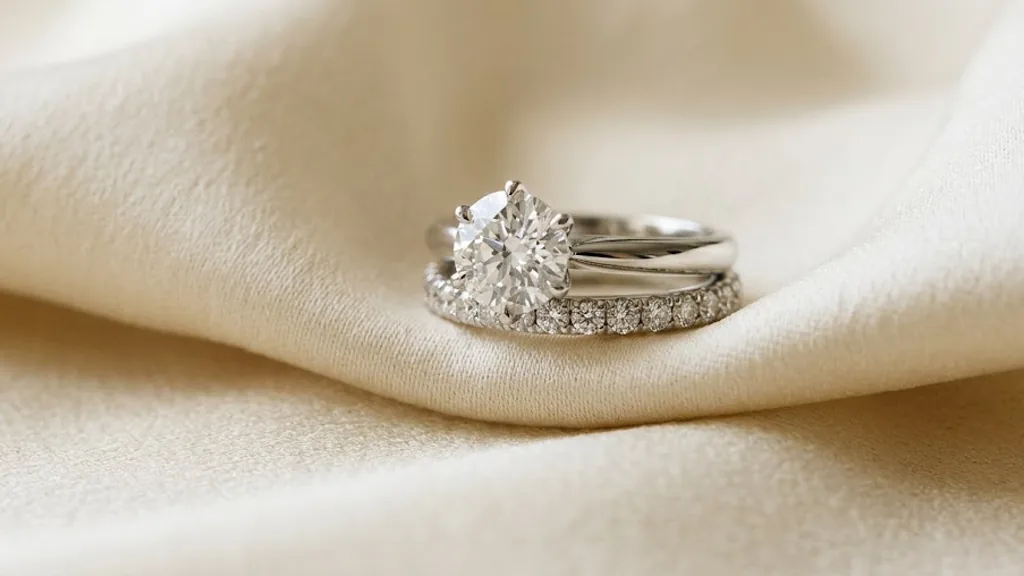
Stacking used to happen by accident. You got engaged, you got married, and then somewhere around a fifth or tenth anniversary a third ring arrived and had to go somewhere. Now people plan it from the start, and the result — two, three or four slim bands worn together — has become one of the most popular ways to wear a wedding ring.
It looks effortless. It is not entirely effortless. A stack that has been thought through sits flat, spins less and wears evenly. A stack that has not been thought through gaps, twists and grinds itself smooth in a couple of years. Here is how to get the first kind.
What “stackable” actually means
A stackable ring is simply a band designed to be worn alongside others rather than alone. In practice that means three things: it is narrow, usually between 1.5mm and 2.5mm; it has a low profile, so the stones do not stand proud and clash with the ring next door; and its edges are flat or gently rounded so it meets its neighbours cleanly.
A tall solitaire engagement ring is not stackable in this sense, but it can be the centrepiece that a stack is built around.
The three ways people wear a stack
One finger, all rings together. The classic. Everything on the fourth finger of the left hand, engagement ring in the middle or on top. This is the neatest look and the one that reads as a set.
Split across two fingers. Engagement ring and wedding band on the fourth finger, extra bands on the middle or index finger of the same hand. Useful when the fourth finger is getting crowded, and much more comfortable in hot weather.
Split across two hands. Wedding band alone on the left, engagement ring and eternity band together on the right. Popular with anyone whose work makes a tall ring impractical.
All three are correct. There is no etiquette rule being broken by any of them.
How to wear two wedding bands with one engagement ring
This is the most common stacking question we get, usually after an anniversary gift arrives. There are two sensible arrangements.
The sandwich. One band below the engagement ring (closest to your hand) and one above it. The engagement ring is framed on both sides, which locks it in place and stops it spinning — genuinely the most comfortable option if your engagement ring is top-heavy. It also looks deliberate rather than accumulated.
Both bands below. Wedding band first, closest to the hand, then the newer band, then the engagement ring on top. This keeps the engagement ring visible and unobstructed, and follows the traditional logic of the wedding band sitting closest to the heart.
| Arrangement | Best for | Watch out for |
|---|---|---|
| Band – engagement ring – band | Top-heavy or spinning engagement rings; a balanced, symmetrical look | The upper band must be low enough not to hide the centre stone |
| Band – band – engagement ring | Keeping the engagement ring the clear focal point | Three rings pushing upwards can feel tall against the knuckle |
| Engagement ring on the other hand | Practical jobs, warm climates, awkward ring shapes | Nothing much — it is the easy option for a reason |
If your engagement ring has a pointed stone — a pear or a marquise — a straight band will leave a wedge of empty finger against the point. The fix is a shaped band, curved or chevron, that follows the outline. Something like our Stackable Marquise Cut Wedding Band in Rose Gold (£789, correct at the time of writing) is designed to nest rather than sit awkwardly.
Getting the fit right
This is where most stacks go wrong. Every ring you add pushes the ones below it slightly, and the combined width behaves differently from any single band.
- Size for the stack, not the ring. Three 2mm bands together behave like one 6mm band. Wide bands feel tighter at the same nominal size, so you may need a half size up for the outer rings.
- Ask for comfort fit. Comfort fit means the inside of the band is gently domed rather than flat, so it slides over the knuckle more easily and sits softer on the finger. Across three rings, that difference is substantial.
- Measure warm. Try the whole stack on at the end of the day, when your hands are at their largest. A stack that only fits first thing in the morning is a stack you will not wear.
- Leave the top ring slightly looser. It has the least contact with your finger and the most opportunity to spin.
Mixing metals — and when not to
Mixed-metal stacks look wonderful and are entirely acceptable. Two practical points, though.
First, hardness. When two metals rub, the softer one loses material. Platinum against 9ct gold will slowly wear the gold. Yellow gold and rose gold in the same carat get along fine because they are close in hardness. If you want to mix, keep the carats similar — a 14ct rose gold band beside a 14ct yellow gold band is a safe pairing.
A reminder on what carat means for gold: 9ct is 37.5% pure gold, 14ct is 58.5%, 18ct is 75%. The higher the number, the richer the colour and the softer the metal.
Second, white gold. White gold is gold alloyed with white metals and finished with rhodium plating — a thin coat of a bright silvery metal that gives it its crisp white colour. That coating wears away over a few years and needs redoing, and it wears faster where a neighbouring ring rubs it. Perfectly manageable, but budget for re-plating if a white gold band sits in the middle of a busy stack.
Building a stack that looks designed
A few principles that hold up in practice:
- Odd numbers read better. Three rings look composed; two can look like something is missing.
- Vary the texture, not everything. One pavé band (rows of small diamonds held by tiny metal beads), one plain, one shaped — that has rhythm. Three near-identical bands just look like a mistake.
- Keep one anchor. One ring should be the loudest. If everything is a statement, nothing is.
- Match the stone shapes across the stack. Baguette diamonds — long, straight rectangles — beside more baguettes gives a clean architectural line. Round beside round gives a soft continuous shimmer. Mixing wildly different shapes can look busy on a narrow finger.
Some pieces from our collection that are built for stacking, prices correct at the time of writing:
| Band | Character | Price |
|---|---|---|
| Stackable Baguette Cut Three Quarter Eternity Band | Straight-edged, architectural, sparkle three quarters of the way round | £1,061 |
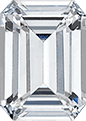
| Stackable Emerald Cut Half Eternity Band | Long, calm flashes rather than fine glitter; resizable | £770 |
| Stackable Marquise Cut Wedding Band in Rose Gold | Pointed stones, warm rose gold, nests against shaped rings | £789 |
Browse the whole wedding rings collection, or filter to baguette cut designs if you want that clean straight-line look.
Half, three-quarter or full eternity?
Worth understanding before you commit. A half eternity has diamonds across the top half of the band only. A three-quarter carries them further round. A full eternity has them the whole way.
From above — which is how you and everyone else actually see your hand — a half eternity looks the same as a full one. The practical difference is underneath: a half or three-quarter eternity has plain metal at the base, which means it can be resized later. A full eternity generally cannot, because there is no plain section to cut. In a stack you will wear for decades through changing finger sizes, that matters.
Looking after a stack
Rings worn together rub every time you move. That is normal, and it is why old stacks develop a soft, lived-in glow. To keep it slow: take the stack off for the gym, gardening and cleaning; wash it weekly in warm water with a drop of washing-up liquid and a soft toothbrush; store the rings separately rather than piled in a dish; and have the claws checked once a year.
Frequently asked questions
How many rings can I comfortably stack on one finger?
Three slim bands is comfortable for most people. Four is possible on longer fingers with very narrow bands. Beyond that the stack starts to sit high against the knuckle and gets caught on everything.
Can I add to my stack later?
Yes, and most people do — anniversaries and births are the usual prompts. Keep a note of the exact metal and carat of your existing rings so the new one can be matched. We design bespoke at no extra design cost, so a band made to sit against your existing rings is a straightforward request.
Do all the rings in a stack need to be the same width?
No, and varied widths often look better. What does need to match is the profile where they meet — flat edges against flat edges sit cleanly, while two domed bands will rock against each other.
Will stacking damage my engagement ring?
Not if the bands are low enough to clear the setting. The risk is a band whose stones sit high enough to knock against the centre stone’s claws. Check that the neighbouring rings touch metal to metal, not stone to claw.
Should the wedding band always be closest to my hand?
Traditionally yes, but comfort wins. If a shaped band only sits properly above the engagement ring, put it there. The order is a custom, not a rule.
If you already own one or two rings and want a third that genuinely belongs with them, send us a photo and the sizes. Matching a new band to existing rings is one of the most satisfying jobs we do, and there is no extra design charge for it.
More guides on this topic
Ready to find your perfect ring?
Explore our lab-grown diamond collection or book a virtual appointment with our team.