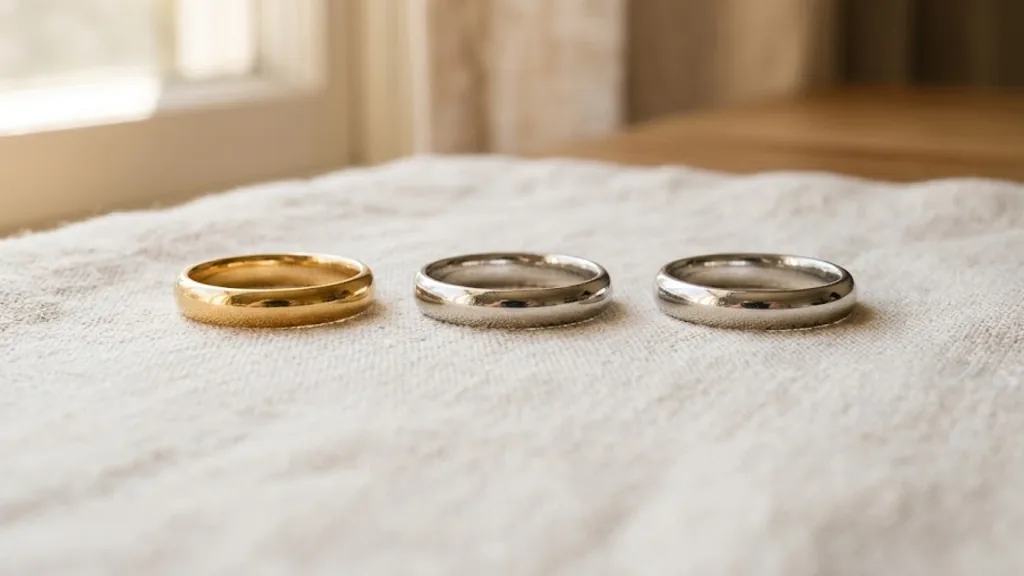
How to Clean a Gold Wedding Ring at Home
A ten-minute method with warm water and washing-up liquid, what never to use on gold, care for yellow, rose and white gold, and when to see a jeweller.
A gold wedding ring does not usually get dirty in any dramatic way. It just gets gradually duller, and because it happens slowly you stop noticing. Then one day you clean it properly, and the difference is startling.
The good news: cleaning gold at home takes about ten minutes, costs almost nothing, and needs no special equipment. The important part is knowing what to avoid, because a few popular “hacks” will genuinely damage a ring.
What is actually making it dull
Gold itself does not tarnish. What builds up on it is a film of ordinary daily life:
- Soap residue. The biggest culprit by far. Hand soap and shower gel leave a scum that dries on and traps everything else.
- Skin oils and hand cream. These pool underneath the ring and behind the stones, which is exactly where light needs to get in.
- Cosmetics and sunscreen. Thick, sticky and very good at coating a setting.
- Fine dust and fabric fibres. Caught in the gaps between claws and small stones.
Note where all that collects: underneath. A diamond takes in light through the top and sends it back out again. If the underside is filmed over, the stone looks grey no matter how clean the top looks. This is why a quick wipe with a cloth never really works.
The basic clean — do this once a week
You need warm water, a drop of plain washing-up liquid, a soft-bristled toothbrush and a lint-free cloth. That is the whole kit.
- Plug the sink first. Every jeweller has heard the story. Do it before anything else.
- Mix the bath. A small bowl of warm — not hot — water with a single drop of washing-up liquid. Hot water is unnecessary and it can shock certain stones.
- Soak for 15 to 20 minutes. This does most of the work by softening the film so you barely have to scrub.
- Brush gently. A soft toothbrush, kept for this job only. Concentrate on the underside of the setting and the gaps between stones. Light pressure — you are lifting residue, not scouring metal.
- Rinse thoroughly in clean warm water. Leftover soap is what leaves a ring looking cloudy an hour later. Rinse in a bowl rather than under a running tap.
- Dry completely. Pat with a lint-free cloth, then leave it out for a few minutes. Water trapped under a setting will dry to a chalky mark.
That is it. Weekly for a ring you wear every day, or whenever it starts looking tired.
Yellow gold, rose gold and white gold are not quite the same
| Metal | Cleaning | Extra care |
|---|---|---|
| Yellow gold | Warm water and washing-up liquid; the standard method above | Very forgiving. Higher carats are softer and scratch more easily. |
| Rose gold | Same method, same frequency | Rose gold contains copper for its warm colour. Copper can darken slightly over years; a jeweller’s polish restores it. |
| White gold | Same method, but be gentler | White gold is coated in rhodium — a thin layer of a bright silvery metal that gives it its crisp white colour. Harsh brushing and chemicals wear that coating away faster. Re-plating every few years is normal. |
A quick word on carats, since it affects how carefully you should brush. 9ct gold is 37.5% pure gold, 14ct is 58.5% and 18ct is 75%. Pure gold is soft, so a higher carat ring marks more easily. An 18ct band deserves a lighter touch than a 9ct one.
Things that will damage your ring
These come up constantly online. Please do not use them on a gold wedding ring.
- Toothpaste. It is a mild abrasive. It will put a haze of fine scratches into soft gold over time. It is not a jewellery cleaner.
- Bicarbonate of soda, salt, or the foil-and-baking-soda trick. That method is for tarnished silver. On gold it is abrasive and pointless, and it can attack the solder joins.
- Bleach and chlorine. Genuinely damaging. Chlorine attacks the alloy metals in gold and can weaken the tiny claws holding your diamonds. Never clean with it, and take the ring off before swimming in a chlorinated pool or using a hot tub.
- Household cleaners, oven cleaner, drain unblocker. All far too aggressive. Wear gloves or take the ring off.
- Boiling water. Thermal shock is a real risk for some gemstones, and for glue-set pieces.
- Home ultrasonic cleaners, unless you know your ring. They vibrate at high frequency and can shake a stone loose from a claw that was already slightly worn. If a claw is weak, an ultrasonic will find out for you — the hard way.
Extra care for particular ring styles
Pavé and set bands. Pavé means rows of small diamonds held by tiny beads of metal. There are dozens of small crevices, and they trap soap beautifully. A longer soak and patient brushing beats hard scrubbing. Something like our Pave Baguette Cut Wedding Band (£690, correct at the time of writing) has straight-edged baguette stones with fine channels between them — worth a proper soak rather than a quick brush.
Twisted and textured bands. Any ring with grooves, twists or milled edges holds residue in the recesses. Our Twisted Round Cut Half Eternity Band (£657) is a good example — brush along the groove, not across it.
Shaped and chevron bands. Where a band nests against an engagement ring, the two press together and dirt gets sealed in the join. Always clean both rings separately, off the finger. A design like the Chevron Round Cut Wedding Band in Rose Gold (£707) sits close against its partner ring, so give the contact edges a moment’s attention.
You can see the full range in our wedding rings collection or browse women’s designs.
Stopping it getting dirty in the first place
Cleaning less often is better than cleaning well. A few habits do most of the work:
- Put hand cream and sunscreen on before the ring goes on, not after.
- Take the ring off for washing up, cleaning, gardening and DIY. Gloves are not enough — they trap moisture and chemicals against the metal.
- Take it off at the gym. Weights bend claws and dent soft gold.
- Take it off for swimming, in pools and in the sea. Chlorine damages the alloy, and cold water shrinks fingers.
- Keep it in a soft pouch or a lined box, on its own. Rings stored loose together scratch each other, and a diamond will scratch gold instantly.
When to hand it to a jeweller instead
Home cleaning removes the film. It does not remove scratches, restore a mirror polish, re-plate white gold or tighten a loose claw. Take the ring in if:
- A stone rattles or moves when you tap the ring gently near your ear — stop wearing it and get it seen.
- The surface is covered in fine scratches and looks matt rather than dull.
- A white gold ring is turning faintly yellow or grey — the rhodium plating has worn through.
- The band has thinned noticeably at the base after years of wear.
- It simply will not come clean at home.
An annual check-up is a good habit regardless. A jeweller can spot a claw that is thinning long before it lets go, and most will do that check quickly and without charge.
Frequently asked questions
Can I clean my gold wedding ring with washing-up liquid?
Yes — a single drop in a bowl of warm water is the safest and most effective home method there is. Avoid anything advertised as antibacterial or with added degreasers, and rinse very thoroughly afterwards.
How often should I clean a gold wedding ring?
Once a week for a ring worn every day, plus a professional clean and claw check once a year. If you use a lot of hand cream or work with your hands, more often will keep it brighter.
Will cleaning damage a lab-grown diamond?
No. Lab-grown diamonds are real diamonds with the same hardness and the same chemistry as mined ones, and they clean identically. The vulnerable part of any diamond ring is the metal holding the stone, not the stone itself.
Is toothpaste really that bad for gold?
Yes. It contains mild abrasives designed to scrub enamel, and gold is far softer than tooth enamel. Repeated use leaves a dull haze of micro-scratches that only a professional polish will remove.
Can I put my gold wedding ring in an ultrasonic cleaner?
Only if you are confident the setting is sound. Ultrasonic cleaners are excellent at cleaning and equally excellent at loosening stones held by worn claws. If in doubt, have a jeweller do it — they will check the setting first, which is really the point.
Ten minutes with warm water and a soft brush will do more for your ring than any product on a shelf. If yours has stopped responding to a home clean, bring it to us in North Harrow and we will look at it properly.
More guides on this topic
Ready to find your perfect ring?
Explore our lab-grown diamond collection or book a virtual appointment with our team.