
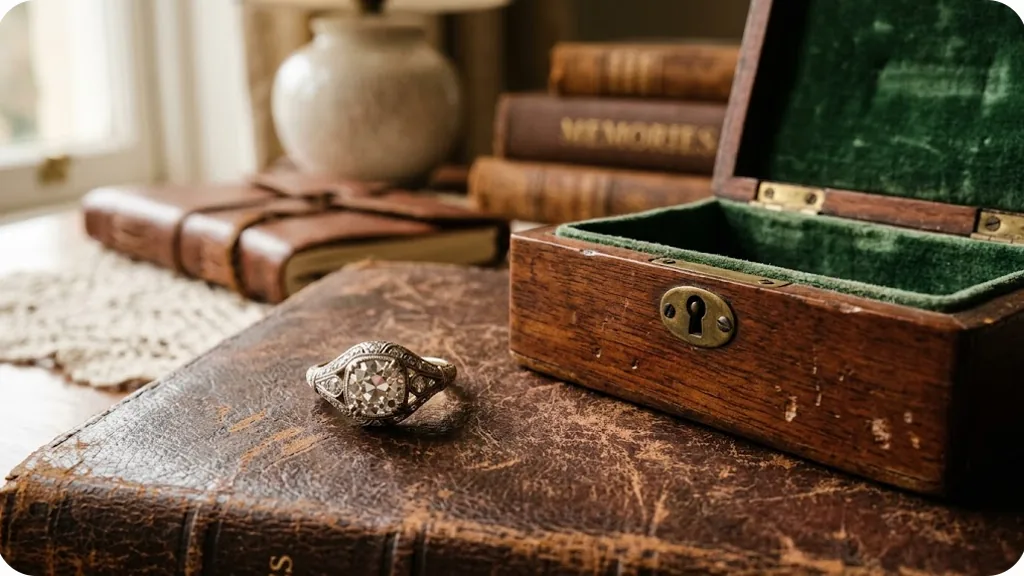
Are European Cut Diamonds Worth More? Antique Character and Real Value
Genuine antique old European cuts carry a real scarcity premium. Newly cut European-style stones do not. Here is the difference.
Old European cut diamonds have a following that borders on devotion. Collectors describe them as warmer, softer and more alive than modern stones — big broad flashes of light instead of rapid glitter, the look of a diamond seen by candlelight rather than under a shop spotlight.
Whether they are actually worth more than a modern diamond is a question with two completely different answers, depending on which kind of European cut you are looking at.
What an old European cut is
The old European cut is the direct ancestor of today’s round brilliant. It was cut by hand, largely between the 1890s and the 1930s, before the mathematics of ideal proportions were worked out and before machines could hold tolerances to a fraction of a degree.
It has 58 facets like a modern round brilliant, but arranged and proportioned quite differently:
| Feature | Old European cut | Modern round brilliant |
|---|---|---|
| Table (the flat facet on top) | Small | Large |
| Crown (the sloping part above the widest point) | Tall and steep | Shallower |
| Culet (the very bottom tip) | Open — a visible flat facet | Closed to a point |
| Girdle (the rim around the widest point) | Thick, often unpolished | Thin and polished |
| Outline | Slightly irregular — hand cut | Perfectly circular |
| Light effect | Broad flashes, strong coloured fire | Bright, rapid white sparkle |
That small table and tall crown are what create the characteristic look. Light travels a longer path through the stone and separates into colour on the way out, so old European cuts throw noticeably more rainbow fire and less white brightness than modern stones. The open culet often shows as a small dark circle in the middle when you look straight down — a giveaway, and to enthusiasts, part of the charm.
Are antique European cut diamonds worth more?
Yes, and sometimes considerably more — but not for any reason a grading report would recognise.
A genuine antique old European cut is a finite object. Nobody is making more of them. Every one that exists was cut by hand a century ago and has survived since. That scarcity is the entire basis of the premium.
Three things drive antique prices:
- Supply is fixed and shrinking. Many antique stones were recut into modern rounds during the twentieth century, when the fashion ran the other way. Those are gone for good.
- Demand has grown. Interest in antique cuts has risen steadily as buyers look for something that does not look like everything else.
- Character sells. No two are identical, because no two were cut by the same hand on the same day.
Working against that: on paper, antique stones grade badly. Their proportions fall outside modern ideal ranges, so a laboratory would rate their cut poorly. They are often warmer in colour, because a century ago nobody was sorting for a D grade. If you buy purely by certificate numbers, an antique European cut looks like a bad deal. If you buy with your eyes, it can look like the only diamond in the room.
One honest caution about antique buying. Age alone does not make a stone valuable. A badly proportioned old European cut with a large window of dead light in the middle is simply a badly proportioned diamond, and there are plenty of those. The good ones are good because someone cut them well, not because they are old.
Are modern European-style cuts worth more?
Here the answer flips.
Modern cutters do produce new stones in the old European style, and these are not scarce at all. They are made deliberately, in whatever quantity the market wants, with modern precision.
They typically cost slightly more than an equivalent modern round brilliant, for a practical reason rather than a romantic one: the tall crown and small table hold weight up high, so a European-style cut looks smaller face-up than a modern round of the same carat weight. You pay for weight you do not see. Cutting one also means deliberately accepting proportions that will never earn an Excellent cut grade, which limits the resale market and is priced in.
What you are buying is the look — and the look is genuinely different. If you want that romantic, fiery, candlelit character in a new stone with a clean modern clarity grade, a European-style cut delivers it. Just be clear that you are buying an aesthetic, not scarcity.
Where a lab-grown European cut makes sense
This is one of the few places where lab-grown solves a genuine problem rather than just being cheaper.
The frustration with antique stones is that you take what exists. You cannot order a 1.30ct old European cut in G colour and VS1 clarity — you find one, or you do not. Sizes, grades and shapes are whatever survived.
A lab-grown stone cut to old European proportions gives you the character with none of the compromises: the size you want, the clarity you want, and a free IGI certificate confirming exactly what it is. Lab-grown diamonds are chemically and optically the same material as mined ones, graded on the same scales by the same laboratories.
It also removes the price problem. Old European cuts hold weight where you cannot see it, which is an expensive habit in a mined stone and a much smaller issue when the rough costs a fraction as much. Lab-grown prices have fallen substantially and continue to move, so treat any specific figure you see quoted online as a snapshot rather than a rule.
Getting the antique look from stock
We do not currently stock old European cut stones, but we make them bespoke at no extra design cost — tell us the size, the grades and the proportions you want, and we will hand-make the ring in solid gold or platinum in our North Harrow workshop.
If it is the overall antique feeling you are after rather than that specific faceting, several stocked pieces get you a long way there. Our Vintage Round Cut Engagement Ring in Yellow Gold has the warm metal and detailed gallery work that defines the period look. Our Vintage Pear Rose Cut Engagement Ring uses a rose cut — an even older hand-cutting style with a flat base and soft glow — for a genuinely antique light effect. And our Cluster Round Cut Engagement Ring borrows the Georgian and Victorian habit of massing small stones together, which reads as antique from across a room.
Should you buy one?
Buy an antique European cut if you want a genuine piece of history, you like the idea of a stone nobody else has, and you are happy to accept whatever size and grade you can find. Buy it in person or from photographs you trust, and judge it by whether it looks alive rather than by its paperwork.
Buy a new European-style cut if you love the soft, fiery, candlelit character but want to choose your own size and clarity, and you accept paying a little more for a stone that looks smaller than its weight.
Buy a modern round brilliant if maximum brightness and maximum size for the money are what you are after. That is exactly what it was engineered to deliver.
Frequently asked questions
Are old European cut diamonds more valuable than modern ones?
Genuine antiques often are, because supply is fixed and demand has grown. New stones cut in the same style carry only a small premium, and it comes from hidden weight rather than rarity.
Why do old European cuts look different?
A small table and tall crown make light travel further inside the stone, splitting it into colour. You get broad, fiery flashes instead of the rapid white sparkle of a modern brilliant.
What is the dark circle in the middle?
That is the open culet — a small flat facet at the very bottom tip, standard on antique cuts and closed to a point on modern stones. It is a feature, not damage.
Should I recut an inherited old European cut?
Usually not. Recutting always loses weight, and it destroys the character that gives the stone its appeal and much of its value. Rebuilding the ring around the original stone is almost always the better answer.
Can I get a lab-grown old European cut?
Yes. We can source one and hand-make the setting as a bespoke commission at no extra design cost, with a free IGI certificate on the centre stone, free insured UK delivery and 30 days to return.
Have a look at our engagement ring collection for the vintage-inspired designs we hold, or the round diamond pieces if you want to compare the modern brilliant side by side.
More guides on this topic
Ready to find your perfect ring?
Explore our lab-grown diamond collection or book a virtual appointment with our team.











