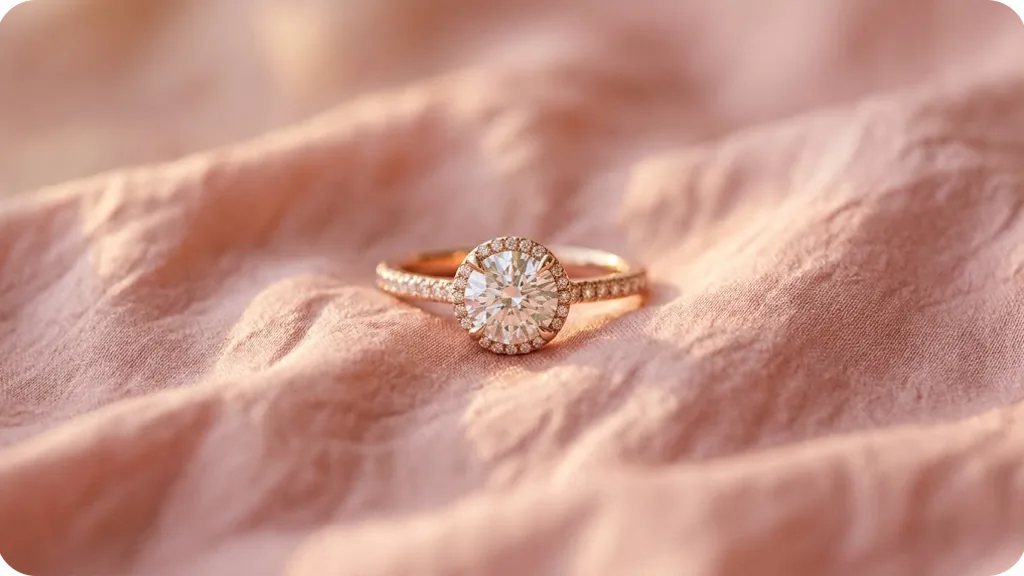
How to Clean a Platinum or Rose Gold Wedding Ring at Home
Clean platinum and rose gold wedding rings safely at home: the method jewellers use, what to avoid, and when to see a jeweller.
Platinum and rose gold are the two wedding ring metals people worry about most when it comes to cleaning. Platinum because it looks expensive and untouchable. Rose gold because it has copper in it, and copper is the metal that goes dark on old coins.
The good news is that both metals are cleaned in exactly the same way, with things you almost certainly already own. The bad news is that most of the “hacks” you will find online are the fastest way to ruin a ring. This guide covers both metals in one place, tells you what is safe, and is honest about the few jobs you should not attempt at home.
First, know what your ring is actually made of
Platinum is a naturally white metal. In the UK it is normally hallmarked 950, meaning 95% pure platinum. It is not plated or coated with anything. The white colour you see on the day you buy it is the colour of the metal all the way through, so it can never wear off.
Rose gold is gold mixed with copper. Pure gold is too soft to wear every day, so it is alloyed with other metals to harden it. Use copper as the main alloy and the gold turns pink. More copper means a deeper, redder pink; less copper means a softer, champagne pink. Like platinum, the colour goes all the way through — solid rose gold is not a plated finish.
This matters for cleaning. White gold is different. Most white gold rings are yellow-ish gold alloy with a thin rhodium plating on top to make them bright white, and that plating can be scrubbed thin. Platinum and rose gold have no plating to protect, which makes them more forgiving to clean.
The cleaning method that works for both metals
This is the same method a jeweller uses on the bench before handing a ring back. It takes about ten minutes, most of which is soaking.
You need: a small bowl, warm water, a drop of plain washing-up liquid, a soft baby toothbrush, and a lint-free cloth (a microfibre glasses cloth is perfect).
- Step 1. Put the plug in the sink, or work on a table away from the sink entirely. Rings go down plugholes.
- Step 2. Fill the bowl with warm water — comfortable to the touch, not hot. Add one small drop of washing-up liquid and stir it in.
- Step 3. Soak the ring for 15 to 20 minutes. This is the part that does the real work. It softens the film of hand cream, soap and skin oils that dulls a diamond.
- Step 4. Brush gently with the soft toothbrush. Spend most of your time underneath the stone, where the gap between the diamond and the setting collects everything. That underside is why a ring looks grey even when the top is clean.
- Step 5. Rinse in clean warm water. Do not rinse under a running tap unless the plug is in.
- Step 6. Dry thoroughly with the lint-free cloth, then leave it out on the cloth for ten minutes so the water trapped under the setting evaporates. Water sitting in a setting is what leaves those cloudy marks.
That is the whole method. There is no better home technique, and no product that beats a soak in warm soapy water for a diamond ring.
What makes platinum different: the patina
Platinum does something no other ring metal does. Over months of wear it develops a patina — a soft, satin, slightly grey surface made up of thousands of tiny scratches. Some people love it. Some people hate it and want the mirror shine back.
Here is the part worth understanding. When platinum scratches, the metal is not worn away and lost — it is pushed to one side. Nothing has gone. That is why platinum rings can be polished back to a high shine again and again over a lifetime without the band getting noticeably thinner. Gold scratches lose a tiny amount of metal each time; platinum largely does not.
Cleaning will not remove a patina, and it is not meant to. A patina is surface texture, not dirt. If you want the original mirror finish back, that is a five-minute polish on a jeweller’s wheel, not a job for a cloth at home. Most people have it done every couple of years, though that is a habit in the trade rather than a measured rule.
A ring like our Bezel Cushion Cut Engagement Ring in platinum (£904, correct at the time of writing) is a good example of why platinum suits people with hands-on jobs. A bezel setting wraps the metal around the stone rather than gripping it with claws, so there is less to catch, and platinum takes the knocks without shedding metal.
What makes rose gold different: the copper
Copper is what gives rose gold its colour, and copper reacts with air and skin more readily than gold or platinum do. In practice, on a solid gold ring, this shows up as a very slow deepening of the colour rather than the black tarnish you see on silver. Many owners like it and never do anything about it.
Two honest points about rose gold:
- It will not turn green or black on your finger the way cheap plated jewellery does. That is a plating failing, not solid rose gold.
- If the colour has deepened and you want it brighter, warm soapy water and a soft brush will bring back most of it. Anything beyond that is a jeweller’s polish.
Rose gold’s real enemy is chlorine. Bleach, swimming pool water and hot tubs attack the alloy metals in gold over time, and repeated exposure can weaken the metal around claws and joints. Take the ring off before you get in a pool or clean the bathroom. This applies to yellow and white gold too, but rose gold is worth the extra care because of the copper content.
If you are shopping rather than cleaning, our Chevron Round Cut Wedding Band in rose gold (£707 at the time of writing) is a good illustration of a shape that sits flush against an engagement ring, which also means fewer gaps for dirt to hide in.
Safe, risky and never: a quick reference
| Method or product | Platinum | Rose gold | Notes |
|---|---|---|---|
| Warm water + washing-up liquid | Safe | Safe | The correct method for both |
| Soft baby toothbrush | Safe | Safe | Soft bristles only, never medium or hard |
| Microfibre or lint-free cloth | Safe | Safe | Dry fully, including under the stone |
| Jeweller’s polishing cloth | Safe | Safe | Metal only. Keep it off any plated ring |
| Home ultrasonic cleaner | Use with care | Use with care | Fine for a sound setting, but it can shake a stone loose if a claw is already worn. Have the setting checked first |
| Ammonia-based jewellery dip | Use with care | Use with care | Not needed for a diamond ring, and unsafe with softer coloured gemstones such as opal, pearl or emerald |
| Toothpaste | Never | Never | It is an abrasive. It scratches metal and dulls polish |
| Bicarbonate of soda | Never | Never | Also an abrasive, despite what the internet says |
| Bleach or chlorine | Never | Never | Attacks gold alloys and can cause cracking over time |
| Boiling water | Never | Never | Sudden heat can loosen settings and damage some gemstones |
When to stop and take it to a jeweller
Cleaning is a home job. These are not:
- A stone that moves or rattles. Stop wearing the ring and get it looked at. A loose stone that falls out on a pavement is usually gone.
- Claws that feel sharp or snag on clothing. That is a claw that has worn thin and is starting to lift.
- A ring that has been badly knocked out of round. Bending it back by hand stresses the metal.
- You want the mirror finish back. Repolishing is a bench job, and it is quick and inexpensive.
A sensible rhythm is a home clean every few weeks and a professional check once a year. That once-a-year figure is standard advice in the trade rather than a measured finding, but it is genuinely how loose claws get caught before they cost you a diamond.
Frequently asked questions
How often should I clean my platinum or rose gold wedding ring?
Every two to four weeks keeps a diamond bright. If you use a lot of hand cream, or you wash your hands constantly at work, clean it weekly. There is no way to over-clean with warm soapy water.
Does platinum tarnish?
No. Platinum does not tarnish or discolour. If your platinum ring looks dull or greyish, it is either surface dirt, which cleaning fixes, or patina, which is fine scratching and needs a polish.
Will cleaning make my rose gold less pink?
No. The colour is in the metal itself, not on the surface, so cleaning cannot wash it away. Cleaning usually makes rose gold look slightly more pink, because you have removed the grey film that was sitting on top of it.
Can I clean my ring with vodka, vinegar or a denture tablet?
You can, but there is no reason to. None of them beat warm soapy water on a diamond ring, and vinegar is acidic enough that it is not worth the gamble on an alloy. Save your money.
Is it safe to wear my ring in the shower?
The water will not hurt platinum or solid gold. The problem is soap scum, which builds up under the stone and dulls it, and the fact that fingers shrink in cold water and rings slide off. Taking it off is the safer habit.
My rose gold ring has gone slightly darker. Is it damaged?
Almost certainly not. Copper deepening in colour over time is normal for solid rose gold and is a surface effect. Clean it first. If you still want it brighter, a jeweller’s polish will restore it.
If you are still choosing a ring rather than caring for one, our Tiara Pear Cut Bridal Set in platinum (£999 at the time of writing) shows how a matched set sits together, and you can see the full range in our wedding ring collection. If you are adding a third ring to the stack, our guide to whether an anniversary ring replaces the wedding band covers how they sit together. Every centre stone is a lab-grown diamond and comes with a free IGI certificate, and if you want something in a metal or shape we do not stock, we design bespoke at no extra design cost from our workshop in North Harrow.
More guides on this topic
Ready to find your perfect ring?
Explore our lab-grown diamond collection or book a virtual appointment with our team.