How Important Is Cut in a Diamond? Why It Matters More Than Carat
Cut quality decides how a diamond sparkles. Here is what the cut grade actually measures and why it beats colour, clarity and carat.
If you only remember one thing about buying a diamond, make it this: cut matters more than anything else. More than carat weight. More than colour. More than clarity. It is the difference between a diamond that stops people in the street and one that looks like a nice piece of glass.
Yet cut is the grade most first-time buyers skip over, partly because the word “cut” is used to mean two completely different things. Let us clear that up first, then explain exactly why cut does the heavy lifting.
What do jewellers mean by the word cut?
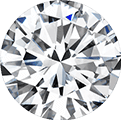
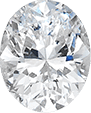
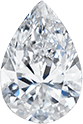
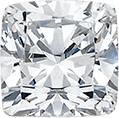
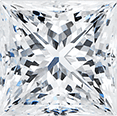
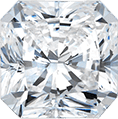
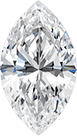
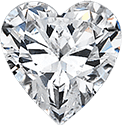
When a jeweller says “cut”, they might mean the shape of the diamond — round, oval, pear, emerald and so on. That is the outline you see from above.
Or they might mean cut quality — how skilfully the stone was proportioned, faceted and polished. This is what appears on a certificate as a grade running from Excellent down to Poor.
This article is about the second one. Cut quality is the only one of the four Cs that is entirely down to human workmanship. Colour, clarity and carat weight are decided by the stone itself. Cut is decided by the cutter, and it is where a diamond is either made or ruined.
What does diamond cut quality actually measure?
A diamond is not a lens or a prism by accident. Every angle in it has a job.
Light enters through the flat table on top. It should then bounce off the angled facets at the bottom of the stone — the pavilion — and come straight back up through the top into your eye. That returned light is what you see as sparkle.
If the bottom of the stone is cut too shallow, light hits those facets at the wrong angle and passes straight out of the bottom instead of bouncing back. The centre of the diamond looks flat and washed out. Jewellers call it a fish-eye or a window — you can almost see through it.
If the bottom is cut too deep, light bounces around inside and leaks out of the sides. The stone looks dark in the middle, as though there is a shadow trapped in it.
Cut quality grades how close the diamond is to the angles that send the most light back up. It is measured in fractions of a degree, and the difference between Excellent and Good is genuinely visible across a room.
What are brilliance, fire and scintillation?
Graders break sparkle into three separate effects, and cut controls all of them.
- Brilliance — the white light returning from the stone. This is the bright, clean flash you see first.
- Fire — the rainbow flashes. A diamond splits white light into colours the way a prism does, and good proportions maximise it.
- Scintillation — the twinkle as the stone or your hand moves. This comes from the pattern and contrast of the facets.
A poorly cut diamond can lose all three at once. And unlike a low colour or clarity grade, you cannot hide bad cut with a clever setting. It is baked into the stone.
What do the diamond cut grades mean?
| Grade | What it means in practice |
|---|---|
| Excellent | Almost all light entering the stone is returned. Bright, lively, sparkles in dim light as well as bright light. |
| Very Good | Very close to Excellent. Most people cannot tell the two apart without comparing them side by side. |
| Good | Noticeably less lively. Fine in strong light, flatter indoors. |
| Fair | Visibly dull. Light is leaking. Often cut this way deliberately to keep carat weight up. |
| Poor | Little sparkle. Looks glassy or dark. Avoid. |
One important caveat. A formal cut grade is only awarded to round brilliant diamonds. That is because the round has one universally agreed set of ideal proportions, so there is a fixed standard to measure against.
Fancy shapes — the trade word for anything that is not round — do not receive a full cut grade, because there is no single correct outline for a pear or an oval. Some people like them long and slim, others short and full. For those shapes you have to judge by eye and by the polish and symmetry grades instead.
Why does cut beat the other three Cs?
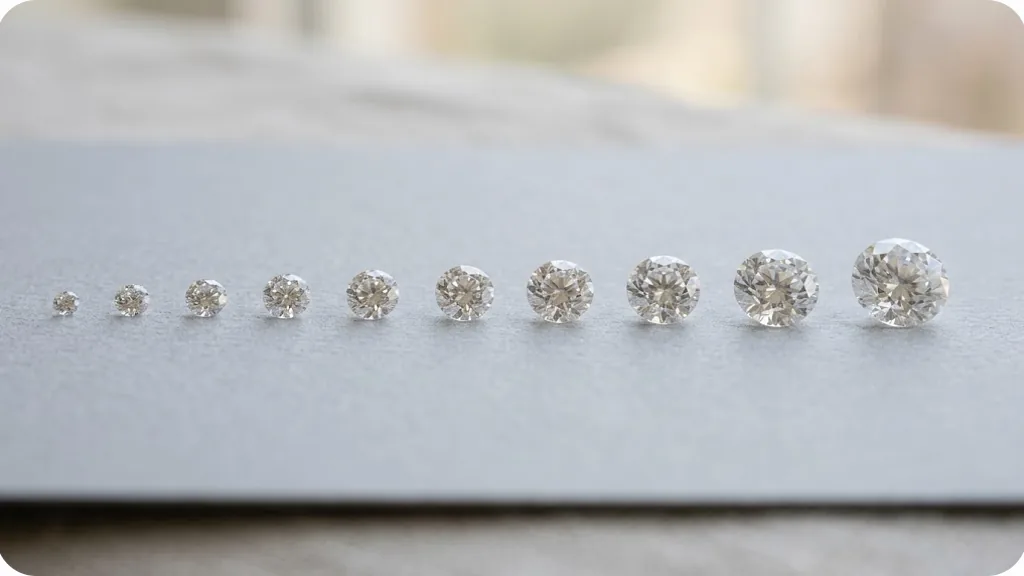
Here is the practical test. Put two one-carat diamonds side by side. One is a top colour grade with an average cut. The other is a slightly warmer colour with an Excellent cut. Almost everyone picks the second one as the more beautiful stone, without knowing why.
That happens because sparkle is what your eye notices from a distance, and it is also what disguises everything else. A brilliantly cut diamond throws so much light around that small inclusions get lost in the flashing. A faint warm tint gets broken up and reads as white.
In other words, a great cut quietly buys you room to relax on colour and clarity. A bad cut does the opposite — it flattens the stone and puts every flaw on display.
Carat weight is the trap here. It is tempting to buy a bigger stone with a weaker cut for the same money. Resist it. A well-cut 0.90ct diamond looks larger and brighter on a hand than a badly cut 1.10ct one, because the bad cut is usually hiding its extra weight in a deep, useless bottom you cannot see.
How can you check cut quality without a loupe?
You do not need equipment. You need a few habits.
Read the certificate. For a round, look for Excellent cut. Then check the polish and symmetry grades — those measure the finish of the facet surfaces and how precisely the facets line up. Excellent or Very Good on both is what you want.
Look at the depth percentage. On a round brilliant, roughly 59% to 62.5% is the healthy zone. Much outside that and light is escaping somewhere.
Move the stone. Tilt it under normal room lighting, not a jeweller’s spotlight. Shop spotlights make almost anything sparkle. A well-cut stone still comes alive in ordinary light.
Look for dead spots. A dark ring around the middle, or a flat pale patch under the table, means light is leaking.
A clean solitaire is the fairest way to judge cut, because nothing distracts the eye. Our Solitaire Round Cut Engagement Ring at £657 puts one stone on show with nothing to hide behind, which is exactly the point of a solitaire.
How does cut quality differ between diamond shapes?
Different shapes reward cut quality in different ways.
A round brilliant is engineered for maximum sparkle, so an excellent cut is spectacular and a poor one is very obvious. If sparkle is what you are buying, this is the shape that delivers most, as a Halo Round Cut Engagement Ring at £707 shows — the centre stone plus a ring of small diamonds around it multiplies the effect.
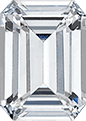
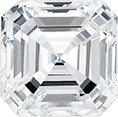
Step cuts are a different animal. An emerald cut has long, parallel facets running around the stone like steps, rather than lots of small triangular ones. It produces broad flashes of light rather than fine twinkle. Cut precision still matters enormously here, but in a different way — the facets must be perfectly parallel and even, because any wobble shows instantly in those long straight lines. A Solitaire Emerald Cut Engagement Ring at £672 lives or dies on the crispness of those lines.
So the rule is not “always buy round”. It is “whatever shape you love, buy the best cut of it you can”.
Why is an excellent cut easier to get in a lab-grown diamond?
With natural diamonds there is constant pressure to cut a stone heavier than it should be, because carat weight is expensive and cutters do not want to grind precious rough into dust. That is why so many mined diamonds are cut slightly deep — it preserves weight at the cost of beauty.
Lab-grown diamonds are chemically and optically identical to mined ones, with the same hardness and the same sparkle, but they cost a great deal less. That takes the pressure off. There is far less reason to compromise on proportions to save weight, and far less reason for you to compromise either.
Practically, it means a first-time buyer can have an excellent cut, a good colour grade and a decent size all at once, rather than picking two of the three. Every centre stone we set comes with a free IGI certificate, an independent laboratory report that states the cut, colour, clarity and carat in black and white.
Frequently asked questions
Is cut really more important than carat?
Yes, for how the ring looks. Weight you cannot see does nothing for you. If you must choose, drop a little weight and keep the Excellent cut — the smaller stone will usually look bigger and always look brighter.
What is the difference between cut, polish and symmetry?
Cut grades the overall proportions and angles. Polish grades the smoothness of each facet surface. Symmetry grades how precisely the facets are aligned and how even the outline is. Cut is the headline; the other two are the fine detail behind it.
Why do some diamonds have no cut grade at all?
Because they are not round. Only the round brilliant has an internationally agreed ideal, so only rounds get a formal cut grade. For fancy shapes, judge polish, symmetry, the length-to-width ratio and your own eyes.
Can a jeweller improve a badly cut diamond?
A stone can be re-cut, but it loses weight in the process and the cost rarely makes sense. It is far cheaper to buy the right cut in the first place.
Do lab-grown diamonds sparkle as much as mined ones?
Identically, when cut to the same standard. They are the same material with the same optical properties. Sparkle comes from the cutting, not from where the carbon came from.
How can you see the difference cut makes?
The best way to understand cut is to compare stones in the same setting at the same price. Browse our engagement ring collection to see the shapes side by side, or the wedding ring collection if you are pairing a band with a stone you already own.
Everything is hand-made in solid gold or platinum at our North Harrow workshop in London, with a free IGI certificate on every centre stone, free insured UK delivery and 30-day returns. Bespoke designs carry no extra design fee, so if you want a particular stone in a particular setting, just ask.
More guides on this topic
Ready to find your perfect ring?
Explore our lab-grown diamond collection or book a virtual appointment with our team.