Does an Anniversary Ring Replace the Wedding Band?
No - an anniversary ring joins your rings rather than replacing them. The four ways to wear one, and full vs half eternity explained.
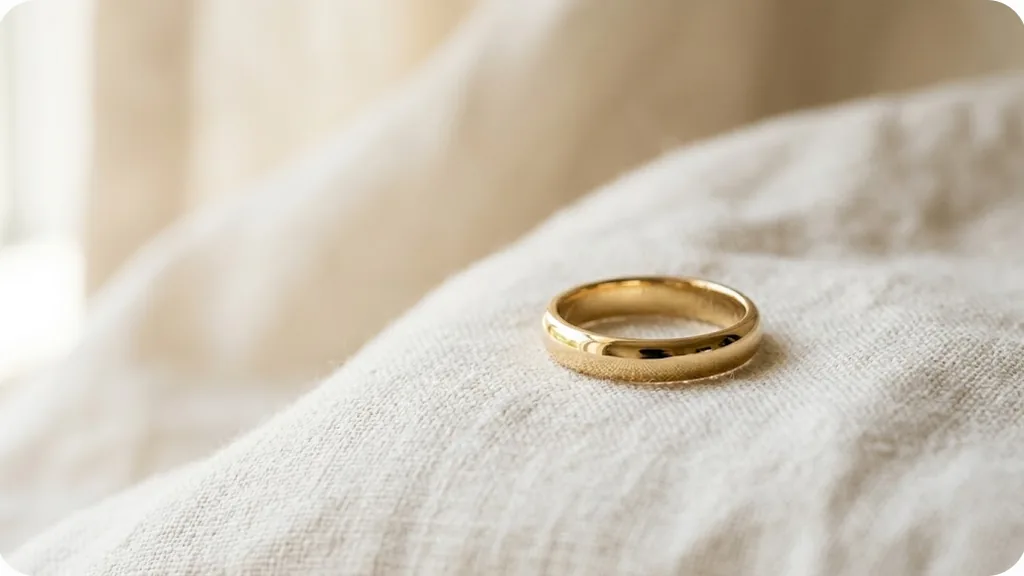
No, an anniversary ring does not replace your wedding band. It is an addition, not a substitution. The wedding band is the ring you exchanged vows over, and almost nobody retires it.
That said, “almost nobody” is not “nobody”, and there are perfectly good reasons why some people do stop wearing the original band. This guide explains what an anniversary ring actually is, the four ways people usually wear one, and how to choose a design that works with the rings you already own rather than fighting them.
What an anniversary ring actually is
An anniversary ring is any ring given to mark a wedding anniversary. That is the whole definition. There is no rule about which anniversary, no rule about the design, and no ceremony attached.
In practice it is nearly always a diamond band — a ring set with a line of stones running around part or all of the band. You will also hear these called eternity rings, and the two terms overlap heavily. The distinction most jewellers use is simple:
- Eternity ring describes the design: a band with stones set continuously along it.
- Anniversary ring describes the occasion: any ring given to mark an anniversary.
So most anniversary rings are eternity rings, but an anniversary ring could equally be a plain band, a three-stone ring or a gemstone ring. Nothing is out of bounds.
There is a widespread idea that the eternity ring is traditionally given at a specific milestone — often the first anniversary, or the birth of a first child. Be aware that this is marketing history rather than deep tradition, and that it varies by family and by country. Give it whenever it makes sense to you.
The four ways people wear one
This is the practical question. You have an engagement ring, a wedding band, and now a third ring. What happens?
| Arrangement | How it looks | Worth knowing |
|---|---|---|
| All three stacked, left hand Wedding band closest to the heart, then engagement ring, then anniversary ring on top |
The classic stack. Three rings reading as one piece | Only works comfortably if the bands are similar in width and profile. Three chunky rings on one finger gets heavy fast |
| Anniversary ring on the right hand | Left hand keeps its original pair; the new ring stands alone opposite | The easiest option. No sizing compromises, no design clashes, and the anniversary ring gets noticed |
| Anniversary ring replaces the engagement ring for daily wear | Wedding band plus anniversary band on the left; engagement ring kept for occasions | Common for people whose engagement ring has a raised stone that catches at work. The engagement ring is not retired, just rested |
| Anniversary ring replaces the wedding band | Engagement ring plus new band, original band retired | The minority choice. Usually done when the original band is worn thin or no longer fits. Many people keep the old band on a chain rather than putting it in a drawer |
None of these is more correct than the others. If you want a rule of thumb rather than a decision, this is the one the trade tends to give: keep the wedding band on the finger it was placed on, and let the anniversary ring go wherever it looks best. That is a habit, not a measured finding, but it avoids most regrets.
Choosing a design that actually fits with your existing rings
The single most common disappointment with anniversary rings is buying something beautiful that will not sit flat against the rings you already wear. Three things cause it.
Stone height. If your anniversary band has stones sitting proud of the metal and it sits next to a solitaire, the two will rub. Over years, that wears grooves into both. A lower profile setting — pavé, channel or bezel — solves it.
Band width. A 2.5mm anniversary band next to a 1.8mm wedding band looks unbalanced to most eyes. Matching widths, or stepping widths deliberately, both work. Accidental near-misses do not.
Metal colour. Mixing metals is fashionable and looks deliberate when there are clear differences — yellow gold next to platinum, for instance. Two slightly different whites, or two slightly different yellows, tend to look like a mistake instead of a choice.
Full, three-quarter or half eternity: the decision that matters most
This is the choice people get wrong, and it is the one with real long-term consequences.
- Full eternity — stones all the way round. The most sparkle from every angle, and the ring never needs turning. But it is very difficult to resize, because there is no plain metal to cut and rejoin. If your finger size changes, a full eternity ring often has to be remade rather than adjusted.
- Three-quarter eternity — stones around roughly three-quarters of the band. Looks like a full eternity from above, keeps a small stretch of plain metal underneath, and is easier to work on later.
- Half eternity — stones across the top half only. The most practical, the most comfortable against a neighbouring ring, and the easiest to resize. The plain underside also sits more kindly against the next finger.
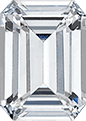
If you expect your ring size to stay stable and you want maximum sparkle, a full eternity like our Stackable Round Cut Full Eternity Band (£707, correct at the time of writing) is the right answer. If you would rather keep your options open, our Stackable Round Cut Three Quarter Eternity Band (£762 at the time of writing) gives you nearly the same look with far more flexibility. For a different stone shape entirely, the Stackable Emerald Cut Half Eternity Band (£770 at the time of writing) uses long rectangular emerald cut stones, which read as cleaner and more architectural than a row of rounds.
What about “upgrading” instead?
Some couples use an anniversary as the moment to change the engagement ring rather than add a new one — a larger centre stone, or the original stone reset into a new design. This is a genuine option and it is often better value than buying a third ring, because you are reusing the diamond you already own.
Be honest with yourself about one thing first. If the original ring has sentimental weight, resetting it changes it permanently. If it does not, and you have simply outgrown the style, resetting is a good use of money. We do this as a bespoke job with no extra design cost, in our North Harrow workshop.
Frequently asked questions
Does an anniversary ring replace the engagement ring?
Not usually, no. More often it joins the stack, or takes the engagement ring’s place for everyday wear while the engagement ring is kept for occasions. Replacing it outright is a personal decision, not a convention.
Which finger does an anniversary ring go on?
Most often the same finger as the wedding and engagement rings, sitting above them. The right hand fourth finger is the next most common, and it avoids all the stacking and fit problems in one move.
Which anniversary is the eternity ring traditionally given on?
There is no single answer, and different jewellers and different families will tell you different things. Treat any confident claim about “the correct anniversary” as a marketing convention rather than a rule you have to follow.
Can a man be given an anniversary ring?
Yes, and it happens. It is usually a plain or textured band rather than a diamond eternity ring, worn on the right hand.
Do I need to have my anniversary ring sized to match my wedding band?
Have it sized properly on its own. Rings worn stacked can feel slightly tighter together than apart, so tell the jeweller you intend to stack them and get measured wearing the existing rings.
Is a full eternity ring a bad idea?
Not at all — just go in knowing it is difficult to resize later. If you are buying in your twenties and expect your hands to change, a three-quarter or half eternity is the safer long-term choice.
Every eternity band we make is hand-set with lab-grown diamonds in solid gold or platinum, with free insured UK delivery and 30-day returns. Have a look at the full wedding and eternity ring collection, or read up on which hand a wedding ring goes on if you are still deciding where the new ring should live.
Ready to find your perfect ring?
Explore our lab-grown diamond collection or book a virtual appointment with our team.