
Are Pave Rings Uncomfortable or Durable? What You Should Know
Well-set pave feels smooth and lasts decades. What makes a pave ring scratchy, what makes stones come loose, and how to check.
Two worries stop people buying pavé rings more than any others. Will it feel scratchy or rough on the finger? And will the tiny diamonds fall out?
Both are fair questions and both have real answers. A well-made pavé ring is comfortable and lasts decades. A badly made one is neither. The difference is not luck, and you can see most of it before you buy.
Does pavé feel uncomfortable to wear?
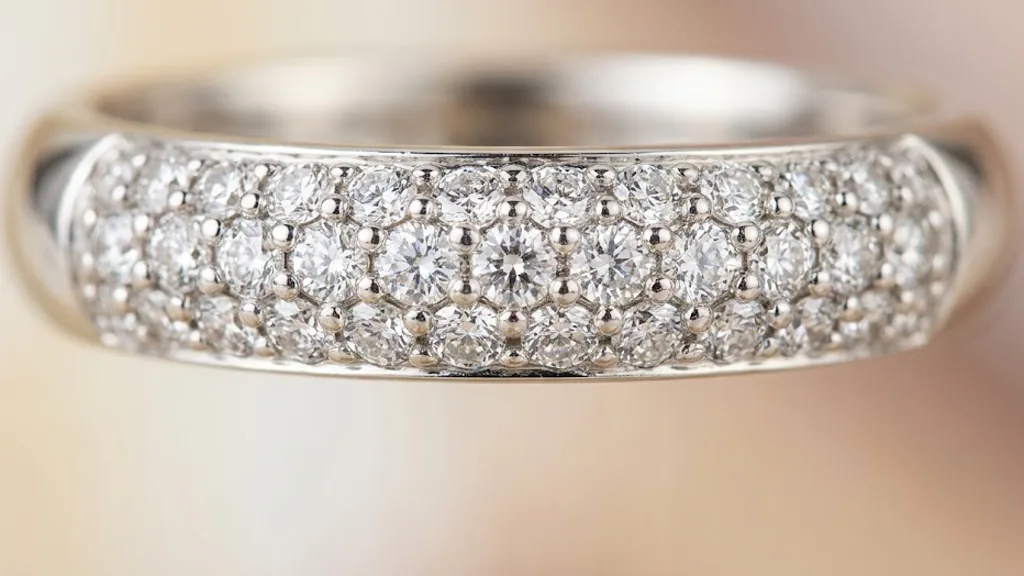
A properly finished pavé ring should feel almost the same as a plain band on the finger. The stones and the tiny metal beads that hold them sit on the outside surface. The inside of the band, which is the part touching your skin, is plain polished metal.
What people are usually reacting to when they say pavé feels rough is one of these:
- Proud stones. The stones sit too high above the metal surface, so their edges are exposed. You feel them against the neighbouring finger.
- Unpolished beads. The beads have been raised but not properly rounded and polished, leaving sharp burrs.
- An unfinished edge. The border of metal alongside the stones has not been smoothed, so the edge of the band catches.
- A ring that is slightly too tight. This makes any ring uncomfortable, and it gets blamed on the setting.
All four are finishing faults, not faults of pavé as a technique. On a hand-finished ring the setter goes back over the work with a polishing tool after setting, and the surface ends up smooth to a fingertip.
The two-second comfort test
When you have a pavé ring in your hand, run a fingertip along the paved surface, then along the edge of the band. You are feeling for anything that snags. Then put it on and press your fingers together. If the ring catches on the next finger, the stones are set too proud.
Do the same check on the inside of the band. It should be smooth and slightly domed rather than flat and square-edged. A domed inside edge, sometimes called comfort fit, makes a real difference to how a ring feels over a whole day.
Are pavé rings durable?
Yes, with a genuine caveat. Diamonds are the hardest natural material we know of, so the stones themselves are not the weak point. The metal beads holding them are.
Each bead is a small raised sliver of gold or platinum. Over years, knocks and abrasion slowly wear those beads down. Eventually one wears thin enough that a stone loosens. This is normal wear on any bead-set jewellery, not a defect.
How long that takes depends on the metal, the quality of the setting, and how the ring is used. A ring worn to a desk job will outlast an identical ring worn while gardening, decorating and lifting weights, by a wide margin.
| Metal | How it behaves in pavé |
|---|---|
| Platinum | Dense and malleable. Beads deform rather than snap, and worn metal displaces rather than disappearing. The most forgiving choice for pavé. |
| 18ct gold | Softer than 14ct. Beads form cleanly and hold well, but the metal itself marks more easily. |
| 14ct gold | Harder and more scratch resistant on the surface, but the beads are less forgiving if knocked hard. |
| Sterling silver | Soft and prone to bending. Fine for occasional wear, less suited to a ring worn every day for decades. |
What actually makes pavé fail
In our experience, lost melee stones almost always come down to one of four causes, and only the first is really about the ring itself.
Poor setting. Too few beads per stone, beads that were never properly pushed over the stone, or seats drilled unevenly so a stone sits at an angle and takes all the pressure on one side.
A single hard knock. Catching a ring on a door frame, a car door or a gym weight can deform a bead in an instant. This is the most common single event we see.
Neglect. A loose stone rattles, wears its seat, and loosens the ones beside it. Caught early it is one small repair. Left for a year it can be a whole row.
Bad resizing. Stretching a stoned band on a mandrel distorts the seats. This is why resizing limits matter, which we cover in our guide on whether pavé rings can be resized.
Making a pavé ring last
- Take it off for the gym, gardening, DIY and heavy cleaning. This single habit does more than everything else combined.
- Clean it every couple of weeks in warm water with a drop of washing-up liquid and a soft toothbrush. Grime hides a loose stone.
- Once a month, hold the ring next to your ear and tap it gently against a fingernail. A loose stone gives a faint rattle you can hear before you can see it.
- Have the setting checked by a jeweller once a year. Tightening beads before a stone goes is far cheaper than replacing one after.
- Store it separately rather than loose in a box with other jewellery.
If you want the look with less risk
There are settings that give a bright, stone-set band with fewer exposed beads. Channel setting holds the stones between two continuous walls of metal, which protects them well. Bezel setting wraps each stone in a rim. Both are more robust than surface pavé, though they read as slightly heavier and less sparkling.
Our Bezel Rose Cut Eternity Band in Sterling Silver, £1,611 at the time of writing, shows the bezel approach on a band. If you do want pavé, our Stackable Pear Cut Engagement Ring at £503 and the Pave Hexagon Cut Engagement Ring at £1,078, both correct at the time of writing, are good examples of how the setting looks in different weights of design.
Frequently asked questions
How often do pavé stones fall out?
We are not going to give you a percentage, because no honest figure exists and any number you see quoted online is invented. What we can say is that on a well-set ring worn sensibly, losing a melee stone is an occasional event across years, not a regular one, and the repair is inexpensive.
Is a lost pavé stone expensive to replace?
No. The stone itself costs very little. You are paying mostly for the jeweller’s time to match it and reset it. It is a minor repair, not a rebuild.
Does pavé scratch the finger next to it?
It should not. If it does, the stones are set too proud or the beads have not been polished. That is a manufacturing fault and worth raising with the seller rather than living with.
Are pavé rings suitable for someone who works with their hands?
They can be, if the ring comes off for the work. If it genuinely cannot come off during the day, a plain band or a bezel-set design will give you fewer problems over a lifetime. We would rather tell you that than sell you a ring you end up repairing every year.
Does insurance cover a lost melee stone?
It depends entirely on the policy, and many exclude gradual wear. Check the wording before you need it, and keep your certificate and receipt somewhere you can find them.
To compare pavé against plainer settings side by side, browse our engagement rings or our wedding rings. Everything is hand-made in solid metal in North Harrow, London, with free insured UK delivery and 30 days to decide.
Ready to find your perfect ring?
Explore our lab-grown diamond collection or book a virtual appointment with our team.











