
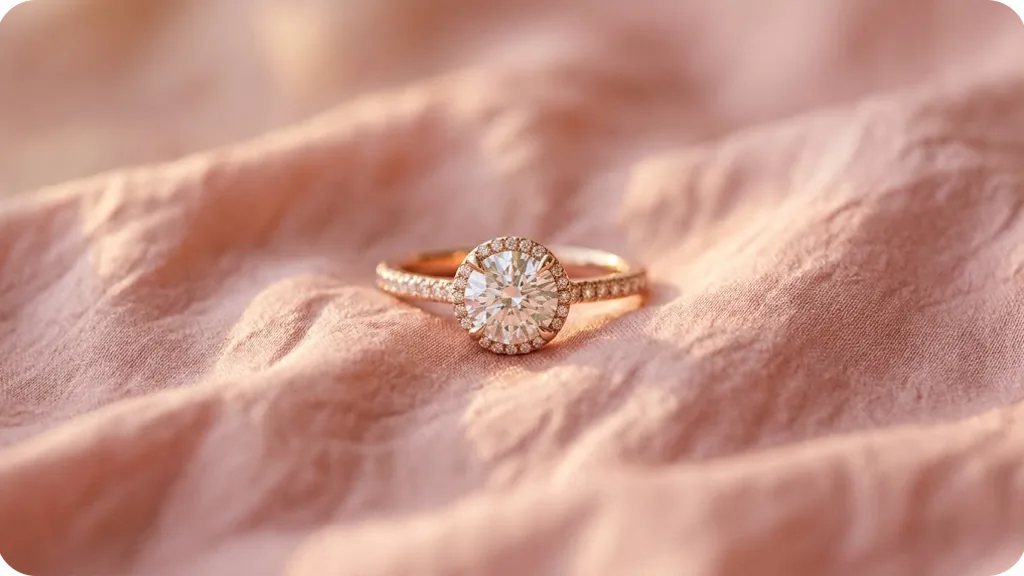
Are Rose Gold Engagement Rings Popular?
How popular rose gold really is, what the copper alloy does, whether it tarnishes, and why it never needs replating.
Yes — rose gold is a mainstream choice rather than a passing fashion, and it has been for well over a decade. It is not the most common metal for engagement rings in the UK; white gold and platinum still lead. But it is firmly established, and it stopped being a risky choice a long time ago.
We are not going to quote you a market share percentage, because we have not seen a reliable UK figure and we would only be making one up. What we can tell you is what rose gold actually is, how it behaves over years of wear, and who it genuinely suits.
What rose gold actually is
Pure gold is soft and yellow. Every gold used in jewellery is an alloy — pure gold mixed with other metals to make it hard enough to wear and to set the colour.
Rose gold gets its colour from copper. The more copper in the mix, the redder it looks.
| Alloy | Pure gold content | Typical colour |
|---|---|---|
| 18ct rose gold | 75% | Warm, soft pink. The rest is mostly copper with a little silver. |
| 14ct rose gold | 58.3% | More copper in the mix, so a deeper, redder pink. |
| 9ct rose gold | 37.5% | Strongest colour of the three, and the hardest. |
So a lower carat number means more rose, not less. That surprises people. If you want a subtle blush rather than a strong pink, 18ct is the one to look at.
The practical advantages nobody mentions
It needs no replating
This is the big one. White gold is naturally a pale grey-yellow and is plated with rhodium to make it bright white. That plating wears through and needs redoing every few years — an ongoing cost and an ongoing inconvenience.
Rose gold’s colour goes all the way through the metal. There is nothing to wear off. In twenty years it will be the same colour it is today.
It hides scratches well
The copper content makes rose gold slightly harder than yellow gold of the same carat, and the warm tone disguises fine surface marks better than a bright white finish does.
It flatters most skin tones
Warm pink sits well against both warm and cool complexions, which is why it works on a much wider range of hands than people expect. If you are unsure, it is the safer bet of the three golds.
It makes a warm diamond look better
A diamond in the lower colour grades — J, K and below — can show a faint warm tint against white metal. Set the same stone in rose gold and the warmth reads as intentional rather than as a flaw. This is a genuinely useful trick if you want a larger stone for the same money.
The honest disadvantages
- Copper allergies exist. They are uncommon, but if someone reacts to copper jewellery, rose gold may irritate. Higher carat means less copper, so 18ct is gentler than 9ct.
- Matching later is harder. Rose gold shades vary between makers. If you buy an engagement ring now and a wedding band elsewhere in five years, they may not sit together perfectly. Buying both from the same jeweller solves this.
- It is a colour with an opinion. Yellow and white gold are neutral backgrounds. Rose gold is a choice you will notice every day — which is wonderful if you love it and tiresome if you were only following a trend.
Does rose gold tarnish?
No, not in the way silver does. Gold does not tarnish, and the copper content in rose gold is not enough to cause the black film you get on sterling silver.
What can happen, very slowly and only in some conditions, is a slight deepening of the colour as the copper at the surface oxidises — usually described as a patina rather than tarnish. Many people like it. A polish removes it entirely, and any jeweller can do that in minutes.
What genuinely does affect it: chlorine, bleach and household cleaners attack the alloy metals over time. Take the ring off before swimming pools and cleaning.
What we make in rose gold
All prices correct at the time of writing.
- The Solitaire Round Cut Engagement Ring in Rose Gold (£1,007) — the classic single stone, in the warmest of the metals. If you want one rose gold ring and no complications, this is it.
- The Halo Heart Cut Engagement Ring in Rose Gold (£949) — a heart-shaped centre stone ringed with smaller diamonds. Rose gold and a heart cut is about as unambiguously romantic as jewellery gets.
- The Bezel Hexagon Cut Engagement Ring in Rose Gold (£1,078) — a hexagonal stone held in a rim of metal rather than claws. Modern, geometric, and nothing catches on clothing.
- The Teardrop Pear Cut Bridal Set in Rose Gold (£999) — engagement ring and matching band bought together, which removes the shade-matching problem entirely.
You can see everything side by side in the engagement ring collection, or look at matched bridal sets if you want the ring and band to be a guaranteed pair. Every centre stone is a lab-grown diamond with a free IGI certificate.
Is it more expensive than yellow or white gold?
Not meaningfully. The gold content is what drives the price, and 18ct rose gold contains the same 75% gold as 18ct yellow or white. Copper is cheap.
Where costs differ slightly is finishing — white gold carries the rhodium plating step, and will carry it again every few years. Over the life of the ring, rose gold is usually the cheaper metal to own.
Frequently asked questions
Are rose gold engagement rings popular?
Yes, and consistently so rather than as a spike. White gold and platinum remain more common in the UK, but rose gold is a normal, well-established choice that no longer reads as unusual.
Will rose gold go out of style?
The colour has been in and out of fashion since the nineteenth century, when it was known as Russian gold. It has never disappeared. If you like it, that is a better reason than any forecast we could give you.
Does rose gold suit every skin tone?
It suits most. Warm pink is more universally flattering than bright white metal, which can look stark against very fair or very warm complexions. Try it on if you can — five minutes with a ring on your hand tells you more than any guide.
Can I mix rose gold with other metals?
Yes, and deliberately mixed stacks look excellent. The trick is to commit to the mix rather than have one ring that nearly matches. Two rose gold rings and one white gold band reads as a choice; two slightly different roses reads as a mistake.
Is rose gold hypoallergenic?
Mostly. It is usually nickel-free, which is the metal most people react to. Copper sensitivity is rarer but real — choose 18ct over 9ct if it is a concern, and tell us before you order.
Can you make any of your designs in rose gold?
Generally yes. If you have seen a design you like in another metal, ask us. We also design bespoke at no extra design cost, so a rose gold version of something you have in mind is straightforward.
Have a browse when you are ready, and if you want to see how a shade sits against your skin before committing, get in touch — we are in North Harrow and happy to help.
Ready to find your perfect ring?
Explore our lab-grown diamond collection or book a virtual appointment with our team.











