
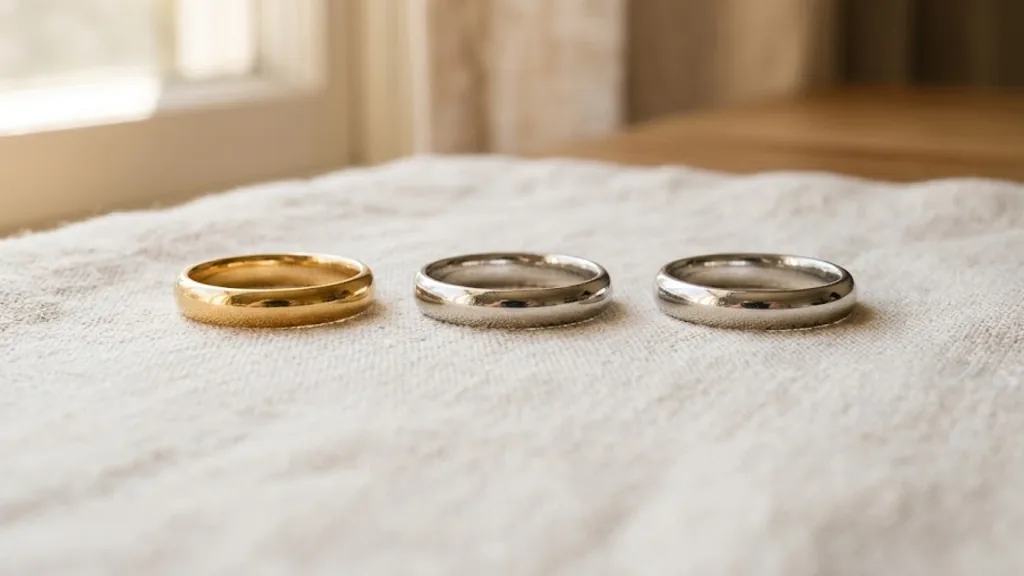
Is 10K White Gold Good for an Engagement Ring?
10K is a US grade, not a UK one. What that means for hallmarking, servicing and durability - and what to choose instead.
Before anything else, one correction that changes the whole question: 10K is not a British standard. It is an American one. If you are shopping in the UK and seeing “10K white gold”, you are looking at an imported ring, and it cannot carry a normal UK gold hallmark at that fineness.
That does not automatically make it a bad ring. But it does mean the sensible comparison is not “10K versus 14K” — it is “10K versus the UK grades you can actually buy and get hallmarked”.
What the numbers mean
Gold purity is measured in carats (spelled karats in America, hence the K). 24 carat is pure gold. Everything below that is an alloy — gold mixed with other metals to make it hard enough to wear.
| Grade | Pure gold | UK standard? | Notes |
|---|---|---|---|
| 9ct | 37.5% | Yes (375) | The UK’s most affordable legal standard. Hard-wearing. |
| 10K | 41.7% | No | An American standard. Not a recognised UK fineness, so no standard UK hallmark. |
| 14ct | 58.3% | Yes (585) | The usual sweet spot for engagement rings. Durable and clearly precious. |
| 18ct | 75% | Yes (750) | Richer colour, softer, more valuable. The traditional fine jewellery choice. |
| 22ct | 91.6% | Yes (916) | Too soft for a ring with a raised stone. Common in South Asian jewellery. |
Note the odd result: 10K contains slightly more gold than UK 9ct. So the American grade people worry about is not actually the lowest one on the British high street.
So is 10K white gold good enough?
Here is the balanced answer.
What it does well
- It is hard. More alloy metal means a stiffer, more scratch-resistant band. If you are hard on your hands, a lower carat genuinely survives better.
- It is cheaper. Less gold, lower price. That is the honest reason it exists.
- It holds a stone securely. Claws in a harder alloy bend less easily than claws in 18ct.
What it does badly
- Higher chance of skin reaction. Less gold means more of everything else. White gold alloys often contain nickel, which is the most common metal allergy. UK and EU rules limit how much nickel jewellery may release, but “limited” is not “none”, and lower-carat alloys sit closer to the limit.
- No UK hallmark at that fineness. A hallmark is an independent assay office’s guarantee of the metal. Losing that is a real loss of protection, not a technicality.
- Harder to service in the UK. Resizing and repair use solder matched to the alloy. Many British workshops do not routinely stock 10K solder, so you may be quoted more, or refused.
- Lower resale and scrap value. Modest either way, but lower is lower.
The white gold issue that applies at every carat
This catches almost everyone out, so it is worth stating clearly.
White gold is not naturally white. Gold is yellow, and mixing it with palladium, silver or nickel makes it a pale grey-yellow, not the bright silver-white you see in the shop. That brightness comes from a thin layer of rhodium plated over the surface.
Rhodium plating wears off. On a ring worn daily, most people notice a warm tinge returning after a couple of years, sooner on the underside where it rubs. Replating is a routine, inexpensive job at any jeweller — but it is a recurring cost for as long as you own the ring.
The lower the carat, the paler the underlying metal, so a 10K white gold ring generally shows less of a colour change when the plating wears than an 18ct one does. That is one genuine point in its favour.
If the idea of ongoing replating puts you off, platinum is the alternative. It is naturally white all the way through and never needs plating.
What we would actually recommend
For an engagement ring meant to be worn every day for decades, we would point most people at 14ct or 18ct gold, or platinum.
- 14ct is the practical middle. Enough gold to be properly precious, enough alloy to be tough, and a UK standard with a proper hallmark.
- 18ct if you want the richer feel and are gentle with your hands.
- Platinum if you want white and never want to think about plating again. It is denser and heavier, and it scratches into a soft sheen rather than wearing away.
- 9ct if budget is the deciding factor — it is a legitimate UK standard, hallmarked, and every British jeweller can service it.
We do not sell 10K. Our rings are hand-made in solid gold and platinum, and if you tell us how the ring will be worn we will tell you honestly which carat suits.
White gold rings worth a look
Prices correct at the time of writing.
- The Solitaire Round Cut Engagement Ring in White Gold (£563) — the straightforward classic, and our most affordable white gold engagement ring.
- The Halo Marquise Cut Engagement Ring in White Gold (£1,143) — a marquise centre stone surrounded by smaller diamonds, which makes the whole ring read considerably larger.
- The Dutch Marquise Cut Bridal Set in White Gold (£932) — engagement ring and matching band together, so the metals are guaranteed to match.
Browse the full engagement ring collection, or the wedding bands if you are buying the pair. Every centre stone is a lab-grown diamond with a free IGI certificate, and delivery is free and insured across the UK.
Frequently asked questions
Is 10K white gold good for an engagement ring?
It is usable and durable, but it is not a UK standard, so it cannot carry a normal British hallmark and can be awkward to service here. For a daily-wear ring we would choose 14ct or 18ct gold, or platinum.
Is 10K real gold?
Yes. It is 41.7% gold by weight. It is real, solid gold — just a lower proportion than most fine jewellery uses.
Will 10K white gold turn my finger green?
Unlikely from the gold itself. Green marks usually come from copper in the alloy reacting with skin, sweat or hand cream, and white gold alloys are generally low in copper. Skin irritation, if it happens, is more often a nickel reaction than a green stain.
Does 10K white gold need rhodium plating?
Yes, like all white gold. The upside is that the metal underneath is paler than in higher carats, so the change as the plating wears is less obvious.
How often does white gold need replating?
A rule of thumb in the trade is every couple of years for a ring worn daily, not a measured figure — it depends entirely on your skin, your job and how often the ring comes off. Some people go five years; others notice within one.
Is platinum worth the extra over white gold?
If you want a permanently white metal with no plating to maintain, yes. It costs more upfront and weighs noticeably more on the hand, which some people love and others do not. Try both on before deciding.
Can you make a ring in a specific carat for me?
Ask us. We design bespoke at no extra design cost, so if you have a particular metal and carat in mind, that is a normal request rather than a special one.
If you are weighing up metals and would rather talk to a person, we are in North Harrow and happy to go through it with you.
Ready to find your perfect ring?
Explore our lab-grown diamond collection or book a virtual appointment with our team.











