What Is the Highest Diamond Clarity? Flawless, IF and VVS1 Explained
Flawless is the top grade. Here is what FL, IF, VVS1 and VVS2 really mean, and when paying for the top of the scale is worth it.
The short answer is Flawless, abbreviated to FL. It is the top of the clarity scale, and it means a trained grader could find no inclusions inside the diamond and no blemishes on its surface while examining it at 10x magnification.
The longer answer is more useful, because Flawless is rare enough that most people never see one, and the three grades just below it — IF, VVS1 and VVS2 — are where the “very high clarity” conversation actually happens.
The top four grades, in order
| Grade | Full name | What a grader sees at 10x |
|---|---|---|
| FL | Flawless | Nothing at all — no inclusions inside, no blemishes on the surface. |
| IF | Internally Flawless | Nothing inside. Only minor surface marks, such as a faint polish line. |
| VVS1 | Very, Very Slightly Included 1 | Inclusions so minute that even a skilled grader has real difficulty locating them. |
| VVS2 | Very, Very Slightly Included 2 | The same category, marginally easier to find. |
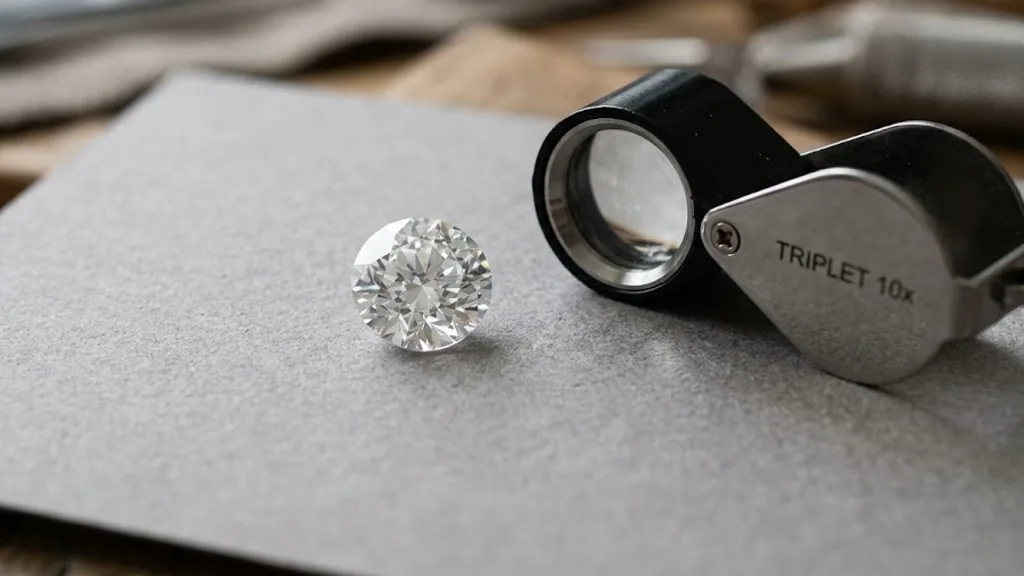
Everything about these grades is judged through a 10x jeweller’s loupe. That is the standard the whole scale is built on, and it is worth holding onto as you read the rest of this.
What does VVS1 mean?
VVS1 stands for Very, Very Slightly Included, first grade. In practice it describes a diamond whose inclusions are so tiny that a professional grader, working in controlled lighting with the stone loose and clean, has to hunt for them.
The features involved are typically pinpoints (single microscopic specks), a very small needle, a faint internal graining line, or an indented natural — a small area of the original rough surface left at the girdle, the thin edge where the top and bottom of the stone meet.
What separates VVS1 from VVS2 is usually where the feature sits. If a grader can only find it by examining the diamond from the underside, it tends to land at VVS1. If it can be located from the top, it tends to land at VVS2. That is the entire difference between the two grades, and it is invisible in every practical sense.
To be completely direct: a VVS1 diamond is not more beautiful than a VS1 diamond. You cannot tell them apart on a hand, in a photograph, across a dinner table, or by any means available to a person without magnification. What VVS1 buys you is rarity and a certificate line.
How rare is Flawless, really?
Genuinely rare, in natural diamonds. Flawless and Internally Flawless stones make up a very small share of gem-quality natural production, and prices at the top of the scale climb steeply for that reason.
We are not going to quote you a percentage. Figures for this get repeated online with great confidence and very little sourcing, and we would rather tell you that no reliable published number exists than invent one. The relevant fact is directional: as you move FL, IF, VVS1, VVS2, each step upward is scarcer and dearer than the one below it, and the last two steps cost the most for the least visible gain.
Lab-grown diamonds change this picture noticeably. Because growth conditions are controlled rather than left to geology, very high clarity is far more achievable, and a VVS-grade lab-grown diamond costs a fraction of the natural equivalent. If owning a top-of-scale stone appeals to you, lab-grown is by a wide margin the affordable route to it.
Is a Flawless diamond worth buying?
Sometimes yes, and we would not talk anyone out of it. But it is worth being clear about what you are and are not paying for.
Good reasons to buy high clarity:
- You simply want it, and you will enjoy knowing. That is a legitimate reason and we will not lecture anyone about it.
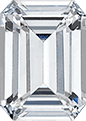
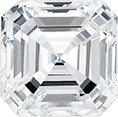
- You are buying a step cut. Emerald, asscher and baguette shapes have long open facets like a hall of mirrors, with very little sparkle to distract the eye. Inclusions show far sooner in them, so clarity does real visible work.
- You are buying a large stone. At three or four carats there is much more diamond to look through, and lower grades stop being reliably eye-clean.
- You collect, or you enjoy examining stones under a loupe.
Weaker reasons:
- You think it will sparkle more. It will not. Sparkle comes from cut quality, and a well-cut VS2 out-performs a poorly cut Flawless every time.
- You think it will hold value better. Retail resale rarely flatters any diamond, and clarity is not the lever that changes that.
- Someone told you it is “the proper grade to buy”. There is no proper grade — only what suits your shape, your size and your budget.
Where high clarity genuinely shows
If you are drawn to a step cut, this is where the top of the scale earns its keep. An emerald cut has broad, flat facets arranged in parallel steps, and the eye can look straight down into the stone rather than being met by a wall of sparkle. Anything inside has nowhere to hide.
Our Solitaire Emerald Cut Engagement Ring is the clearest example of that effect, with a single stone and no surrounding diamonds to break up the view. A Hidden Halo Emerald Cut Engagement Ring adds a ring of tiny diamonds tucked underneath the centre stone, which lifts the whole thing visually while leaving the open table facet on full display.
Asscher cuts behave the same way — a square step cut with a distinctive concentric look, which is why our Stackable Asscher Cut Wedding Band in Yellow Gold uses small stones where clarity is far less demanding.
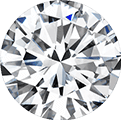
Round brilliants sit at the other extreme. Fifty-seven facets throwing light in every direction hide small inclusions extremely well, which is why a round is the shape where paying for VVS makes the least visual sense.
Reading a high clarity certificate
Two details are worth checking on any report at the top end.
First, look at the plotting diagram — the small outline drawings showing where inclusions were found. On a VVS stone there will be very little marked, and often nothing at all on the top view. On a Flawless or IF stone the diagram will be clean.
Second, read the comments line at the bottom. It sometimes notes that clarity is partly based on features not shown on the diagram, or mentions internal graining. Neither is alarming at this level, but both are worth knowing about.
Every centre stone we sell comes with a free IGI certificate, so you can check both of those yourself rather than taking a description on trust.
Is the “clearest” diamond the same as the whitest?
“Clearest” gets used for two completely different things, and mixing them up leads people to buy the wrong grade.
- Clarity is about what is inside the stone — inclusions and blemishes. That is the FL to I3 scale, and it is what this guide covers.
- Colour is about the faint body tint of the stone — how white or warm it is. That is a separate D to Z scale.
A diamond can be Flawless and still show a warm tint, because it is graded on both scales independently. If what you actually want is the whitest diamond rather than the cleanest, read our guides to F colour and G colour instead.
What actually makes a diamond look clear
Three things, in order of how much they matter:
- Cut. The angles decide whether light entering the top comes back out to your eye or leaks through the base. A poorly cut stone looks dull and glassy no matter what its clarity grade says.
- Transparency. Large clouds or extensive graining can leave a diamond looking faintly milky. This is a real effect and it is not always obvious from the grade alone — read the comments section on a certificate.
- Cleanliness. Genuinely. A film of hand cream and soap on the underside of a stone blocks light far more effectively than any inclusion does. Warm water, a drop of washing-up liquid and a soft brush once a fortnight makes more difference than three clarity grades.
A note on grading language
“Perfect”, “clean” and “top clarity” are marketing words, not grades. Only the eleven official codes — FL, IF, VVS1, VVS2, VS1, VS2, SI1, SI2, I1, I2, I3 — mean anything, and only when they come from a named laboratory report.
It is also worth saying that clarity has nothing to do with how tough a diamond is, unless you go all the way down to the I2 and I3 grades where a large fracture can genuinely weaken a stone. Buying Flawless because it sounds safer is buying the wrong thing.
Choosing a setting for a very clean stone
If you have paid for a high clarity grade, put it somewhere you can see it. Open, simple mounts do the stone justice.
- Solitaires put nothing between you and the diamond. Our Solitaire Round Cut Engagement Ring is as direct as it gets.
- Bezel settings ring the stone in metal, which keeps it secure and gives a very clean modern line. Our Bezel Hexagon Cut Engagement Ring in Rose Gold shows the effect.
- Two-stone designs let you compare two stones side by side, which is unforgiving and rather beautiful when the stones are matched. Our Toi et Moi Pear Cut Engagement Ring in White Gold is designed exactly that way.
Frequently asked questions
What is the highest degree of clarity for a diamond?
Flawless (FL). No inclusions and no blemishes visible at 10x magnification. Internally Flawless (IF) sits immediately below it, with a clean interior and only trivial surface marks.
Is VVS1 better than VVS2?
Technically yes, practically no. The difference is usually just whether a grader can locate the feature from the top of the stone or only from underneath. There is no visible difference whatsoever.
Is VVS1 better than IF?
IF is one step higher. An Internally Flawless stone has nothing at all inside it; a VVS1 has something, just barely findable. Both look identical to the eye.
Can you see the difference between VVS1 and VS1?
Not without magnification, and usually not easily with it either. Three grades separate them on paper and nothing separates them on a hand. If your budget is finite, this is one of the easiest places to redirect money towards carat weight or a better cut.
Do lab-grown diamonds come in Flawless and VVS grades?
Yes, and considerably more affordably than natural stones. They are graded on the same FL-to-I3 scale by the same laboratories, so the letters mean exactly the same thing.
Is Flawless the same as perfect?
Not quite. Flawless refers only to clarity. A Flawless diamond can still have a poor cut, a noticeable warm tint, or awkward proportions. It is one grade out of four, not an overall verdict on the stone.
Is Internally Flawless as good as Flawless?
Visually, yes. The surface blemishes that separate IF from FL are microscopic and have no effect on how the diamond looks, sparkles or lasts.
Do you stock Flawless diamonds?
Our listed rings are set with stones chosen for eye-clean appearance and value rather than for top-of-scale certificates. If you specifically want an FL or IF centre stone, ask us — we source to specification and bespoke design carries no extra design cost.
Choosing your grade
If the top of the scale appeals to you, lab-grown is the sensible way to reach it, and a step cut is where you will actually see the benefit. If you are buying a round brilliant, our honest advice is to sit lower on the clarity scale and put the difference into cut quality or size.
If you want the practical version of that trade-off, we have written it up in what clarity and colour to choose for a diamond ring, and the full scale is explained in how to read diamond clarity grades on a certificate.
Otherwise, have a browse through our emerald cut designs or the wider engagement ring collection. Everything is hand-made in solid gold or platinum in North Harrow, and if you want a specific grade in a setting we do not list, we design bespoke at no extra design cost.
More guides on this topic
Ready to find your perfect ring?
Explore our lab-grown diamond collection or book a virtual appointment with our team.