Can I Add Diamonds to My Engagement Ring? Upgrade Options Explained
Five ways to add diamonds to a ring you already own, from a stacking band to a rebuilt head, with the real risks and costs.
Yes, in most cases diamonds can be added to an engagement ring you already own. Whether it is a good idea, and which method makes sense, depends on how the ring is built and on what you actually want to change about it.
This guide sets out every realistic option, from the ones that touch nothing to the ones that involve real workshop surgery, with an honest view of the cost and risk of each.
What people usually mean by “adding diamonds”
When someone asks this, they normally want one of five different things. Being clear which one you want makes the conversation with a jeweller far shorter.
- A bigger-looking centre, without buying a bigger stone
- More sparkle along the band
- A larger centre stone, keeping the same ring
- To mark an anniversary or a milestone with something visible
- To modernise a ring that feels dated
Each has a different best answer, and one of them requires no work on the ring at all.
Option 1: Wear another ring alongside it
The safest option, and the one most jewellers will suggest first if they are being straight with you. Nothing is cut, nothing is heated, nothing is at risk, and it is fully reversible.
A diamond band worn next to the engagement ring changes the whole look of the hand. Two bands, one either side, changes it dramatically. And if you tire of it, you take it off.
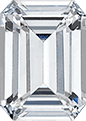
Our Stackable Round Cut Three Quarter Eternity Band is £762 and the Stackable Emerald Cut Half Eternity Band is £770, both correct at the time of writing. There are more in the wedding ring collection, in several stone shapes so you can echo the shape of your centre stone.
Option 2: Add diamonds to the shoulders
The shoulders are the parts of the band leading up to the centre stone. Setting small diamonds there is one of the most effective and least invasive changes you can make.
The jeweller drills seats into the existing metal and sets the stones, usually as pavé or in a channel. The centre stone often does not need to come out at all, which removes the main risk.
The limiting factor is the thickness of the band. A slim, delicate shank may not have enough metal to take seats without being weakened. A jeweller can tell you in a moment by looking at it, and should refuse the job if the answer is no.
Option 3: Add a halo
This makes the centre stone look larger and adds a ring of light around it. It requires the head to be rebuilt, which means the centre stone comes out and goes back in.
It is the most transformative of the modifications and also the most involved. We cover exactly what it entails, and when a new ring is the better buy, in our guide on adding a halo to an existing ring.
Option 4: Add side stones or convert to three stone
Two matched stones either side of the centre turn a solitaire into a three stone ring. It is a bigger change than shoulder pavé and gives a lot more width on the finger.
The practical difficulty is matching. Your existing centre stone has a specific colour and clarity, and the new side stones need to sit beside it without looking obviously different. This is easier with lab-grown stones, where consistent grades are readily available, than with an older mined stone of unknown grading.
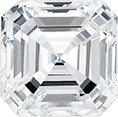
If you like the look, it is worth comparing against simply buying a three stone ring. Our Three Stone Emerald Cut Engagement Ring is £1,017 at the time of writing, and it is designed as a three stone from the ground up rather than adapted into one.
Option 5: Upgrade the centre stone
The band and setting stay, a larger stone goes in. The head usually needs replacing, because a head is made to fit a particular stone size.
This works best when the sentiment lives in the band, for example an engraved or inherited shank. It works less well when the ring was designed around the original stone’s proportions, because a much larger stone can throw the whole design out of balance.
| Option | Risk to the ring | Relative cost | Reversible |
|---|---|---|---|
| Wear a band alongside | None | Cost of the band | Yes, completely |
| Shoulder diamonds | Low | Moderate | No, but the change is subtle |
| Halo | Moderate | Higher | Only by another rebuild |
| Side stones | Moderate | Higher | Only by another rebuild |
| Larger centre stone | Moderate | Highest | The original stone can be kept |
Rings where the answer is usually no
Some rings should be left alone, and a good jeweller will say so.
Full eternity bands have no plain metal to work with. Tension settings hold the stone by spring pressure alone, and altering the band destroys the tension. Very slim or worn shanks do not have the metal to take more seats safely. Antique and hallmarked pieces can be modified, but doing so often removes the very thing that made them worth keeping.
There is also a category we would simply steer you away from: inexpensive rings where the modification would cost more than the ring itself. In that case you are paying a great deal to keep something the workshop is about to substantially replace anyway.
Practical points before you hand the ring over
- Get the quote in writing, including what happens if a stone chips during setting.
- Ask who insures the ring while it is with the jeweller. Very few people ask, and it is the most important question.
- Photograph the ring from several angles first, including the hallmark and any engraving.
- Ask whether your wedding band will still sit flush afterwards. Adding width at the top often means it will not.
- Ask for the total added carat weight in writing, so your insurer’s records stay accurate.
Frequently asked questions
Will adding diamonds increase what my ring is worth?
It increases what it cost you, but not proportionally what it would sell for. Melee diamonds and setting labour add relatively little resale value. Do it because you want to wear it, not as an investment.
Can lab-grown diamonds be added to a ring with mined diamonds?
Physically yes, and they will match visually because they are the same material. Be aware that the ring then contains both, and any future valuation or insurance record should say so. We will always tell you exactly what we have set.
How long does the work take?
Shoulder setting is typically a matter of days to a couple of weeks. Rebuilding a head, setting a halo and refinishing the ring usually takes longer. Anyone promising same-day work on a stone-set modification is cutting corners somewhere.
Will the added diamonds match my existing ones?
A good setter will match colour and clarity by eye against your existing stones and will show you before setting. Perfect matching is easier on newer rings with known grades than on older stones.
Should I just buy a new ring?
Sometimes, and we will say so if we think it. If the existing ring carries real meaning, modify it. If it does not, the money usually goes further on a ring designed as a whole. Our engagement ring collection is a fair place to compare, and we design bespoke pieces at no extra design cost if nothing there is quite right.
Everything we make is hand-made in solid gold or platinum in North Harrow, London, with a free IGI certificate on centre stones, free insured UK delivery and 30-day returns.
More guides on this topic
Ready to find your perfect ring?
Explore our lab-grown diamond collection or book a virtual appointment with our team.