Does Your Engagement Ring Have to Be a Diamond?
No rule says it must. An honest look at sapphire, moissanite, emerald and plain bands, and which survive daily wear.
No. An engagement ring does not have to contain a diamond, and there is no rule anywhere that says it must. Plenty of people are engaged with sapphires, emeralds, moissanite, plain gold bands, or rings with no stone at all.
What follows is an honest look at the alternatives, including where each one is genuinely a good idea and where it will cause you problems later. We sell lab-grown diamond jewellery, so we will be clear about that bias throughout and try to be useful anyway.
Where the “must be a diamond” idea came from
It is more recent than most people think. Diamond engagement rings existed for centuries but were rare and aristocratic. What made them the default in Britain and America was twentieth-century advertising, particularly from the late 1930s onwards, when the diamond industry ran an extremely successful and very long campaign to link diamonds with engagement.
Before that, coloured gemstones, pearls and plain gold bands were all perfectly ordinary engagement rings. If you choose a sapphire today you are not breaking with tradition. You are rejoining an older one. We look at this history properly in our guide to when diamond engagement rings became popular.
The one thing that genuinely matters: hardness
An engagement ring is worn every day, often for decades, and it takes constant knocks against door handles, keyboards, steering wheels and worktops. That is a harder life than any other piece of jewellery.
Gemstone hardness is measured on the Mohs scale, from 1 to 10. It measures scratch resistance, not toughness, but it is the best single guide to how a stone will look after ten years of daily wear.
| Stone | Mohs hardness | Suitability for daily wear |
|---|---|---|
| Diamond (mined or lab-grown) | 10 | Excellent |
| Moissanite | Around 9.25 | Excellent |
| Sapphire and ruby | 9 | Excellent |
| Emerald | 7.5 to 8 | Fair; commonly included and prone to chipping |
| Aquamarine, morganite | 7.5 to 8 | Fair; morganite abrades and dulls over time |
| Opal, pearl | 5.5 to 6.5 and below | Poor for an everyday ring |
The practical line falls around 8. Above it, the stone will still look sharp in twenty years. Below it, the facet edges soften, the surface picks up a fine haze of scratches, and the stone gradually loses its life. That is not a reason to avoid a softer stone, but it is a reason to know what you are choosing.
The main alternatives, honestly assessed
Sapphire. The strongest non-diamond choice. Hardness 9, available in blue, pink, yellow, green and colourless, and historically well established as an engagement stone. The main caution is that sapphire returns less light than a diamond, so it reads as a deep, saturated colour rather than as sparkle.
Ruby. Same material as sapphire, same hardness, and a striking choice. Fine rubies are expensive, and lower quality ones can look flat and brownish, so quality varies more than with sapphire.
Emerald. Beautiful and genuinely fragile. Almost all emeralds contain internal fractures, and most are treated with oil or resin to improve their appearance. That treatment can be affected by heat, ultrasonic cleaning and even some detergents. If you choose emerald, choose a protective setting and accept that it needs care.
Moissanite. A separate material, not a diamond and not a fake diamond. It is hard, durable, and disperses light more strongly than diamond, which gives it noticeably more rainbow flash. Some people love that; others find it looks different from what they expected. It costs far less than diamond of any origin.
Morganite. Very popular in rose gold and very soft for the job. It will dull over years of daily wear. Lovely for a ring worn occasionally; a compromise for one worn always.
No stone at all. A plain or engraved gold band as an engagement ring is a real and quietly confident choice, especially for someone whose work makes a set stone impractical.
What we stock, plainly
We work in lab-grown diamond. We do not stock coloured gemstone engagement rings, and we are not going to pretend otherwise or send you a link to something that does not exist.
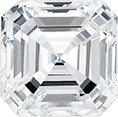
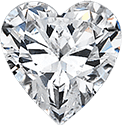
What we can offer, if the appeal of a coloured stone is really about wanting something that does not look like everyone else’s ring, is unusual diamond shapes and settings. Those go a long way towards individuality while keeping the hardness that makes a ring survive daily life.
- Our Vintage Pear Rose Cut Engagement Ring, £1,237 at the time of writing, uses a rose cut, which has a flat back and a domed faceted top. It gives a soft, antique glow rather than modern glitter, and looks nothing like a standard brilliant.
- Our Toi et Moi Pear Cut Engagement Ring in White Gold, £685 at the time of writing, sets two stones side by side, a design with genuine historical roots and no resemblance to a solitaire.
- Our Solitaire Hexagon Cut Engagement Ring, £1,078 at the time of writing, uses a geometric shape you will rarely see on another hand. You can see the rest in our hexagon shape selection.
If a coloured centre stone is genuinely what you want, tell us. We design bespoke pieces at no extra design cost, and we will give you a straight answer about whether we are the right workshop for that particular commission rather than taking the order regardless.
Frequently asked questions
Will people judge a non-diamond engagement ring?
Some might, briefly, and then they will get on with their lives. You will be wearing it for decades. Their opinion has a half-life of about a week.
Is a lab-grown diamond an alternative to a diamond?
No, it is a diamond. Same carbon structure, same hardness of 10, same optical behaviour, graded by the same laboratories on the same scales. The difference is that it was grown rather than mined, and it costs considerably less for the same size and quality. If your reason for looking at alternatives was price, this is worth understanding before you rule diamond out.
Is moissanite the same as cubic zirconia?
No. Cubic zirconia is much softer, around 8 to 8.5 on the Mohs scale, and it clouds and abrades within a few years of daily wear. Moissanite is far harder and genuinely lasts. They are often lumped together and should not be.
Can I have a coloured stone with diamonds around it?
Yes, and it is a sensible way to have colour while keeping brightness. A halo of diamonds around a sapphire also protects the centre stone’s edges. Our guide to halo engagement rings explains how that setting works.
What if she changes her mind later?
A centre stone can usually be swapped in the same setting, which is one reason to buy a well-made ring in the first place. It is a workshop job rather than a quick fix, but it is entirely normal.
If you would like to see what diamond looks like beyond the standard round solitaire, browse our engagement ring collection. Everything is hand-made in solid gold or platinum in North Harrow, London, with free insured UK delivery and 30 days to change your mind.
Ready to find your perfect ring?
Explore our lab-grown diamond collection or book a virtual appointment with our team.