How to Clean Your Wedding Ring at Home
A five-minute method that restores sparkle, what never to use on a ring, and the tap test that catches a loose stone early.
A wedding ring worn every day goes dull surprisingly fast, and it is almost never dirt from outside. It is a film of soap, hand cream, skin oils and shampoo that builds up underneath the stones and on the inside of the band. Diamonds attract grease, so a stone that looked brilliant in the shop can look flat within a few weeks.
The good news is that cleaning it at home takes five minutes, costs nothing, and works better than most people expect.
How do you clean a wedding ring at home?
Warm water and washing-up liquid. That is genuinely the professional answer for the vast majority of rings, and everything else on this page is a refinement of it.
- Block the plughole first. Do this before anything else. More rings are lost down bathroom drains than are ever stolen.
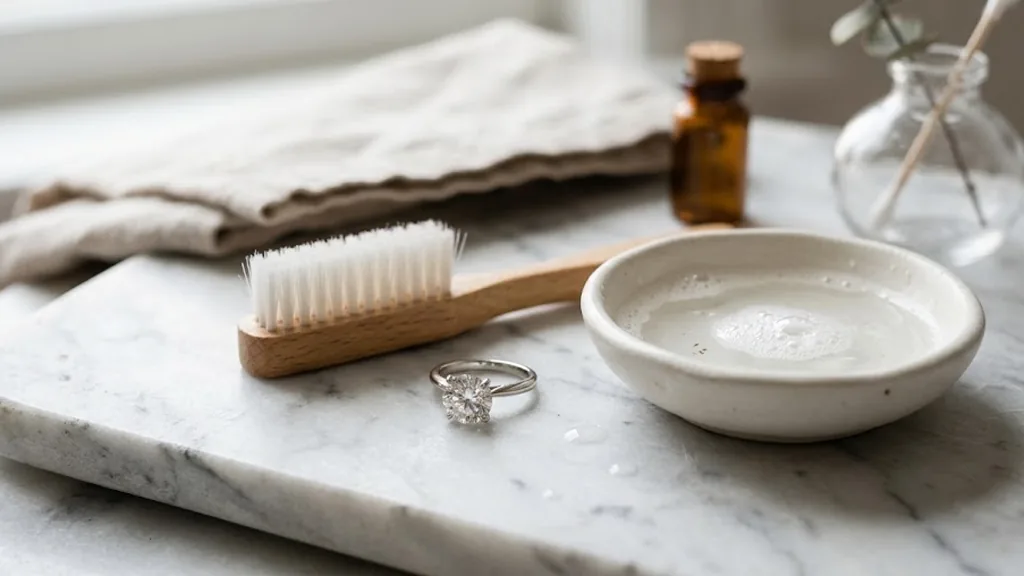
- Fill a small bowl with warm water — comfortably warm, not hot. Add a couple of drops of plain washing-up liquid.
- Soak the ring for 20 to 30 minutes. This does most of the work by softening the greasy film.
- Brush gently with a soft toothbrush. A baby toothbrush or a very soft-bristled adult one. Work around and underneath the stones — the underside of a diamond is where the grease sits, and it is the surface that makes the stone look dull.
- Rinse in clean warm water in a second bowl, not under a running tap. Again: the drain.
- Dry on a soft lint-free cloth and leave it to air-dry completely before putting it back on. Trapped moisture under a setting will leave marks.
Once a fortnight is plenty for a ring worn daily. Once a week if you use a lot of hand cream.
How should you clean each type of wedding ring?
| Ring | Safe to soak? | Notes |
|---|---|---|
| Plain gold or platinum band | Yes | Nothing to damage; soak and brush freely |
| Diamond-set band (pavé, channel) | Yes | Brush carefully; check settings while it is clean |
| Bezel-set stones | Yes | Grease collects at the rim; brush all round it |
| Sterling silver | Yes | Also tarnishes — see below |
| Rhodium-plated white gold | Yes, gently | Avoid anything abrasive; it thins the plating |
| Oxidised or blackened silver | Briefly only | Scrubbing removes the deliberate darkening |
| Pearls, opals, emeralds | No | Wipe with a damp cloth only — never soak |
How do you clean a diamond ring specifically?
Diamonds are the hardest material used in jewellery and the water-and-soap method will not touch them. Two extra points worth knowing:
The underside matters most. Light enters a diamond through the top, bounces around inside, and comes back out. If the pavilion — the pointed underside — is coated in grease, that light escapes instead of returning. Cleaning underneath is what restores the sparkle, not polishing the top.
Set bands need attention along the row. A ring like the Stackable Round Cut Full Eternity Band has stones all the way round with small gaps between each setting, and those gaps trap soap. Angle the brush along the row rather than across it.
Bezel settings, where each stone sits inside a rim of metal, are the easiest of all to keep clean — there are no claws to catch fibres. On a ring like the Bezel Rose Cut Eternity Band in Sterling Silver, run the brush around the outside edge of each rim, which is where the film collects. Prices on our product pages are correct at the time of writing.
How do you clean a sterling silver ring?
Silver has a second problem beyond grease: tarnish. That is a chemical reaction between the silver and sulphur compounds in air, and it produces a yellow-brown then black film. Washing will not remove it.
For tarnish, use a proper silver polishing cloth — the two-layer kind, impregnated with a mild polish. Rub gently and the tarnish lifts. Do not use it on plated or oxidised areas.
Tarnish is also preventable. Store silver in a sealed bag with an anti-tarnish strip when you are not wearing it, and keep it away from rubber bands, wool and onions, all of which are sulphur-rich.
What should you never use to clean a ring?
These come up constantly, and some of them cause real damage.
- Toothpaste. It is a mild abrasive. It will scratch gold, dull platinum and thin rhodium plating. It is the single most common piece of bad jewellery advice on the internet.
- Bicarbonate of soda. Also abrasive. Same problem.
- Bleach or anything chlorine-based. Chlorine attacks the alloys in gold, and over time it can make a band brittle and crack. This includes swimming pools and hot tubs — take the ring off.
- The aluminium foil and bicarb trick. It works on silver, but it is a chemical reaction that can affect settings and any oxidised finish, and it does nothing helpful for gold or platinum.
- Strong jewellery dips. The liquid dip solutions sold cheaply can be harsh on plating and on any softer stones.
- Scrubbing hard. Gold is soft. Firm brushing puts fine scratches into the metal that add up over years.
Are ultrasonic cleaners safe for wedding rings?
Home ultrasonic cleaners use high-frequency vibration to shake dirt loose. They are very effective and they are also the fastest way to lose a stone from a ring that already had a loose setting.
Reasonable in an ultrasonic: plain gold and platinum bands, and well-made diamond rings with settings you know are tight.
Never in an ultrasonic: anything with pearls, opals, emeralds or other fragile or fracture-filled stones; anything glued rather than set; anything with a visibly loose stone; and antique or inherited pieces where you do not know how it was made.
If you use one, put the ring in a small basket rather than letting it rest on the tank floor, and check every stone afterwards.
How can you tell if a stone is loose?
Here is a check worth doing every time you clean. Hold the dry ring close to your ear and tap it gently with a fingernail. A well-set ring is silent. If you hear a faint rattle or tick, a stone is loose and needs a jeweller before you wear it again.
That thirty-second habit has saved more diamonds than any cleaning method.
How do you keep a wedding ring clean for longer?
- Take the ring off for hand cream and sunscreen. These are the main culprits. Put the ring on afterwards, not before.
- Take it off for washing up, cleaning and gardening. Bleach and detergents are worse for it than any amount of wear.
- Take it off in swimming pools and the sea. Chlorine damages gold alloys; cold water shrinks fingers and rings slide off in the sea.
- Take it off at the gym. Weight bars are one of the most common causes of bent bands we see.
- Have one place you always put it. A small dish by the sink. Every ring lost at home was put down somewhere unusual.
When should you take the ring to a jeweller instead?
Home cleaning handles appearance. It does not handle structure. Have a diamond-set ring checked professionally every year or two, and sooner if:
- You hear or feel any movement in a stone
- A claw looks bent, flattened or snagged on fabric
- The band has visibly thinned on the palm side
- White gold has gone slightly yellow or grey — that is the rhodium plating wearing through, and it needs re-plating rather than cleaning
A professional clean also uses steam, which reaches places a toothbrush cannot.
Frequently asked questions
How often should I clean my wedding ring?
Every week or two for a soak-and-brush if you wear it daily. A quick wipe with a soft cloth any time it looks smeary. There is no such thing as cleaning it too often with soap and water.
My diamond looks cloudy even after cleaning. Why?
Usually residue underneath the stone that the brush did not reach. Soak it longer — an hour rather than twenty minutes — and work the brush from below. If it is still cloudy, the film may have hardened, and a jeweller’s steam clean will shift it in seconds.
Can I clean my engagement ring and wedding band together?
Yes, and you should — they get dirty together. Just clean them separately in the bowl rather than stacked, so the brush can reach the surfaces that normally touch each other.
Does platinum need different cleaning to gold?
No, the method is the same. Platinum does develop a soft matte patina over time, which is not dirt and will not clean off. Some people love it; if you prefer a bright finish, a jeweller can polish it back.
Will cleaning remove scratches?
No. Cleaning removes film; scratches are in the metal itself. Light scratches on a well-worn ring are normal and can be polished out professionally, though polishing removes a small amount of metal each time, so it should not be done too often.
Why does regular cleaning matter?
A ring that is cleaned regularly and checked once a year will outlast all of us. Most of the damage we repair at the bench comes from neglect rather than accident — a loose claw that went unnoticed, or a band worn thin without anyone looking.
If your ring needs more than a clean, we are in North Harrow, London, and we work on rings whether or not they came from us. And if you are still choosing, our wedding ring collection includes low-maintenance designs — bezel settings and plain bands take daily wear better than anything else. Everything hand-made in solid gold, platinum and sterling silver with lab-grown diamonds, free insured UK delivery and 30 days to return.
Ready to find your perfect ring?
Explore our lab-grown diamond collection or book a virtual appointment with our team.