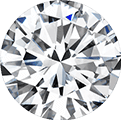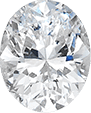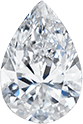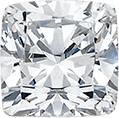
Where to Buy a Man-Made Diamond Engagement Ring in the UK
What man-made really means, the six questions that separate good sellers from bad, and how UK buying options compare.
“Where should I buy the ring?” is a harder question than it looks, because the diamond market is full of words that sound similar and mean very different things. This guide covers what “man-made” actually means, the questions that separate a good seller from a poor one, and how the different kinds of UK jeweller compare.
First, the words
Getting this right will protect you from the most expensive mistake in the category.
| Term | What it is | Is it a diamond? |
|---|---|---|
| Lab-grown diamond | Diamond grown in a controlled facility | Yes — identical material |
| Man-made diamond | The same thing, older wording | Yes |
| Lab-created / lab-made | The same thing again | Yes |
| Cultured diamond | The same thing, marketing wording | Yes |
| Moissanite | Silicon carbide — a different mineral | No |
| Cubic zirconia (CZ) | Zirconium dioxide — a simulant | No |
| “Diamond simulant” or “diamond hybrid” | Anything that looks like a diamond but isn’t | No |
The first four rows are all the same product under different names: real diamond, made above ground rather than dug up. Same carbon, same crystal structure, same hardness, same sparkle. They are graded by the same laboratories on the same four Cs, and a jeweller cannot tell the difference by eye — it takes specialist equipment that reads growth patterns.
The last three are not diamonds at all. Moissanite is a perfectly respectable stone in its own right and much cheaper, but it is a different material with a different look. Cubic zirconia is glassy, softer, and clouds with wear. If a listing uses vague language like “diamond simulant”, “diamond quality” or “diamond hybrid”, it is not selling you a diamond.
The questions that separate good sellers from bad
1. “Is the centre stone certified, and by whom?”
The answer should be a named independent laboratory — IGI and GIA are the two you will see most often for lab-grown stones. An in-house certificate written by the seller is the seller marking their own homework.
Every centre stone we sell comes with a free IGI certificate. You should expect that as standard, not as an upgrade.
2. “What are the exact measurements of the stone?”
Carat weight alone tells you very little. A seller who cannot give you millimetre measurements either does not have the certificate to hand or does not want you comparing.
3. “Is the metal hallmarked?”
In the UK it is a legal requirement for gold items over one gram and platinum items over half a gram sold as precious metal to carry a UK Assay Office hallmark. It is a small stamped mark, usually inside the band. Ask where the item is hallmarked and by which office.
4. “What is the returns policy, and does it apply to bespoke work?”
UK consumer law gives you cancellation rights on most distance purchases, but genuinely personalised items — an engraved ring, a fully bespoke commission — are commonly excluded. Get the policy in writing before you order, not after.
5. “Who actually makes it, and where?”
Some retailers design and make. Some buy in finished stock and add a margin. Neither is wrong, but it changes what happens if you want an alteration, a resize or a repair. We are a workshop in North Harrow, London, which means the person who made the ring is the person who can fix it.
6. “Can I resize it, and how easily?”
Plain shanks resize easily. Full eternity bands and heavily set shoulders often cannot be resized at all. Ask before you buy, not when the ring does not fit.
Where people buy, and how the options compare
| Strengths | Watch out for | |
|---|---|---|
| High street chains | Try things on, familiar names, easy returns | Limited lab-grown ranges; higher overheads in the price; staff turnover means variable knowledge |
| Independent local jewellers | Real expertise, alterations, a relationship | Smaller stock; may not specialise in lab-grown |
| Online specialists | Wide choice, strong prices, detailed specifications | You cannot see it first; check the returns window carefully |
| Making workshops | Bespoke work, direct contact with the maker, repairs in-house | Lead times; less off-the-shelf stock |
| Marketplaces and auction sites | Occasional bargains | Certification is often absent or unverifiable; simulants are frequently mislabelled |
| Second-hand and antique | Character, and older cuts you cannot buy new | Have any uncertified stone independently checked before paying |
What we would tell a friend
Buy from someone who will still take your call in five years. Almost everything else — certification, hallmarking, returns — follows from dealing with a seller who intends to be around.
Beyond that, three practical points:
- Compare specifications, not headline prices. Two rings at the same price can carry very different stones. Line up cut, colour, clarity and measurements before comparing.
- Do not buy an uncertified centre stone. There is no good reason for one to be uncertified.
- Ask about the setting, not just the stone. Claw thickness, gallery construction and shank weight are what determine whether a ring survives twenty years of daily wear.
What we do
We are one option among many and we would rather be useful than pushy about it. What we offer is: lab-grown diamonds only, a free IGI certificate on every centre stone, rings hand-made in solid gold and platinum in our own North Harrow workshop, free insured UK delivery, 30 days to return, and bespoke design at no extra design cost.
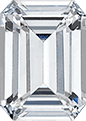
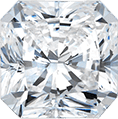
If you want to see the range, the Solitaire Round Cut Engagement Ring at £657 is the classic starting point, correct at the time of writing. The Hidden Halo Emerald Cut Engagement Ring at £1,016 shows what a step cut looks like with a concealed row of small stones underneath the centre. And for an engagement ring and wedding band designed together, the Curved Radiant Cut Bridal Set is £917.
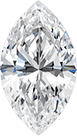
One honest note on stock: we hold a focused range of shapes rather than everything. Round, pear, emerald, marquise, baguette, hexagon, cushion, oval, heart, radiant, rose cut and asscher. We do not stock princess cut or old European cut rings. If you want one of those, we will make it bespoke rather than pretend otherwise.
Frequently asked questions
Are man-made diamonds real diamonds?
Yes. They are chemically, physically and optically the same as mined diamonds. The distinction is where they were made, not what they are. The only reliable way to tell them apart is laboratory equipment that reads the growth structure — which is exactly why certification matters.
Will a jeweller be able to tell?
Not by eye, and not with a simple thermal diamond tester — a lab-grown diamond passes that test because it is a diamond. Proper identification needs specialist instruments. Reputable lab-grown stones are also laser-inscribed on the girdle with their certificate number.
Do lab-grown diamonds hold their value?
Any diamond, mined or lab-grown, loses a substantial amount of its retail value the moment you buy it, because you have paid a retail margin. Lab-grown diamonds are a newer market and prices have moved a good deal. Buy a ring to wear, not as an investment — that is honest advice regardless of which type you choose.
Is it safe to buy an engagement ring online?
Yes, provided the stone is independently certified, the metal is hallmarked, the returns window is clear, and the seller is contactable by phone. Those four checks remove most of the risk.
How long does a bespoke ring take?
It depends on the design and the stone, and any jeweller quoting a fixed figure before seeing the brief is guessing. Tell us your date and we will tell you honestly whether it is achievable.
Where to go from here
Browse the full engagement ring collection or the bridal sets if you want the engagement ring and wedding band designed as a pair. If nothing there is quite right, tell us what is in your head and we will draw it.
Ready to find your perfect ring?
Explore our lab-grown diamond collection or book a virtual appointment with our team.