How Much Is a 4 Carat Wedding Ring?
What 4 carats actually means on a wedding band, what changes the price, and why lab-grown and natural diamonds differ so much.
Four carats is a lot of diamond. Before talking about money it is worth being clear about what the number describes, because on a wedding ring it almost never means one stone.
What “4 carat” actually means
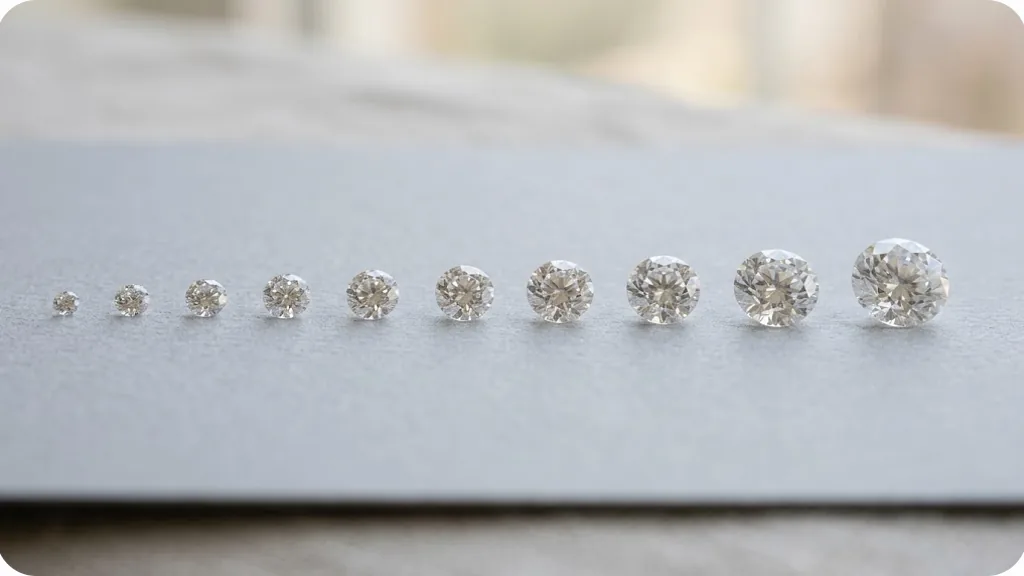
A carat is a unit of weight, not size. One carat is 0.2 grams – a fifth of a gram. So a 4 carat ring contains 0.8 grams of diamond in total.
On an engagement ring, a carat figure usually refers to a single centre stone. On a wedding band it almost always refers to the total carat weight of all the small stones added together. A full eternity band set with thirty small diamonds can reach a substantial total weight without any individual stone being large.
This matters enormously for price. One 4 carat diamond costs far more than forty 0.1 carat diamonds weighing the same in total, because large rough crystals are much rarer than small ones. Never compare a total-weight figure with a single-stone figure and assume they are equivalent.
The price gap between lab-grown and natural
This is the single biggest factor, and it grows as the carat weight rises.
A lab-grown diamond is the same material as a mined diamond – the same carbon crystal, the same hardness, the same optical behaviour. It is grown in a reactor rather than found in the ground. Independent laboratories such as IGI grade both on identical scales.
Because supply is not limited by geology, lab-grown diamonds cost substantially less for the same size and quality, and the saving is proportionally larger at higher carat weights. That is guidance based on how the market works rather than a fixed percentage we can quote – prices move, and any figure we printed would be out of date within months.
We use lab-grown diamonds throughout our range. It is the reason a heavily set band from us sits where it does rather than several times higher.
What else moves the price
| Factor | Effect on price |
|---|---|
| One large stone vs many small ones | Very large. A single 4ct stone is far more expensive than 4ct of small stones |
| Lab-grown or natural | Very large, and grows with carat weight |
| Colour and clarity grades | Moderate to large, especially at bigger sizes where flaws are easier to see |
| Cut quality | Moderate. A well-cut stone returns more light and costs more |
| Shape | Moderate. Round cuts waste more rough and cost more per carat than most other shapes |
| Metal and setting labour | Smaller, but not trivial – setting forty stones by hand takes real time |
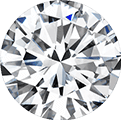
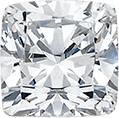
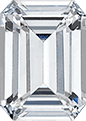
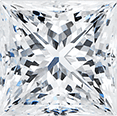
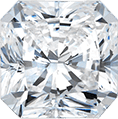
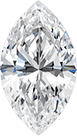
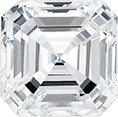
Shape is worth dwelling on. Round brilliant cuts lose the most material during cutting, so they carry a premium. Elongated and step cuts – emerald, baguette, marquise – use rough more efficiently and often look larger for the same weight because they spread across the finger rather than sitting deep.
Do we sell a 4 carat wedding band?
We do not publish total carat weights on our wedding band listings, so we will not pretend one of our stock bands is exactly four carats. What we can tell you is where our range sits.
| Band | Setting | Price |
|---|---|---|
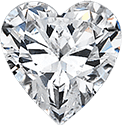
| Stackable Heart Cut Eternity Band in Rose Gold | Heart cut stones all the way round | £2,450 |
| Stackable Emerald Cut Eternity Band | Emerald cut stones all the way round | £2,121 |
| Bezel Rose Cut Eternity Band | Bezel set rose cuts | £1,611 |
| Stackable Asscher Cut Wedding Band | Asscher cut stones | £1,416 |
All prices correct at the time of writing. If you want a band built to a specific total carat weight, that is a bespoke job and we charge no extra design fee – you pay for the diamonds, the metal and the making. Tell us the weight, the shape and the metal, and we will quote it properly rather than guess.
Is 4 carats sensible on a wedding band?
It depends entirely on how the weight is distributed.
Spread across many small stones in a full eternity band, four carats is genuinely wearable. The stones sit low, the ring stays slim, and it will slide under gloves and sleeves without catching. This is the usual way to reach a big number on a band.
Concentrated into a few large stones, four carats is a statement ring rather than an everyday band. Large stones sit higher, catch on things more, and are more exposed to knocks. If you want that look, it is worth choosing a bezel setting where metal wraps the edge of each stone rather than claws that can be bent.
There is also the question of scale. A very wide, heavily set band overwhelms a slim finger. Before committing to a large total weight, try a wide band on and see how it looks – it is a much bigger visual change than most people expect.
Reaching a big look for less
If what you actually want is presence rather than a specific number, there are cheaper routes to it.
- Stack two or three slim bands. Two stackable baguette cut half eternity bands together read as one wide band and cost less than a single heavily set one, plus you can wear them separately.
- Choose step cuts. Baguette and emerald cuts sit edge to edge with no gaps, so the surface looks continuous. A stackable emerald cut three quarter eternity band at £1,074 covers a lot of finger.
- Choose a three-quarter rather than a full eternity. The back of the ring sits against your palm where nobody sees it, and leaving it unset saves money and makes resizing possible.
- Accept slightly lower colour or clarity. In small stones, the difference between neighbouring grades is genuinely hard to see with the naked eye.
Certification
At this sort of weight, certification matters. An IGI certificate records the carat weight, colour, clarity and cut of the stone independently, and confirms whether it is laboratory-grown. We include a free IGI certificate on centre stones.
Small melee stones in an eternity band are not usually certified individually – that would be impractical and expensive for stones this size. Instead the total weight and the grade range are specified for the ring as a whole. Ask for that in writing whenever you buy a heavily set band from anyone.
How to read a carat figure on any listing
Once you start comparing rings, you will see carat quoted in three different ways, and they are not interchangeable. Knowing which is which stops you comparing two rings that are nothing alike.
Centre stone weight. The weight of the single main stone. This is what people mean when they say “a two carat ring”. It is the most expensive way to buy carat.
Total carat weight, often written as TCW or ct tw. Every stone in the ring added together. A band described as 4ct TCW might contain forty small stones, none of them individually notable. This is how eternity bands are almost always described.
Weight per stone. Occasionally a listing gives the size of each individual stone instead. Multiply it out and check it matches the total quoted.
The trap is straightforward: a 4ct total-weight band and a 4ct single-stone ring can differ in price by a factor of ten or more, and both are honestly described. Always check which figure you are looking at before comparing anything.
Millimetres tell you more than carats
If what you actually care about is how the ring looks, ask for measurements in millimetres rather than weight.
Two stones of identical weight can look noticeably different in size. A stone cut deep carries its weight downwards, hidden inside the setting, so it looks smaller from above. A stone cut shallow spreads wider and looks larger, though very shallow cutting costs you sparkle.
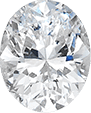
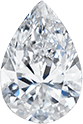
The same applies across shapes. Elongated shapes such as marquise, pear and emerald spread further across the finger than a round stone of the same weight, so they read as larger. This is why an elongated stone is often the better buy if visible size matters more to you than the number on the certificate.
For a band, the measurement that matters most is the width of the band itself and the height the stones stand above it. A low, wide band with many small stones looks substantial and lives comfortably under a glove. A narrow band with tall stones does neither.
Frequently asked questions
Can you tell me the exact price of a 4 carat band?
Not honestly, no – not without knowing whether you mean one stone or many, lab-grown or natural, which shape, which grades and which metal. Those choices can move the total by a factor of ten. Send us the specification and we will quote it.
Is a lab-grown diamond a real diamond?
Yes. Same chemistry, same crystal structure, same hardness. The only difference is where it was formed, and a laboratory certificate records that.
Will a 4 carat band be uncomfortable?
Not if the weight is spread over many small stones in a low setting. It becomes uncomfortable when stones stand proud of the band and catch on things.
Can a full eternity band be resized?
Usually not, or only within a very narrow margin, because the stones run all the way round. Get the size right first time, or choose a three-quarter eternity band instead.
Does a bigger carat weight mean a bigger-looking ring?
Not necessarily. A shallow, well-spread stone can look larger than a deeper stone of the same weight. Millimetre measurements tell you more about appearance than carats do.
You can compare every band and price in our wedding ring collection, and if you want something built to a specific weight, our bespoke service carries no extra design cost. Free insured UK delivery and 30-day returns as standard.
Ready to find your perfect ring?
Explore our lab-grown diamond collection or book a virtual appointment with our team.