What Does a Three Stone Engagement Ring Mean? Past, Present, Future
A three stone ring's diamonds traditionally mean past, present and future. We stock 5 designs, and cover which wedding bands pair with them best.
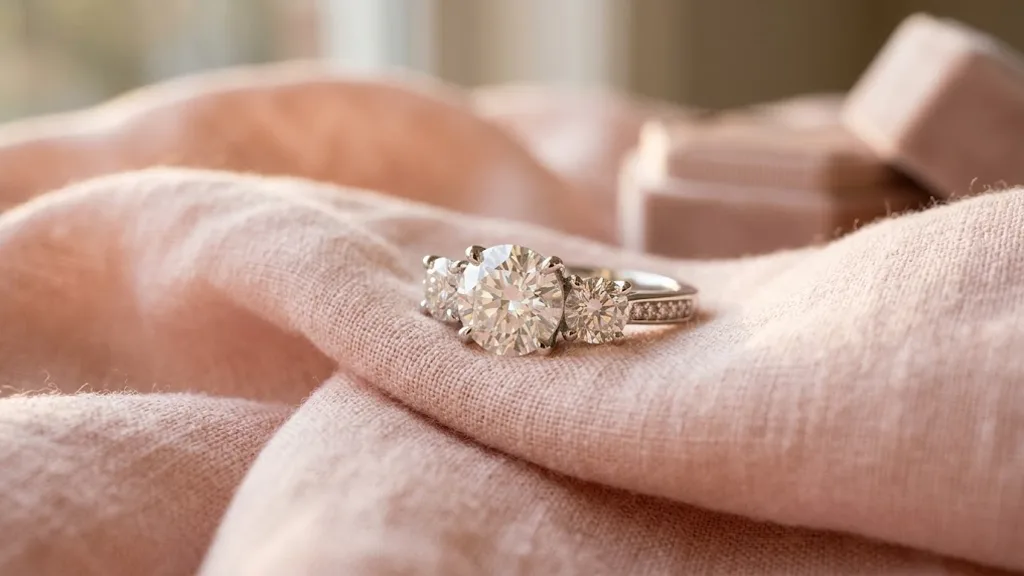
A three-stone engagement ring sets a larger centre diamond between two smaller side diamonds, traditionally read as past, present and future. It is a widely used convention, not a formal grading term — it will not appear on an IGI or GIA certificate. We currently stock 5 three-stone designs, plus bespoke options and wedding band pairings.
What does a three-stone engagement ring actually mean?
A three-stone engagement ring means the ring’s design is built around three diamonds of graduated or matched sizes, set side by side, rather than a single centre stone alone. The most common reading of the three stones is past, present and future, though a jeweller could reasonably tell the story a little differently, and that is fine — the meaning has never been fixed by any official body.
What do the three stones represent — past, present and future?
The three stones in a three-stone engagement ring are usually read as past, present and future: the two outer stones stand for the relationship’s history and the road ahead, and the centre stone marks the present moment being celebrated. This is a widely used convention, not an official classification, and it will not appear on a diamond’s IGI or GIA certificate. Our guide to what a promise ring means mentions the same reading in a single line, without unpacking where it comes from.
British jewellers also call this style a trilogy ring — trilogy being the trade name for the same three-stone design, used interchangeably with “three-stone” inside the trade and increasingly in customer searches too. Our guide to what cushion cut means mentions the same past-present-future symbolism as an aside while covering a completely different subject, the cushion cut shape.
Where does the three-stone tradition come from?
The three-stone tradition comes from a long-standing habit in Western jewellery of grouping stones in threes to carry sentimental meaning, going back to Victorian and Edwardian pieces that combined gemstones for symbolic reasons rather than purely decorative ones. There is no single, verifiable date we can point to for when “past, present, future” specifically became attached to this design, and we have not found a reliable public source that settles it, so we are not going to invent one.
Are three-stone engagement rings still popular?
Three-stone engagement rings remain a genuinely popular style rather than a passing trend, and we still make and sell them regularly. No independently published survey tracks three-stone rings as a share of the wider engagement ring market, so we cannot give you a percentage or a trend line — no reliable public figure exists for that, and a made-up one would not help you choose.
What we can say from working at the bench is that three-stone requests come in steadily throughout the year, most often from customers who specifically want the symbolism rather than customers choosing the style purely for its look. That pattern has stayed consistent, even as fashions in halo styles and hidden-halo settings have moved around it.
Which wedding band pairs with a three-stone engagement ring?
A wedding band for a three-stone engagement ring needs to sit comfortably against a setting that is wider and sits proud of the finger in three places, not just one. We do not currently carry a stock wedding band shaped specifically to fit our three-stone rings, so this pairing is bespoke, made at no extra design cost, in the same way we already handle band pairings for our emerald cut engagement rings and our oval engagement rings.
The table below shows the band shapes that generally work well against a three-stone setting, and why, based on how each one behaves against a ring that is raised and widest in the middle.
| Band style | Why it suits a three-stone ring |
|---|---|
| Curved or contoured band | Follows the curve of the three stones so it sits flush against the setting, closing the gap a straight band would leave |
| Plain straight band | Simple and versatile, though it can leave a small gap on either side of a raised three-stone setting |
| Pavé half-eternity band | Echoes the ring’s multiple diamonds without competing with the centre stone for attention |
| Flush-set eternity band | Sits low and smooth against the finger, a good choice if you plan to stack and wear both rings daily |
Can a three-stone ring be stacked with a wedding band?
A three-stone engagement ring can be stacked with a wedding band, and most of our customers wear the two together daily once married. The side stones sit slightly higher than a plain solitaire’s shoulders, so a curved or notched band that follows that shape will stack more comfortably than a perfectly straight one, which is worth deciding on before the wedding band is made rather than after.
What shapes work best in a three-stone setting?
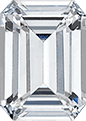
Most diamond shapes work in a three-stone setting, because the design is really about the arrangement of three stones rather than any one shape being required. We currently stock three-stone rings in oval, marquise, emerald, cushion and pear, each pairing the centre shape with smaller side stones cut to complement it — for the fuller picture of how each shape behaves, see our complete guide to diamond shapes and cuts.
Elongated centre shapes such as our Three Stone Oval Cut Engagement Ring, £1,021 correct at the time of writing, tend to make the three-stone effect most visible along the finger, while a shape like our Three Stone Marquise Cut Engagement Ring, £1,143 correct at the time of writing, exaggerates it further with pointed tips at each end. You can browse the full range in our engagement rings collection.
Does the centre stone have to be larger than the side stones?
The centre stone does not have to be larger than the side stones, but in almost every three-stone ring we make it is, because that is what keeps the eye drawn to the middle of the design. The two side stones are usually a fraction of the centre stone’s carat weight rather than a near-equal match — for how carat weight and cost actually scale together as stones get bigger, see our guide to how big lab-grown diamonds can get.
Setting three stones level with each other is a specific bench skill: if the side stones are not set to matching height and angle, the ring reads as lopsided even though each stone is cut perfectly. Resizing a three-stone ring also takes more care than resizing a solitaire, since all three settings have to stay aligned through the process. Our Three Stone Cushion Cut Engagement Ring is priced at £957, correct at the time of writing.
The metal the ring is made in matters here too. In a three-stone setting there are more claws gripping more stones than on a plain solitaire, so 18ct gold’s relative softness matters more than it does elsewhere — our guide to whether 18ct gold suits a wedding ring covers that trade-off in full.
Frequently asked questions
Is a trilogy ring the same as a three-stone ring?
Yes, a trilogy ring and a three-stone ring are the same design, just two names for it. “Trilogy” is the term used inside the UK jewellery trade, including sometimes by us informally, while “three-stone” is the more common phrase customers actually search for and use in conversation.
Do side stones have to match the centre stone shape?
No, side stones do not have to match the centre stone’s shape, though many of our designs pair them for a cleaner, more deliberate look. A round or trapezoid side stone next to an oval or emerald centre stone is a common combination, chosen to complement rather than copy the centre shape.
Which wedding band pairs best with a three-stone ring?
A curved or contoured band generally pairs best with a three-stone ring, because it follows the raised, three-part shape of the setting instead of leaving a gap on either side. A pavé half-eternity band is the next most popular choice, since it echoes the ring’s multiple stones without overpowering the centre diamond.
Are three-stone rings pricier than a solitaire?
Yes, a three-stone ring is usually more expensive than a comparable solitaire, simply because it contains two extra diamonds and more setting work. The gap in price depends on the size and quality of the side stones chosen, so it varies from one design to another rather than following a fixed rule.
Can the two side stones be different sizes?
Yes, the two side stones can be different sizes, though the great majority of three-stone rings we make use matching side stones for visual balance. A deliberately asymmetric pair is possible as a bespoke design if that is the look you want, at no extra design cost.
Can a three-stone ring work as a promise ring?
Yes, a three-stone ring can work well as a promise ring, since the past, present and future symbolism suits a promise just as naturally as it suits an engagement. There is no rule reserving the design for engagements only, and it is a genuine option worth considering alongside a single-stone promise ring.
More guides on this topic
If you are choosing between diamond shapes for a three-stone setting, or want to see how a wedding band is fitted to an existing engagement ring more generally, the guides linked throughout this page cover both in more depth. Every three-stone design we make can also be adjusted in metal, carat weight or side-stone shape as a bespoke order, at no extra design cost.
Ready to find your perfect ring?
Explore our lab-grown diamond collection or book a virtual appointment with our team.