Diamond Shapes and Cuts: The Complete Guide
Shape is the outline, cut is the quality. Every diamond shape compared, what we stock, and how to match a shape to a hand.
Diamond shape is the outline of the stone seen from above — round, oval, pear, emerald, marquise and so on. Diamond cut is how well that stone is faceted and proportioned, which is what controls sparkle. The two words are used interchangeably in shops, but only one of them is graded on a certificate, and it is not the shape.
What is the difference between a diamond’s shape and its cut?
A diamond’s shape is its outline; its cut is the quality of its faceting and proportions. Shape is a style decision with no right answer — a pear is not better or worse than a round, it is simply a different silhouette. Cut is a quality judgement, and a badly cut diamond of any shape will look dull no matter how good its colour and clarity are. On an IGI or GIA certificate, only round brilliants receive a full cut grade from Excellent down to Poor; fancy shapes are reported on polish and symmetry instead, because no single set of ideal proportions has ever been agreed for them. Our guide to the types of diamond cuts sets out the whole vocabulary.
Why does cut quality matter more than carat weight?
Cut quality matters more than carat weight because cut decides how much of the light entering a diamond comes back out of the top. A poorly proportioned stone leaks light through its base and looks lifeless, and no amount of extra weight fixes that — it just makes a bigger dull stone. A well-cut diamond a shade lower in colour will out-perform a heavier, better-graded stone that was cut to save weight rather than to look good. If a budget has to give somewhere, give on colour or clarity before you give on cut. Read how important cut is in a diamond.
What are the three families of diamond cut?
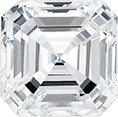
Diamond cuts fall into three families, and knowing which family a shape belongs to tells you how it will behave. Brilliant cuts use triangular and kite-shaped facets arranged to scatter light, giving maximum sparkle and hiding inclusions well — round, oval, pear, marquise, heart and radiant are all brilliant cuts. Step cuts use long parallel facets arranged like a staircase, giving broad flashes and a glassy clarity instead of fire — emerald, Asscher and baguette are step cuts. Mixed cuts combine both, as the cushion and radiant do in different ways. What a step cut diamond is explains why the difference shows so clearly on the finger.
This table lists every diamond shape CarbonstoneUK currently has in stock, with the number of rings available in each and what the shape is genuinely good at.
| Shape | Family | Rings in stock | What it does well |
|---|---|---|---|
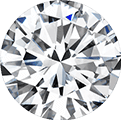
| Round brilliant | Brilliant | 20 | Maximum sparkle; the only shape with a full certificate cut grade |
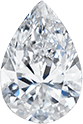
| Pear | Brilliant | 11 | Elongates the finger; distinctive without being unusual |
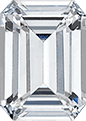
| Emerald | Step | 6 | Glassy flashes and a long, elegant outline; shows clarity honestly |
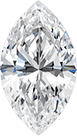
| Marquise | Brilliant | 6 | Looks largest for its carat weight; strongest finger-lengthening effect |
| Baguette | Step | 4 | Clean geometry in bands and side stones |
| Hexagon | Step / mixed | 4 | Modern, architectural outline that reads as bespoke |
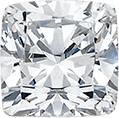
| Cushion | Mixed | 3 | Soft rounded corners and a warm, vintage character |
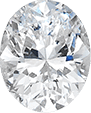
| Oval | Brilliant | 3 | Round-level sparkle with a longer, slimmer outline |
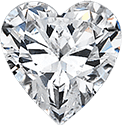
| Heart | Brilliant | 2 | Unmistakable symbolism; needs a good outline to work |
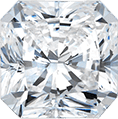
| Radiant | Brilliant | 2 | Rectangular outline with brilliant-cut sparkle |
| Rose cut | Rose | 2 | Flat back, domed facets, soft antique glow rather than fire |
| Asscher | Step | 1 | Square step cut with deep, concentric "hall of mirrors" flashes |
Which diamond shape is the most popular for engagement rings?
The round brilliant is the most popular engagement ring shape in the UK and has been for decades, with oval the most visible challenger in recent years. Round holds its position because it is the only shape with an agreed set of ideal proportions and a full cut grade on the certificate, so a buyer can verify sparkle on paper rather than trusting their eye. That certainty is also why round stones cost more per carat: more rough is lost getting to a round outline. Our own stock reflects it, with 20 round rings against 11 pear. Read the most popular diamond cut for engagement rings and what shape of diamond is best.
What does "round brilliant" actually mean?
A round brilliant is a round diamond cut with 57 or 58 facets in the standard brilliant arrangement, and the phrase describes both the outline and the faceting at once. Not every round diamond is a modern round brilliant — antique rounds such as old European cuts have a different facet layout and a visibly different, softer look. The 58th facet is the culet, a tiny flat at the very bottom, which most modern stones omit. Read what round brilliant really means and how many facets a round cut diamond has.
What should you check on an oval or pear diamond before buying?
Check an oval or pear diamond for the bow tie: a dark band across the centre of the stone, shaped like a bow tie, caused by the wearer’s own head blocking light from reaching facets in the middle. Every elongated brilliant cut has one to some degree, and a faint one is normal and invisible in wear. A strong bow tie makes the stone look dead in the middle and cannot be polished out. It is never mentioned on a certificate, so it has to be seen. Read the bow tie effect in oval and pear diamonds, why choose a pear cut diamond and whether oval diamonds are too trendy.
What makes emerald, Asscher and baguette cuts different to wear?
Emerald, Asscher and baguette are all step cuts, so they give long mirror-like flashes rather than the fine glitter of a brilliant cut, and they hide far less. Their open facets act like a window into the stone, which means inclusions and colour tint that would vanish in a round brilliant are visible in a step cut. In exchange you get a calmer, more architectural look that many people prefer, and step cuts of the same carat weight generally cost less than rounds. Read what an emerald cut diamond is, why emerald cuts are cheaper, Asscher versus cushion and what a baguette cut diamond is.
How do cushion, radiant and marquise cuts compare?
Cushion, radiant and marquise are three very different answers to the same question of how to get brilliant-cut sparkle in a shape that is not round. The cushion has soft rounded corners and a pillow outline that reads as vintage. The radiant keeps a rectangular outline but uses brilliant faceting, so it sparkles like a round in a squared silhouette. The marquise is the most dramatic, with pointed ends that make it look larger on the finger than its carat weight suggests. Read what cushion cut means, whether cushion cuts are popular, radiant versus cushion and what choosing a marquise says about your taste.
What is a rose cut diamond?
A rose cut diamond has a flat, unfaceted back and a domed top covered in triangular facets, usually 3 to 24 of them, so it has no pavilion and no culet at all. It dates from the sixteenth century and gives a soft, glowing, candlelit look rather than the sharp fire of a modern brilliant. Because it is shallow, a rose cut spreads wide for its carat weight and looks larger than the number suggests. CarbonstoneUK stocks 2 rose cut rings. Read are rose cut diamonds more expensive.
Which diamond shapes cost the most and the least?
Round brilliants cost the most per carat of the common shapes, because cutting a round outline from rough loses the most raw material, and demand for round is highest. Elongated and step cuts — emerald, marquise, pear, baguette — generally cost less per carat because they retain more of the rough and face lower demand. The cheapest way to get visible size is therefore an elongated shape rather than a round, since marquise and pear spread wider across the finger for the same weight. Read the most expensive diamond cut shape, the least expensive diamond cut and princess versus round pricing.
Which shapes does CarbonstoneUK not stock?
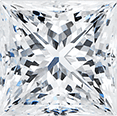
CarbonstoneUK does not stock princess cut or old European cut rings, and we would rather say that plainly than send you to a product page that does not exist. The princess is a square brilliant with sharp corners that need protecting in the setting; the old European is an antique round with a small table, a high crown and a visible culet, and it looks noticeably different from a modern round brilliant. Both can be made for you through our bespoke service at no extra design cost, using a certificated lab-grown stone. Read is princess cut more expensive than round and what a 1 carat old European cut diamond is worth before commissioning either.
How do you match a diamond shape to a hand?
Match the shape to the hand by thinking about proportion rather than trend. Elongated shapes — oval, pear, marquise, emerald — draw the eye along the finger and suit shorter or wider fingers, because they add visual length. Compact shapes such as round, cushion and Asscher sit within the width of the finger and suit long, slim fingers without overwhelming them. Setting height matters as much as outline: a low bezel or a flat-profile solitaire is the practical choice for anyone who works with their hands, whatever the shape. Browse by outline in engagement rings or narrow straight to pear cut rings.
Which diamond shape guide should you read next?
This table maps each shape and cut question to the guide that answers it in full.
| Your question | Guide |
|---|---|
| What are all the cuts called? | Types of diamond cuts |
| Which shape suits an engagement ring? | Best shape for an engagement ring |
| Which is most popular? | Most popular diamond cut |
| Why does cut matter most? | How important cut is |
| What is a round brilliant? | Round brilliant explained |
| How many facets does a round have? | Round facet count |
| What is a step cut? | Step cuts explained |
| What is an emerald cut? | Emerald cut explained |
| Why are emerald cuts cheaper? | Emerald cut pricing |
| Asscher or cushion? | Asscher vs cushion |
| What is a baguette cut? | Baguette cut explained |
| What does cushion cut mean? | Cushion cut explained |
| Are cushion cuts still popular? | Cushion cut popularity |
| Radiant or cushion? | Radiant vs cushion |
| Why choose a pear? | Pear cut meaning and appeal |
| What is the bow tie effect? | Bow tie in ovals and pears |
| Will an oval date? | Are ovals too trendy |
| What does a marquise say about taste? | Choosing a marquise |
| What is a rose cut? | Rose cut value |
| Which shape costs most? | Most expensive shape |
| Which shape costs least? | Least expensive cut |
| Is princess dearer than round? | Princess vs round pricing |
| What is an old European cut worth? | Old European cut value |
Which shaped rings can you buy from CarbonstoneUK today?
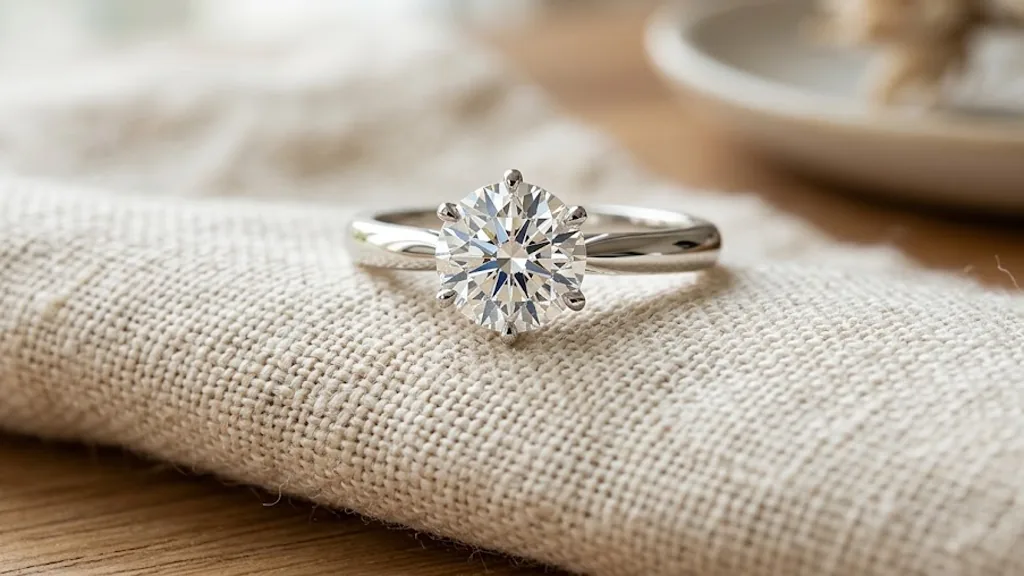
CarbonstoneUK is a lab-grown diamond jeweller in North Harrow, London, and we make rings only — twelve shapes across engagement rings, wedding bands and bridal sets, each with a free IGI certificate on the centre stone. If you want the most sparkle, the Solitaire Round Cut Ring in White Gold is £563. For a step cut with a longer outline, the Solitaire Emerald Cut Ring is £672. For maximum spread per carat, the Solitaire Marquise Cut Ring is £538, and for something architectural the Solitaire Hexagon Cut Ring is £1,078 (prices correct at the time of writing). Every order includes free insured UK delivery and 30-day returns.
Frequently asked questions about diamond shapes and cuts
Which diamond shape sparkles the most?
The round brilliant sparkles most, because its facet arrangement was mathematically optimised to return light through the top of the stone and it is the only shape with agreed ideal proportions. Oval and radiant come closest among the fancy shapes. Step cuts such as emerald and Asscher produce broad flashes rather than fine sparkle by design, not by accident.
Which diamond shape looks the biggest for its carat weight?
Marquise looks largest for its carat weight, followed by pear and oval, because elongated shapes spread their weight across the surface instead of hiding it in depth. A rose cut also looks large because it has no pavilion at all. Round and cushion carry more weight below the girdle, so they look smaller face-up than the number implies.
Is diamond shape the same thing as diamond cut?
No. Shape is the outline seen from above; cut is the quality of the faceting and proportions that produce sparkle. Jewellers say "emerald cut" and "pear cut" loosely to mean the shape, which blurs the distinction. Only cut quality is graded on a certificate, and only for round brilliants.
Do all diamond shapes get a cut grade on the certificate?
No. IGI and GIA award a full cut grade of Excellent to Poor only to round brilliants, because ideal proportions have been agreed for that shape alone. Fancy shapes receive polish and symmetry grades instead. For a fancy shape you have to judge the stone by eye or on video rather than by a single letter grade.
Do you sell princess cut engagement rings?
No. CarbonstoneUK does not stock princess cut rings, and we do not stock old European cuts either. Both can be made to order through our bespoke service, which carries no extra design fee, using a certificated lab-grown stone in the size and grade you choose. Ask us before assuming a shape is unavailable.
How many millimetres wide is a 1 carat diamond?
A well-cut 1 carat round brilliant measures roughly 6.4 to 6.5 mm across. Fancy shapes of the same weight measure differently because they are not symmetrical: an oval or marquise will be longer and narrower, a cushion slightly smaller across than a round. Always compare millimetre measurements, not carat weight, when judging apparent size.
Which diamond shape hides inclusions best?
Brilliant cuts hide inclusions best, because their many small facets scatter light and break up the view into the stone. Round, cushion, oval, pear and marquise are all forgiving. Step cuts — emerald, Asscher, baguette — have large open facets that act like windows, so a higher clarity grade is worth paying for in those shapes.
If you are torn between two shapes, we are happy to compare them side by side before you decide, and we can make any shape bespoke at no extra design cost.
Ready to find your perfect ring?
Explore our lab-grown diamond collection or book a virtual appointment with our team.