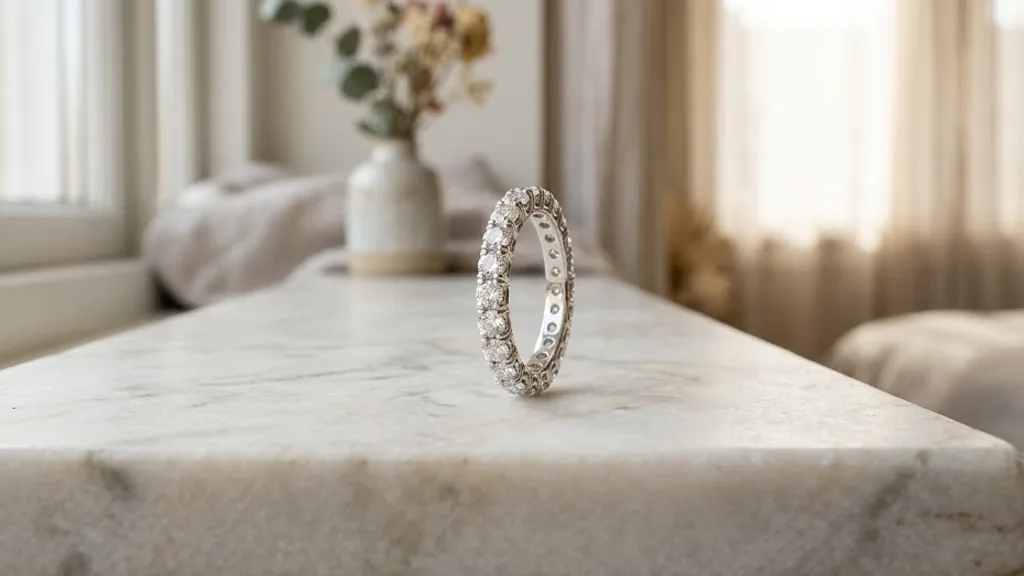
Are Eternity Rings Comfortable to Wear Every Day?
Mostly yes, though a full band puts stones against your palm and can catch. A 2.5mm court profile sits flatter and is the one we fit most often.
Yes, for most people, an eternity ring is comfortable to wear every day, and the band profile matters far more than the stones do. A 2.5 mm court profile, rounded on the inside, is the one we fit most often. The catch is that a full eternity band puts stones against your palm.
What makes a full eternity band dig in?
A full eternity band digs in when the stones continue all the way round and meet the soft skin between your fingers. Diamonds are set slightly proud of the metal, so the underside of the ring is a row of small hard edges rather than a smooth curve. Grip a steering wheel or a shopping bag and those edges press into the next finger. That is the whole of the problem.
Two things make it worse. A square or flat inside edge on the band gives you a corner where a curve should be. And a ring worn a half size too tight pushes the metal harder into the web of the finger all day. Neither has anything to do with the diamonds themselves, which is why the fix is nearly always the band, not the stones.
Which band profile is most comfortable for daily wear?
A court profile is the most comfortable band for daily wear, and the trade also calls it comfort fit. Court means the inside of the ring is domed rather than flat, so the metal rolls over the skin instead of presenting an edge to it. At 2.5 mm wide it is barely noticeable. A flat or D-shaped band of the same width will feel harder against the finger.
Width matters as much as shape. Anything up to about 3 mm sits between the knuckles without fighting the fingers on either side, while a 5 mm band is a real presence on a small hand. Wider bands need more doming inside, not less. Our page on whether a man can wear an eternity ring goes into wide-band comfort in more detail.
The table below matches each inside profile to how it actually feels after a full day on the hand.
| Inside profile | How it feels all day | Width we usually fit |
|---|---|---|
| Court, or comfort fit | Rolls over the skin, no edges | 2.0 to 3.0 mm |
| D-shape | Flat inside, mild edge at the sides | 2.0 to 2.5 mm |
| Flat | Two square corners against the skin | 2.0 mm and under |
| Full eternity, any profile | Stones underneath as well as on top | 2.5 mm and up |
Do eternity rings spin on the finger?
Eternity rings spin far less than an engagement ring does, and the reason is weight distribution. A solitaire carries most of its mass in one place, so gravity keeps rolling that mass towards your palm. An eternity band spreads the same weight evenly around the circle, and a full band has nothing heavier on one side at all. A half eternity can still turn a little.
Where spinning does happen it is usually a sizing problem rather than a design one. Fingers change size through the day, through the year and through pregnancy, so a ring measured on a warm afternoon may be loose on a cold morning. The stacking order on the finger also plays a part, and which finger an eternity ring goes on covers how to arrange several rings so they hold each other steady.
Why can a full eternity ring not be resized?
A full eternity ring usually cannot be resized, and this is the single most important thing to know before you buy one. Resizing means cutting the band, adding or removing metal, and soldering it closed again. On a full eternity band every part of the circle carries stones, so there is nowhere to cut that does not run through a setting. Heat near diamonds is its own risk.
Half and three-quarter eternity bands are different, because the plain section at the back can usually take a size or two either way. That is a genuine reason to choose one over a full band, quite apart from cost. The differences between the three coverage styles are set out in our guide to full, half and three-quarter eternity rings.
The practical answer is to get the size right first time. Have the finger measured at the end of the day, on the hand the ring will live on, at normal room temperature. If you are buying as a surprise and cannot measure, a three-quarter band is the safer choice, and we would rather tell you that than sell you a full band you cannot alter later.
How does an eternity ring sit next to an engagement ring?
An eternity ring worn beside an engagement ring is comfortable if the two bands meet flat and uncomfortable if they do not. A straight eternity band pressed against a raised solitaire leaves a wedge-shaped gap, and the two rings then rock against each other every time you close your hand. That rocking is what wears a flat, shiny patch on the edge of both bands over a few years.
At the bench the usual fixes are a shaped or curved band that follows the outline of the engagement ring, or moving the eternity ring to the other hand. Some people simply wear the plainest band in the middle of the stack so the two stone-set rings never touch. For the wider question of what belongs on which finger, wearing a signet ring as a wedding band covers another way people rearrange a stack.
Which setting is kindest to the skin on a stone-set band?
Channel setting is the kindest to the skin on a stone-set band, because the diamonds sit down inside two walls of metal with nothing standing proud. Rubover, also called bezel, is nearly as smooth, since each stone gets its own ring of metal folded over the edge. Claw and pavé settings show more of every stone and give you more small points of contact.
The difference shows up on knitwear before it shows up on skin. A pavé band catches on wool and on the fine hairs of a jumper, and that catching is also the early warning that a claw has lifted. If you notice a ring snagging, have it checked at a bench rather than pushing the claw back yourself. Metal marks on the finger have a separate cause, explained in why a gold ring marks your finger black.
Which eternity ring should you choose for everyday wear?
An eternity ring for everyday wear should be a half or three-quarter band, in a court profile, at around 2.5 mm wide, with the stones set flush rather than raised. That combination is the one we fit most often and the one that comes back least for adjustment. A full eternity band is the more striking ring, and it is the right choice if you are certain of the size.
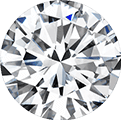
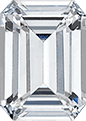
Prices are correct at the time of writing. The stackable round cut three quarter eternity band is £762 and is the compromise we recommend most. The stackable emerald cut half eternity band is £770, and the stackable round cut full eternity band is £707. Insurance is worth thinking about too, and claiming for a lost wedding ring explains how that works. Browse the full wedding ring collection to compare widths.
Frequently asked questions
Can an eternity ring be worn on its own?
Yes, and plenty of people do. An eternity ring has no rule attached to it about what else must be on the finger, and a stone-set band worn alone reads as a dress ring or a wedding band depending on the wearer. Worn alone it is also less likely to rock or wear against a neighbouring ring, which makes it more comfortable.
Do the stones underneath get damaged?
Yes, they take more wear than the ones on top, because the underside of a ring meets keys, handles and worktops constantly. Diamonds themselves rarely suffer, but the small claws or channel walls holding them wear thinner over years. A yearly check at a bench catches a thin claw long before a stone moves, and re-tipping is routine work.
Is a half eternity more comfortable than a full one?
Yes, for most people. A half eternity band has a plain section at the back, so the part that sits against your palm and between your fingers is smooth metal rather than a row of set stones. It is also the version that can usually be resized. The trade-off is that stones show only from certain angles.
Do eternity rings dig into the next finger?
Yes, they can, and it is nearly always the edge of the band rather than the diamonds. A flat or D-shaped inside edge presses a corner into the web between two fingers, while a court profile rolls over the same skin. Width plays a part as well: above about 3 mm any band crowds the fingers on either side.
Can you wear an eternity ring every day?
Yes, an eternity ring is made for daily wear and most of ours are worn that way. Take it off for the gym, for gardening and for anything involving grit or chemicals, and clean it in warm soapy water with a soft brush. Have the settings checked once a year. That routine is the whole of the care it needs.
How wide should an everyday eternity band be?
Around 2.5 mm suits most hands, and anything from 2.0 mm to 3.0 mm sits comfortably between the knuckles. Below 2.0 mm the band starts to feel wire-like and holds smaller stones. Above 3.0 mm it becomes a statement ring that presses on the fingers either side, which is fine if that is what you want.
More guides on this topic
Ready to find your perfect ring?
Explore our lab-grown diamond collection or book a virtual appointment with our team.