Are Oval Cut Diamonds More Expensive? Understanding Your Options
Ovals cost less per carat than round and look bigger on the finger. The honest trade-offs, plus real UK prices on oval rings.
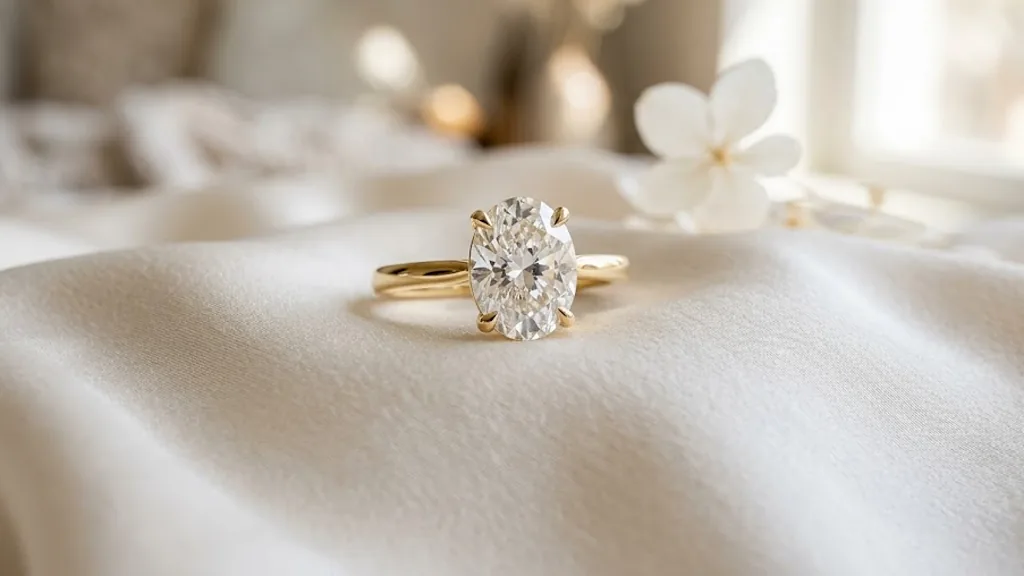
No, oval cut diamonds are not more expensive than round. For the same carat weight and similar quality, an oval normally costs less than a round brilliant, and it usually looks larger on the finger too. That combination is why the oval has become one of the most requested engagement ring shapes in the UK.
Here is what sits behind the price, and where an oval can quietly cost you more if you are not paying attention.
Why ovals cost less than rounds
Two reasons, both practical.
Less waste when cutting. Diamonds start as irregular rough crystals. Producing a perfectly symmetrical round brilliant means grinding away a great deal of material. An elongated shape like an oval follows the natural form of many rough crystals more closely, so more of the original stone survives. Lower waste means a lower price per finished carat.
Lower demand than round. Round remains the most requested shape, and the most requested shape holds its price. Everything else is priced more competitively. That is ordinary market behaviour, not a reflection of quality.
The oval’s real advantage: it looks bigger
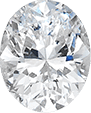
An oval carries more of its weight across the top of the stone and less hidden in the depth below the setting. Combined with its elongated outline, it covers noticeably more of the finger than a round of the same weight.
| Shape at 1.00ct | Approximate face-up size | Impression on the finger |
|---|---|---|
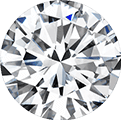
| Round | 6.5mm across | Compact, maximum sparkle |
| Oval | 7.7mm x 5.7mm | Longer, elongates the finger |
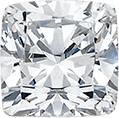
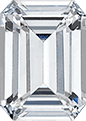
| Cushion | 5.5mm x 5.5mm | Soft square, reads smaller |
| Emerald | 7.0mm x 5.0mm | Long and calm, less sparkle |
So an oval gives you a lower price and a larger appearance at the same time. For anyone working to a fixed budget who wants presence on the hand, it is one of the strongest value choices available.
Where an oval can cost you more
Being honest about the drawbacks matters more than selling the shape.
The bow-tie
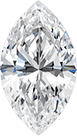
All elongated shapes show a shadow across the middle that looks a little like a bow-tie. On a well-cut oval it is faint and moves as your hand moves. On a badly cut one it is a solid dark band that never goes away. Stones with a barely visible bow-tie command a premium, and they are worth it. Always look at a video or the stone itself.
No standardised cut grade
Round brilliants are given a full cut grade on certificates. Ovals are not, on most reports. That means you cannot simply read “Excellent” and relax. Judging an oval takes an eye, or a jeweller you trust to use theirs.
Length-to-width ratio
This is how long the stone is compared with how wide. Around 1.35 to 1.45 is the classic oval proportion and the most in demand, so it can carry a small premium. Shorter, rounder ovals and very long, narrow ones are often cheaper. Neither is wrong; it is taste.
Colour shows more
Elongated shapes can concentrate warmth at the ends. If you are setting an oval in white gold or platinum, a colourless or near-colourless grade is worth the extra. In yellow or rose gold you can go warmer and save.
Lab-grown versus natural: the bigger lever
Choosing oval over round saves money. Choosing lab-grown over natural saves considerably more.
A lab-grown diamond is the same material as a mined one: identical carbon crystal structure, identical hardness, identical sparkle. It is grown rather than dug up. A lab-grown oval costs a fraction of a natural oval of comparable colour and clarity, which is why so many buyers use the saving to move up in size or in cut quality instead.
We sell lab-grown only, and every centre stone comes with a free IGI certificate stating exactly what it is.
Our oval rings and their real prices
We currently hold three oval designs. All are hand-made in solid metal with lab-grown diamonds. Prices correct at the time of writing.
| Ring | Style | Price |
|---|---|---|
| Solitaire Oval Cut Engagement Ring | Single stone, clean band | £557 |
| Hidden Halo Oval Cut Engagement Ring | Small diamonds set beneath the centre stone | £1,021 |
| Three Stone Oval Cut Engagement Ring | Centre oval with two side stones | £1,021 |
Notice the pattern: the plain solitaire is comfortably the least expensive, because it uses one certified stone and the simplest setting. The hidden halo and three stone versions add stones and hours of setting work, not a bigger centre.
See the oval cut collection, or compare across all engagement rings.
How to buy an oval well
- Look at the bow-tie first. Before colour, before clarity. A heavy bow-tie ruins an otherwise good stone.
- Pick your ratio deliberately. Ask to see a 1.30, a 1.40 and a 1.50 side by side if you can. Most people have a clear preference once they see them.
- Match colour to metal. Cooler metals expose warmth; yellow and rose gold absorb it.
- Don’t overspend on clarity. Ovals are brilliant cut, so their busy sparkle hides small inclusions well. VS2 is usually ample.
- Buy just under a milestone weight. A 0.90ct oval is barely distinguishable from a 1.00ct one on the finger, and the price step at the round number is real.
What about shapes we do not stock?
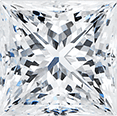
People comparing ovals often ask about princess cut, which is a sharp-cornered square, and old European cut, which is an antique round. We do not stock either as ready-made rings, and we would rather say so plainly than send you to a page that does not exist.
If your heart is set on one of them, we can make it bespoke at no extra design cost. You pay for the stone and the metal; the design work is free.
For reference, princess cuts are usually a little less expensive per carat than round, for the same reason ovals are: less waste when cutting. They do have four sharp corners, which need protective claws, and they tend to look smaller face-up than an oval of the same weight. On pure size for money, the oval still wins.
What an oval ring costs in practice
It is worth separating the stone from the ring. In a finished piece, the metal and the hours of hand work form a substantial share of the price, which is why the gap between shapes narrows once the ring is complete. A simple solitaire in any shape will always be the most economical way to own a good diamond, because it uses one certified stone and the least setting labour.
Frequently asked questions
Are oval cut diamonds more expensive than round?
No. For the same weight and quality an oval is normally less expensive per carat, because cutting an oval wastes less rough crystal and demand for round is higher.
Does an oval look bigger than a round of the same carat?
Yes, generally. An oval spreads its weight across a longer face-up outline, so at one carat it measures about 7.7mm by 5.7mm against a round’s 6.5mm circle. It reads as a larger stone.
What is a bow-tie and should I worry about it?
It is a dark shadow across the centre of an elongated stone, caused by the way light behaves in the cut. Every oval has one to some degree. A faint one is normal and moves as you move; a heavy, fixed one is a reason to choose another stone.
Is a lab-grown oval a real diamond?
Yes. Same chemical composition, same hardness, same optical properties as a mined diamond. Our free IGI certificate on every centre stone records the origin honestly.
Can you make an oval ring to my own specification?
Yes. Bespoke commissions carry no extra design cost with us. Choose the ratio, the grades and the metal, and we hand-make the ring in our North Harrow workshop in London.
In summary
The oval is cheaper than round per carat, looks bigger than round per carat, and asks only that you look carefully at the bow-tie and the proportions before you buy. That is a very reasonable trade.
Free insured UK delivery and 30-day returns on every piece, so you can judge the shape properly on your own hand.
Ready to find your perfect ring?
Explore our lab-grown diamond collection or book a virtual appointment with our team.