How to Get a Stuck Wedding Ring Off Your Finger
A stuck wedding ring usually comes off with cold water, elevation and washing-up liquid. The floss trick, when to stop, and the carat-matched repair after.
A stuck wedding ring usually comes off with the hand held up for a few minutes, cold water, a slippery lubricant such as washing-up liquid or hand cream, and a slow twisting pull rather than a straight tug. Stop if the finger is discoloured, numb or badly swollen, and go to A&E or a walk-in centre: a jeweller can cut the band later, hallmark and all.
Can’t get my wedding ring off?
A wedding ring that will not come off is nearly always caught behind the knuckle rather than gripping the whole finger, and the order you try things in matters far more than how hard you pull. Raise the hand for a few minutes, run cold water over it, then work a lubricant right around and under the band before you pull at all. Turn the ring as you draw it back instead of dragging it straight off.
This is the order a bench jeweller works through, gentlest first, and the point at which each method stops being worth trying.
| Method | What it does to the ring | When to stop |
|---|---|---|
| Hand raised, then cold water | Gives the band a little clearance before you pull | Stop after a few minutes if nothing changes |
| Washing-up liquid, hand cream or oil | Cuts the friction between the band and the skin | Stop if the band still will not turn |
| Slow twisting pull | Walks the band over the knuckle a fraction at a time | Stop the moment the band stops moving |
| Dental floss or tape wrap | Winds the band off over a wrapped finger | Never a first resort; stop if it has to be forced |
| Ring cutter at a jeweller, A&E or fire station | Cuts the band in one place and leaves it repairable | The right answer, not the last one |
Why does a wedding ring get stuck in the first place?
A wedding ring gets stuck because it was sized to pass the knuckle by a small margin, and anything that eats into that margin leaves the band caught behind it. Heat, salt, a long flight, a heavy day of work with the hands and simple weight change over the years all close that gap. Band shape plays a part too: a wide, flat-profile band grips over a longer stretch than a narrow court profile, which is why how tight a ring should sit depends on its width.
How do you get a ring off with cold water and lubricant?
Cold water and lubricant work on a stuck ring in that order, and most rings that come off at home come off exactly this way. Hold the hand up for a couple of minutes, run cold water over the whole hand rather than the ring alone, then dry it. Work washing-up liquid, hand cream, olive oil or hair conditioner right around the band and push a little underneath it. Then twist the ring back and forth as you ease it towards the knuckle.
Any jeweller’s counter has a bottle of washing-up liquid under it for this, and it is the first thing we reach for when someone walks in with a ring that will not move. Soap is not quite as slippery; hand cream is kinder if the skin is sore. Give the lubricant a minute to travel under the band rather than pulling straight away.
Does the dental floss method really work?
The dental floss method does work on some stuck rings, and it is the last thing to try at home rather than the first. It means threading floss or thin tape under the band, winding it firmly along the finger past the knuckle, then unwinding it from the far end so the ring travels along the wrap. It is uncomfortable, it can leave the finger more swollen than before, and the winding must never be forced.
If the floss cannot be threaded under the band at all, that is the answer: the ring is too tight for this method, and pushing on will only make the next attempt harder. A ring cutter takes seconds and costs the ring far less than an hour of pulling.
When should you stop trying and see a doctor?
Stop trying and seek medical help if the finger is discoloured, numb or badly swollen, and go to A&E or a walk-in centre. That is the same line we hold at our own counter: we will not keep working at a ring on a finger in that state, and no jeweller worth the name will. We are jewellers rather than clinicians, so we can tell you exactly what the ring will do, and the finger is a question for someone qualified to answer it.
Does a ring have to be cut off, and who does it?
A ring only has to be cut off when nothing gentler has moved it, and the people who do it are jewellers, A&E departments and, in many areas, fire stations. A hand ring cutter is a small toothed wheel turned by a lever, with a curved metal guard that slides between the band and the skin first, so the wheel only ever meets metal. Gold, silver and platinum give way quickly.
Hard metals behave differently, and it is worth knowing which one you are wearing. Tungsten carbide and ceramic bands are not cut at all: they are cracked with locking pliers, which shatters them and ends the ring. Titanium and steel need a powered cutter rather than a hand tool. Most high street jewellers will cut a band at the counter, often for nothing or for a small charge, so it is worth ringing ahead to ask.
Can a cut ring be repaired or resized afterwards?
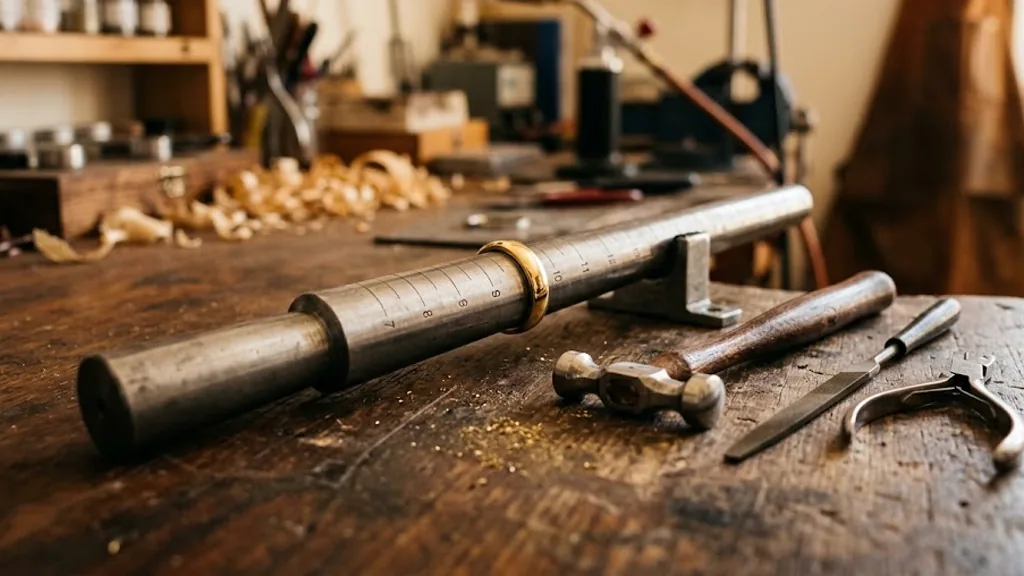
A cut ring can usually be repaired, and on a plain band that repair is routine bench work rather than a rescue. The cutter leaves a narrow gap in one place. The band is closed on a mandrel, joined with solder of the same carat and colour, filed, and then polished until the join is hard to find. A good jeweller cuts away from the hallmark on purpose, so the marks survive the repair intact.
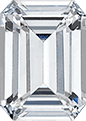
Diamond-set bands are where it gets harder, and the difference is worth understanding before it happens. A half eternity band such as this stackable emerald cut band (£770, correct at the time of writing) has a plain section at the back, which is exactly where it can be cut and later sized. A plain band like our minimalist round cut band (£687) is the easiest case of all.
A full eternity band is the hard one. Our stackable full eternity band (£707) carries stones the whole way round, so there is no plain metal to cut and none to add; cutting one means stones out, remaking and resetting. That is also why a full eternity ring cannot simply be sized up later. Our guides to what happens at the bench afterwards and what a resize costs set out the work and the pricing.
How do you stop a ring getting stuck again?
Stopping a ring getting stuck again is a sizing job rather than a habit, and it starts with measuring properly instead of guessing. A band that has to be forced past the knuckle every time is the wrong size for that finger, and the fix is either a resize or a band with a slightly deeper inside curve. Measure at the end of the day rather than first thing, and measure the knuckle as well as the base of the finger.
Have the fit checked whenever the ring starts to feel different, and take it off for heavy or hot work rather than pulling at it later. Our guides to measuring your size at home and finding your true ring size cover the method, and you can see profiles and widths across our wedding ring collection, hand-made in our North Harrow workshop.
Frequently asked questions
What should you never use to get a ring off?
Never use pliers, a saw, a knife or any household cutting tool on a ring you are wearing. They slip, they mark the band badly enough to make a proper repair harder, and a jeweller’s cutter does the same job in seconds with a steel guard between the metal and the skin. Butter and petroleum jelly are safe, but no better than washing-up liquid.
Can a jeweller cut a ring off without hurting your finger?
Yes. The cutter is built so that the blade never touches skin: a curved steel guard slides under the band first, and the toothed wheel runs against that guard rather than against the finger. In our experience customers describe warmth and pressure rather than pain, and the whole thing is over quickly on a gold or silver band.
Does an eternity ring have to be destroyed to come off?
No. An eternity ring is cut in the same way as any other band, and the cut itself is narrow. What differs is the repair: a full eternity band set the whole way round has no plain metal to work with, so stones near the cut usually have to come out and be reset, which is skilled work rather than a quick solder.
Will a cut wedding ring still have its hallmark?
Yes, in almost every case. UK hallmarks are struck inside the band in one place, and a jeweller cutting a ring deliberately chooses a point away from those marks. If a repair adds a significant amount of new metal, the piece may need re-hallmarking, which an assay office handles through the jeweller who did the work.
Which works better on a stuck ring, soap or hand cream?
Hand cream and washing-up liquid both beat bar soap, because they stay slippery instead of drying into a film. Washing-up liquid travels under a tight band most easily, which is why it is the one we keep at the counter. Hand cream or a light oil is the better choice on skin already sore from pulling.
How often do wedding rings actually need cutting off?
No reliable published UK figure exists for this, and we are not going to invent one. What we can say from our own counter is that it is uncommon, that most rings brought in stuck come off with lubricant, and that the ones which do need cutting are usually rings that have not been sized in many years.
More guides on this topic
Ready to find your perfect ring?
Explore our lab-grown diamond collection or book a virtual appointment with our team.