How Much Does a Diamond Engagement Ring Cost? Including 2 Carat
Real current prices instead of invented averages, what actually drives the cost, and the truth about 2 carat rings.
There is no honest single answer to “how much does a diamond engagement ring cost”, and anyone who gives you one is quoting a survey of their own customers. What we can do is explain exactly what you are paying for, show you real current prices from our own collection rather than a made-up average, and answer the most common specific version of the question: what a 2 carat ring costs.
Why “average” figures are close to useless
Published averages for UK engagement ring spending come almost entirely from retailer and wedding-industry surveys. They measure the customers of whoever ran the survey, they rarely separate lab-grown from mined diamonds, and different sources produce wildly different answers.
They also mix two completely different markets. A 1 carat lab-grown ring and a 1 carat natural ring of the same specification are not remotely comparable on price, so an “average” that blends them describes nothing real.
We would rather show you actual prices. Everything below is from our own collection and correct at the time of writing.
Real prices from our collection
| Ring | Price |
|---|---|
| Stackable Pear Cut Engagement Ring | £503 |
| Solitaire Round Cut Engagement Ring in White Gold | £563 |
| Halo Round Cut Engagement Ring | £707 |
| Vintage Pear Rose Cut Engagement Ring | £1,237 |
Those four span most of our engagement ring range. They are all lab-grown diamonds, all hand-made in solid gold or platinum, all with a free IGI certificate on the centre stone. A comparable natural-diamond ring at the same specification would cost substantially more — that gap is the single largest factor in what anyone pays.
What actually drives the price
The centre stone — usually most of it
Four things set the price of the diamond: carat weight, cut quality, colour grade and clarity grade. Carat has the steepest effect, because price per carat rises as stones get bigger as well as the weight itself increasing. A 2 carat stone costs considerably more than twice a 1 carat stone of identical quality.
Lab-grown or natural
The largest single variable. A lab-grown diamond is the same material as a mined one — the same carbon, the same hardness, the same optical behaviour, graded by the same laboratories — but costs a fraction of the price. This is the reason the rings above are priced where they are.
The metal
Platinum is denser and more expensive than gold, so the same design costs more in platinum. 18k gold contains more pure gold than 14k and costs more accordingly. Heavier, wider bands use more metal and cost more than slim ones.
The setting
A plain solitaire mount is the cheapest thing to make. Every additional small stone adds both material and, more significantly, labour — each one has to be set individually by hand. A pavé band or a halo can add a surprising amount for that reason.
Who you buy from
High street retail carries the cost of premises and staff. A workshop carries the cost of making. Marketplaces carry very little of either, which is usually reflected in what you get.
How much is a 2 carat diamond engagement ring?
We are not going to publish a single number, because it would be misleading. A 2 carat stone at an excellent cut, F colour and VS1 clarity and a 2 carat stone at a fair cut, J colour and SI2 clarity are both “2 carat” and the price difference between them is large.
What we can tell you honestly:
- A 2 carat lab-grown diamond ring is achievable for a great many people who assumed 2 carats was out of reach. It is the size where the difference between lab-grown and natural becomes most dramatic.
- A 2 carat natural diamond ring of good quality sits in a completely different bracket, typically several times the lab-grown equivalent. Any range you read should say which it is quoting.
- Our stock range does not currently include 2 carat centre stones. We make them as bespoke commissions, quoted on the actual specification, with no extra design cost for the design work itself. Tell us the cut, colour and clarity you want and we will price it properly rather than guess.
Before you commit to 2 carats, know this
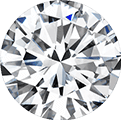
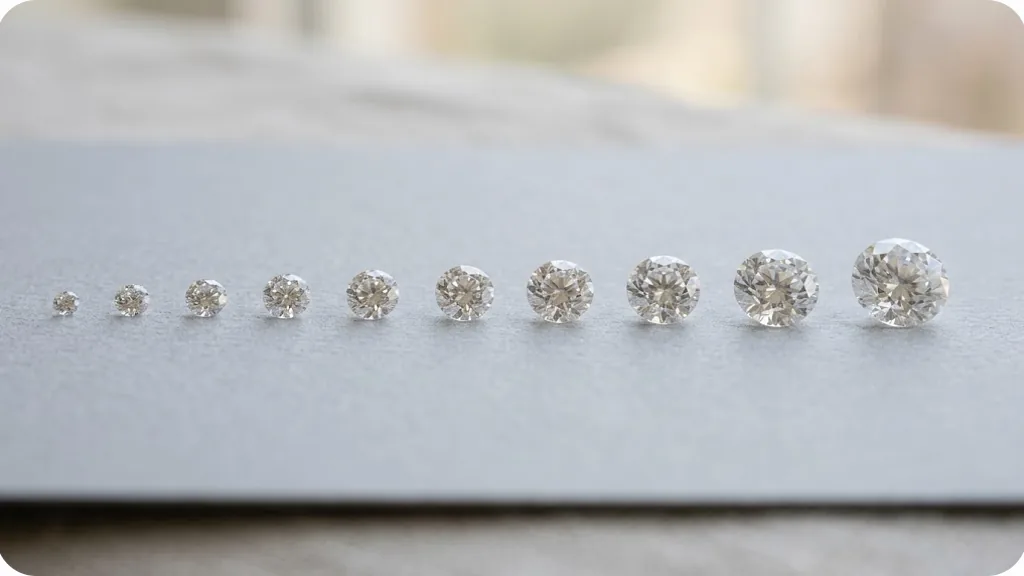
A 1 carat round diamond measures about 6.5mm across. A 2 carat round measures about 8.1mm. Doubling the weight adds roughly 1.6 millimetres of width.
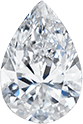
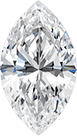
That is the most important number in this entire article. Price roughly triples or more; visible width grows by about a quarter. If your goal is presence on the hand rather than a number on a certificate, an elongated shape at a lower carat weight will often get you further. A marquise or pear spreads its weight across the top of the stone and costs less per carat into the bargain.
Where the money is best spent
| Spend more on | Spend less on |
|---|---|
| Cut quality — it determines sparkle | Clarity above the point where it is eye-clean |
| The making and the setting — it determines whether the ring survives | Colour above the point your chosen metal reveals |
| An independently certified stone | Hitting a round carat number exactly |
Two practical savings that cost you nothing visible: buy just under a carat threshold (0.90ct rather than 1.00ct is invisibly narrower but meaningfully cheaper), and match colour grade to metal (a warmer stone looks white in yellow or rose gold).
What about the two months’ salary rule?
It was written by an advertising agency. It is not etiquette, it is not tradition, and it is not a measured average of what anybody spends. It first appeared in mid-twentieth-century diamond marketing and it has done a remarkable job of making people feel they are underspending.
Spend an amount that does not cause a problem. That is the whole rule.
Frequently asked questions
How much should I spend on an engagement ring?
Whatever you can spend comfortably. If you want a framework rather than a figure: decide the number first, then optimise cut, then shape, then carat within it. Rings bought on credit at a stretch cause more regret than small stones ever have.
Why do two 1 carat rings have very different prices?
Because carat weight is only one of four grades, and because the metal, the setting complexity and whether the stone is lab-grown or natural all move the price substantially. Compare the full specification, never the carat weight alone.
Are lab-grown diamond rings cheaper for a reason I should worry about?
No. The price difference reflects how the crystal was produced, not what it is. A lab-grown diamond is graded on exactly the same scales by the same laboratories and behaves identically in wear. It is the same material.
Does the price include the wedding band?
Not usually, unless you are buying a bridal set where the two are designed and sold together. Budget for both from the start — it avoids an unwelcome surprise a few months later.
Can I upgrade the stone later?
Often yes. A jeweller can reset a larger stone into an existing mount or build a new one around the old diamond. We take on that work with no extra design cost.
Where to go from here
Browse the full engagement ring collection with prices on every listing, or read our guides to what quality of diamond to choose and what size to go for. Free insured UK delivery and 30-day returns on everything.
Ready to find your perfect ring?
Explore our lab-grown diamond collection or book a virtual appointment with our team.