Is a Claddagh Ring a Wedding Ring?
What a Claddagh ring means, which hand and direction says married, and the practical points before choosing one as a wedding ring.
Short answer: a Claddagh ring can be a wedding ring, and for many Irish families it is. But it is not only a wedding ring — it is a ring with several meanings that change depending on which hand you wear it on and which way it faces. That is what makes it interesting, and what makes the question worth answering properly.
What is a Claddagh ring?
A Claddagh ring is an Irish design showing two hands holding a heart, with a crown above it. Each part means something:
- The hands — friendship
- The heart — love
- The crown — loyalty
It takes its name from Claddagh, a fishing village just outside Galway on Ireland’s west coast. The design is generally dated to the seventeenth or early eighteenth century, and the goldsmith Richard Joyce of Galway is the name most often attached to it. The finer details of that story vary between tellings, and honest jewellers say so rather than presenting one version as settled fact.
It belongs to a wider European family of “fede” rings — from mani in fede, hands joined in faith — which were used as betrothal and wedding rings across Europe for centuries. So the Claddagh is not an odd outlier. It sits in a long tradition of clasped-hands rings that were absolutely meant as marriage rings.
So is it a wedding ring?
It is used as all of these, depending on the wearer:
- A wedding ring
- An engagement ring
- A friendship ring
- A ring showing you are single or unattached
- A family heirloom passed from mother to daughter, or grandmother to granddaughter
- A ring worn simply to mark Irish heritage
The design does not decide which one it is. How you wear it does.
How to wear a Claddagh ring, and what each position means
This is the part people actually want to know. The convention is widely observed, though it is a folk tradition rather than an official code, and you will meet families who do it slightly differently.
| Hand | Heart points | Traditional meaning |
|---|---|---|
| Right hand | Towards the fingertip | Single, and open to love |
| Right hand | Towards the wrist | In a relationship |
| Left hand | Towards the fingertip | Engaged |
| Left hand | Towards the wrist | Married |
The logic is easy to remember: heart turned inward, towards you, means your heart is taken. Left hand means the commitment is a marriage or an engagement rather than a courtship.
So a Claddagh worn on the left ring finger with the heart pointing towards the wrist is a wedding ring, in the full traditional sense.
Practical things to consider before choosing one as your wedding ring
I would be doing you a disservice if I only told you the romantic half. Here is the workshop view.
It is a raised, detailed design. The crown sits proud of the band, and the hands and heart have real depth. That is what makes it beautiful, and it is also what makes it catch on jumpers, gloves and hair. If you work with your hands, this is worth thinking about.
Fine detail softens over decades. On a ring worn every day, the crown points and the knuckles of the hands are the first things to round off. In fifty years a Claddagh looks noticeably worn. Many people consider that part of the charm; some do not.
It does not stack easily. Because the design is one-directional and raised, a Claddagh sits awkwardly next to a conventional engagement ring. Most people who use one as a wedding ring wear it on its own.
Orientation matters when you buy. A Claddagh has a top and a bottom. If you order online, check that the ring is described the way you intend to wear it, and remember that “heart pointing towards the fingertip” and “pointing towards the wrist” are simply the ring turned around — it is not two different products.
Resizing is possible but limited. The band section beneath the design can be adjusted, but only within a range, because the design occupies a large arc of the ring. Get the size right at the outset.
Do we make Claddagh rings?
Not as a stock item — you will not find one in our collection, and we would rather say so than send you clicking through pages that do not have it. Our stock is contemporary: solitaires, halos, eternity bands and set wedding rings, hand-made in solid gold and platinum with lab-grown diamonds.
We do make Claddagh rings to order, with no extra design cost for the bespoke work. Two versions come up most often:
- A traditional Claddagh in solid yellow gold, white gold, rose gold or platinum, with the classic hands, heart and crown.
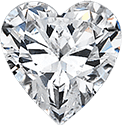
- A Claddagh with a lab-grown diamond as the heart — a heart-cut stone set where the metal heart would normally be. This is the version most people ask about, and it makes an exceptional engagement ring.
If you want a sense of how a heart-shaped lab-grown diamond looks in a finished ring before committing to bespoke, our Halo Heart Cut Engagement Ring in Rose Gold shows the stone shape clearly, and the Stackable Heart Cut Eternity Band in Rose Gold shows it repeated around a band. We hold a small number of heart-cut stones, so it is worth asking early.
If you want the meaning without the design
Some couples love what the Claddagh stands for but want something that stacks better and wears flatter. A few alternatives that carry a similar sentiment:
- A heart-cut diamond in a simple setting — the love symbolism, none of the catching.
- An engraved Claddagh inside a plain band — the symbol worn where only you know it is there. This works beautifully and is one of the more popular bespoke requests we get.
- A toi et moi design — two stones side by side, an old European motif meaning “you and me”. Our Toi et Moi Pear Cut Engagement Ring in White Gold is the same family of idea: two elements, one meaning.
Frequently asked questions
Can a man wear a Claddagh as his wedding ring?
Yes, and it is common in Ireland and among the Irish diaspora. Men’s versions are usually made wider and heavier, sometimes with a flatter, more shield-like crown so the ring sits closer to the finger.
Do I have to be Irish to wear one?
No. It is worn worldwide. Most people in Ireland treat it as a shared symbol rather than a closed one, though wearing it with some understanding of what it means will always go down better than wearing it as a souvenir.
Is it bad luck to buy a Claddagh for yourself?
There is a saying that a Claddagh should be given, not bought for oneself. It is a piece of folklore, not a rule, and plenty of people buy their own. Treat it as a nice story rather than a restriction.
Can a Claddagh be used as an engagement ring and then re-worn as a wedding ring?
Yes — that is exactly what the left-hand tradition allows. Wear it heart-outward while engaged, and turn it heart-inward at the wedding. One ring, two stages. It is a genuinely elegant solution and costs nothing extra.
Can you set a coloured stone in the heart?
Yes. Emerald is the most requested for obvious reasons, and sapphire and ruby are both practical choices for daily wear. We will always tell you honestly how a particular gemstone will hold up in a ring worn every day before you commit.
Where to go from here
If a Claddagh is your wedding ring, wear it on your left ring finger with the heart turned in. That is the tradition, and it needs nothing added to it.
If you would like one made — traditional, or with a lab-grown diamond heart — we design bespoke at no extra design cost from our workshop in North Harrow, London, with free insured UK delivery and 30-day returns. Or browse the wedding ring collection to compare metals and widths first. Prices shown are correct at the time of writing.
More guides on this topic
Ready to find your perfect ring?
Explore our lab-grown diamond collection or book a virtual appointment with our team.