Should You Wear Your Wedding Ring Every Day?
Yes, wedding rings are made for daily wear. When to take yours off, which metals last best, and how to keep it looking new.
A wedding ring is the one piece of jewellery most people never take off. That is the whole point of it. But once you own a ring that cost several hundred pounds, a sensible question follows: is wearing it every single day actually good for it?
The short answer is yes, you can wear your wedding ring every day, and most people do. The longer answer is that a few ordinary daily habits will wear a ring out far faster than normal life ever will. Knowing which ones they are is the difference between a ring that still looks right in thirty years and one that needs a rebuild in five.
Wedding rings are designed for daily wear
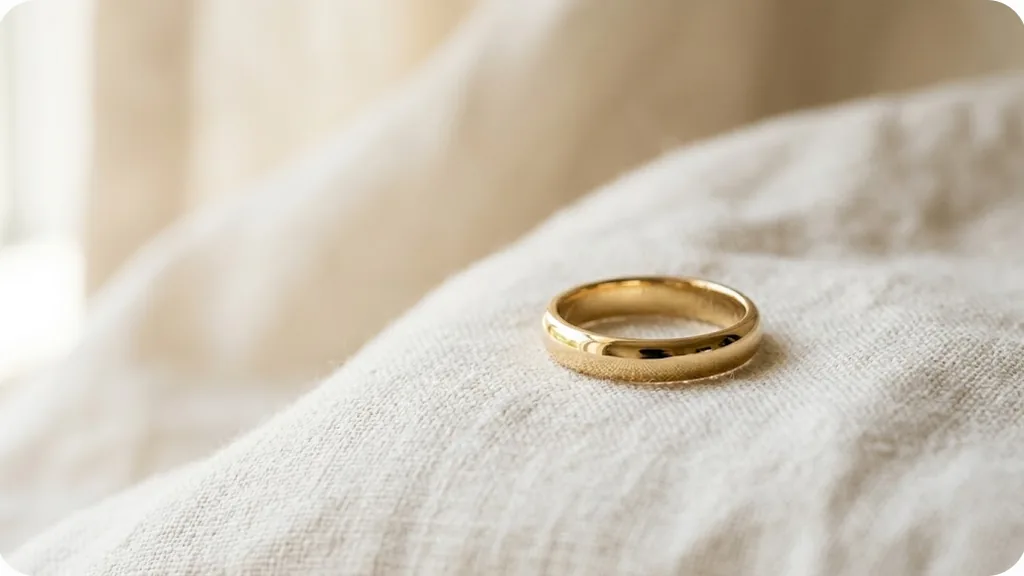
Unlike a cocktail ring or a pair of drop earrings, a wedding band is built as an everyday object. That is why traditional bands are plain, low and rounded. There is nothing sticking up to catch, nothing thin enough to bend, and no stone sitting proud of the metal.
Modern diamond-set bands are still made to the same brief, just with more going on. A well-made band keeps the stones low in the metal and protects the girdle (the widest edge of each diamond) inside a channel, a bezel rim or under small grains of gold called claws or beads.
So the honest position is this: daily wear is normal and expected. What causes damage is not time on the finger. It is specific moments.
The five things that actually damage a ring
In a workshop, the same handful of causes come back again and again.
- Impact. Knocking a ring against a door frame, a barbell, a car door or a kitchen worktop. Metal moves, claws bend, stones loosen. This is the single biggest cause of stone loss.
- Grit. Sand, soil and cleaning powders act like very fine sandpaper. Gardening and beach holidays do more polishing damage than a year at a desk.
- Chlorine and bleach. Chlorine attacks the other metals mixed into gold (usually copper, silver, zinc and sometimes nickel). Over repeated exposure this can make the alloy brittle and cause tiny cracks, particularly in thin claws. Swimming pools, hot tubs and neat bleach are the culprits.
- Squashing. Weights, kettlebells, rowing handles and heavy tools press a round ring into an oval. Once a band is out of round it is uncomfortable and the stones sit under uneven pressure.
- Hand cream and soap build-up. This does not damage the ring, but it dulls it fast. Film under a diamond kills sparkle more effectively than anything else on this list.
Notice what is not on that list: showering, washing up with a normal detergent, sleeping, typing, cooking, driving, holding children. Those are all fine.
When to take it off
| Activity | Take the ring off? | Why |
|---|---|---|
| Showering, washing hands | No need | Water is harmless. Soap film just needs a clean now and then. |
| Sleeping | Personal choice | Safe for plain bands. Claw-set rings can catch on bedding. |
| Weight training, climbing, racket sports | Yes | Impact and squashing. Also degloving risk with a caught ring. |
| Gardening, DIY, sanding | Yes | Grit scratches metal and dulls stones. |
| Swimming pools and hot tubs | Yes | Chlorine damage to the alloy, and cold water shrinks fingers. |
| Cleaning with bleach or oven cleaner | Yes | Harsh chemicals attack the alloy and can strip rhodium plating. |
| Applying hand cream or fake tan | Yes, briefly | Stops build-up under the stones and staining on the setting. |
| Cooking, office work, driving, childcare | No | Ordinary life. This is what the ring is for. |
One warning worth repeating: if you take a ring off in a public changing room, a hotel bathroom or beside a sink, it is far more likely to be lost than damaged. More rings go down plugholes than get broken in the gym. If you take it off, put it in a zipped pocket or a small pouch, never on a ledge.
Does the metal you choose make a difference?
Yes, and it is worth understanding before you buy rather than after.
| Metal | How it behaves with daily wear |
|---|---|
| Platinum | Dense and very hard-wearing. It still scratches, but the metal is pushed aside rather than lost, so it develops a soft grey sheen called a patina. Can be polished back. The best choice for claws. |
| 18ct gold | Richer colour, slightly softer. Wears beautifully but shows marks a little sooner than 9ct. |
| 9ct gold | Harder on the surface because there is less pure gold in the mix, but more brittle. Good value, very common in the UK. |
| White gold | Usually finished with a thin rhodium plating for a bright white colour. That plating wears through with daily use and needs redoing periodically. This is normal, not a fault. |
| Sterling silver | The softest of the group. Lovely for a band you wear some of the time, but it marks and bends more readily under everyday knocks. |
If you want something you genuinely never think about, a low-profile band in gold or platinum is the answer. Our Minimalist Round Cut Wedding Band is the classic version of that idea, and the Bezel Rose Cut Eternity Band uses a rim of metal all the way round each stone, which is the most protective setting there is. Prices correct at the time of writing.
Wearing it every day when your fingers change
Fingers are not a fixed size. They swell in heat, after salty food, during pregnancy, on long flights and later in life. They shrink in cold weather and first thing in the morning.
A ring that is slightly loose in February and slightly tight in July is completely normal. What matters is that you can always get it off. If a ring has to be forced past the knuckle, stop wearing it until it is resized. A stuck ring on a swelling finger is a genuine medical problem, not just an inconvenience.
If your fingers change permanently, most plain and half-set bands can be resized. Full eternity bands, where diamonds run the whole way round, usually cannot be, because there is no plain metal to cut into. If you love the look of a full eternity ring, a three-quarter or half version gives you the same appearance from the front with room to alter it later.
Keeping it looking new
Daily wear does not have to mean a dull ring. Two habits cover almost everything:
- Clean it every couple of weeks. Warm water, a drop of washing-up liquid, five minutes to soak, then a soft baby toothbrush behind and underneath the stones. Rinse and dry with a lint-free cloth. That is all a diamond needs.
- Have the setting checked once a year. A jeweller will look at the claws under magnification and tighten anything that has moved. This takes minutes and prevents the one thing you cannot undo, which is losing a stone.
Avoid toothpaste, bicarbonate of soda and any abrasive paste. They scratch gold and are especially bad for rhodium-plated white gold. Steer clear of home ultrasonic machines with any ring where you are not certain the stones are tight, because vibration can shake a loose stone right out.
What if you would rather not wear it every day?
Plenty of people do not, and it is not a statement about the marriage. Surgeons, nurses, chefs, mechanics, electricians, carers and anyone who wears gloves for hours all have good practical reasons.
Common solutions include wearing the ring on a chain during shifts, owning a plain hard-wearing band for work days and keeping the diamond-set one for the rest, or simply putting it on when you get home. Any of those is fine. The ring is a symbol, not a rule.
Frequently asked questions
Should I wear my wedding ring every day?
Yes, if you want to. Wedding rings are designed for it. Take it off for the gym, gardening, swimming pools and harsh cleaning products, and it will handle everything else without complaint.
Is it bad to sleep in my wedding ring?
Not for a plain band. If your ring has raised claws or a high setting, you may find it catches on bedding and pulls threads, and claws can be knocked out of line. Sleeping with it off is fine too, as long as it goes in the same safe place every night.
Can I shower with my wedding ring on?
Yes. Water will not hurt gold, platinum or diamonds. The only downside is a slow build-up of soap and shampoo film under the stones, which is exactly what a periodic warm-water clean removes.
Will wearing my ring every day wear it out?
It will thin very slowly over decades, which is normal and part of the character of a ring. What genuinely wears a ring out early is impact and grit. Careful removal at the right moments matters far more than total hours worn.
How often should a wedding ring be professionally checked?
Once a year is a sensible rule of thumb in the trade rather than a measured figure. Bring it in sooner if you hear a stone rattle, feel a claw catching on fabric, or knock the ring hard.
Choosing a ring you will happily wear every day
If you are still deciding, buy for your actual life rather than for a photograph. Low settings, rounded edges and a metal suited to your work will make a ring you never want to take off.
Every ring we make uses lab-grown diamonds, is hand-made in solid gold or platinum, and comes with a free IGI certificate on the centre stone, free insured UK delivery and 30 days to return it. Have a look through the full wedding ring collection, or browse round cut designs if you want the most classic everyday shape. If nothing is quite right, we design bespoke pieces at no extra design cost from our workshop in North Harrow, London.
Ready to find your perfect ring?
Explore our lab-grown diamond collection or book a virtual appointment with our team.