What Is a Vintage Style Engagement Ring? The Details That Define It
A vintage style ring is new but copies an earlier era, 1837 to 1939. Milgrain, filigree, engraving and old-style cuts create the look, not the ring’s age.
A vintage style engagement ring is a new ring designed to look like one from an earlier era, usually the Victorian, Edwardian or Art Deco years between about 1837 and 1939. The look comes from details such as milgrain edges, engraved shoulders, clusters and softer old-style cuts. The caveat is that vintage style is not antique: the ring is new, and so is its metal.
What makes an engagement ring vintage style?
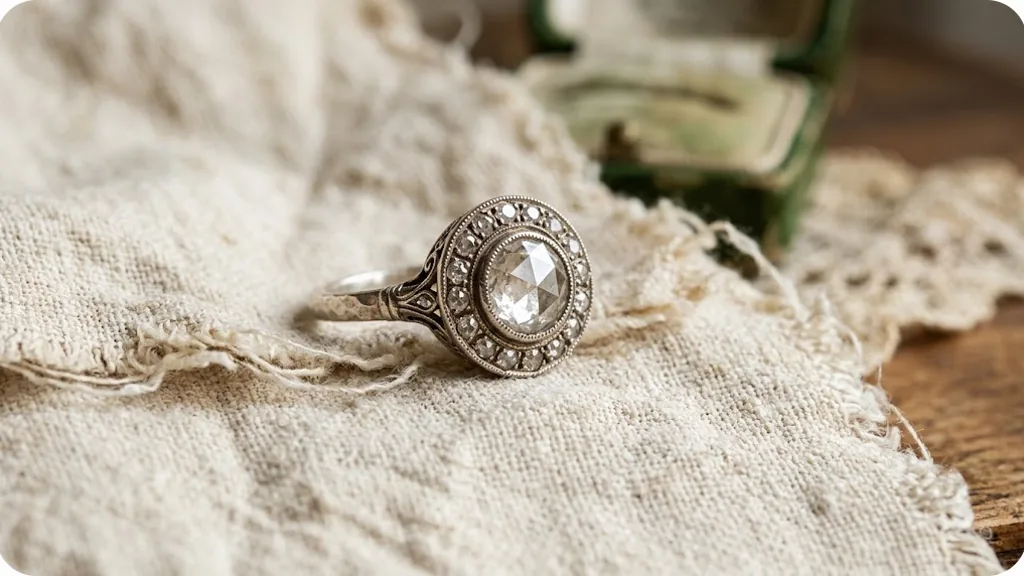
An engagement ring is vintage style when its design borrows the details of a past era rather than the clean lines of a modern solitaire. Typical cues are milgrain, the tiny row of metal beads along an edge; filigree, which is open lacework in metal; engraved shoulders; and a cluster or halo of small stones. A ring needs only 2 or 3 of these cues to read as vintage.
Milgrain is the most common of them, and our guide to what milgrain means on a ring explains how it is made. If the ring is a real family piece, read proposing with a family heirloom ring.
Which eras do vintage style rings copy?
Vintage style rings copy four main eras, each with its own look. Victorian rings (1837 to 1901) favour yellow gold, clusters and romantic motifs. Edwardian rings (about 1901 to 1915) use platinum, lace-like filigree and milgrain. Art Deco rings (the 1920s and 1930s) are geometric, with step cuts and bold symmetry. Retro rings of the 1940s are chunkier and often in rose or yellow gold.
In short, the era you pick decides the metal, the shape of the stone and how busy the metalwork should be.
| Era | Years | Typical details |
|---|---|---|
| Victorian | 1837 to 1901 | Yellow gold, clusters, engraving |
| Edwardian | About 1901 to 1915 | Platinum, filigree, milgrain |
| Art Deco | 1920s and 1930s | Geometric shapes, step cuts |
| Retro | 1940s | Bold, chunky rose or yellow gold |
Is a vintage style ring the same as an antique ring?
A vintage style ring is not the same as an antique ring. In common trade usage, an antique ring is at least 100 years old and a vintage ring is roughly 20 to 100 years old, while an estate ring simply means previously owned, of any age. A vintage style ring is newly made, so it has a sound band, fresh claws and a certificate for the stone. These terms are trade custom, not legal definitions.
For the wider story, see the history of diamond engagement rings.
Which diamond shapes suit a vintage style ring?
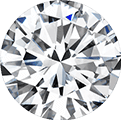
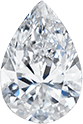
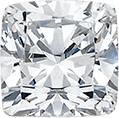
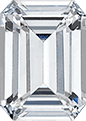
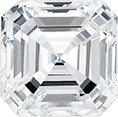
The diamond shapes that suit a vintage style ring best are round, cushion, pear and the step cuts favoured in the 1920s, such as emerald and Asscher. A rose cut, which has a flat base and a domed top of triangular facets, gives the softest antique look. Older cuts such as the old European had larger facets than a modern 57-facet round brilliant, so they flash more gently.
Those older cuts are covered in how diamonds were cut in the past and whether European cut diamonds are worth more.
Which vintage style rings are in stock?
Two vintage style rings are in stock at the time of writing, both with lab-grown diamonds. The first pairs a 1.20 ct pear rose cut, measuring 9.22 x 6.71 mm, with a matching diamond band as a bridal set. The second is a round centre stone of 1.00 to 3.00 ct framed by milgrain and a U-shaped pavé, set on a band 2.0 mm wide and 2.0 mm thick.
They are the Vintage Pear Rose Cut Engagement Ring and the Vintage Round Cut Engagement Ring in Yellow Gold. CarbonstoneUK, of North Harrow, London, includes a free IGI certificate with every centre stone. For other settings, browse all lab-grown diamond engagement rings.
Frequently asked questions
Does a vintage style ring need more care than a modern one?
Yes, a little. Milgrain beads, filigree holes and engraving all collect soap and hand cream, so the ring dulls faster. A 20-minute soak in warm water with a drop of washing-up liquid and a soft toothbrush clears most of it. Milgrain also wears smooth over many years and can be re-applied by a jeweller.
Can a vintage style ring be worn every day?
Yes. A newly made vintage style ring has a full-thickness band, often around 2 mm, and fresh claws, so it is as sound as any modern ring. The fine detail is the only weak point. Remove it for the gym and gardening, and have the claws and pavé checked once a year.
Which metal is most authentic for a vintage look?
The most authentic metal depends on the era you are copying. Platinum suits an Edwardian or Art Deco look, because those rings were often made in platinum. Yellow gold, typically 18ct, suits a Victorian look, and rose or yellow gold suits the 1940s. White gold is a modern stand-in for platinum.
Are vintage style rings made with old cut diamonds?
No, not usually. Most vintage style rings use modern cuts set in old-style metalwork. Some use a newly cut rose cut or an old-style round with larger facets to soften the sparkle. A genuine old European cut would normally be a recycled antique stone rather than a new one.
Is a vintage style ring cheaper than a real antique ring?
No reliable rule exists, because antique prices depend on rarity, maker and condition rather than metal and stone alone. A vintage style ring with a lab-grown diamond is usually cheaper than an antique with a natural diamond of the same 1 ct size, and it comes with a modern certificate.
Can I add vintage details to a modern ring design?
Yes. Vintage details such as milgrain edges, engraved shoulders or a small halo can be added to an otherwise modern design when the ring is made. It is easiest at the 3D design stage. Adding milgrain to a finished ring is possible but can change the profile slightly.
More guides on this topic
Cushion stones suit this look well, as our cushion cut diamond guide explains.
Ready to find your perfect ring?
Explore our lab-grown diamond collection or book a virtual appointment with our team.