Are Cushion Cut Diamonds Cheaper Than Round?
Cushion cuts cost less than rounds, but not as much less as you think once the ring is made. Honest UK price guidance.
Yes. For the same weight, colour and clarity, a cushion cut diamond is almost always cheaper than a round one. The gap is real and it is worth knowing about, because it is one of the easiest ways to get more diamond for your money.
But “cheaper” needs unpacking. Cheaper by how much? And is there a catch? Here is the honest version, written for someone buying their first ring.
What a cushion cut is
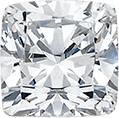
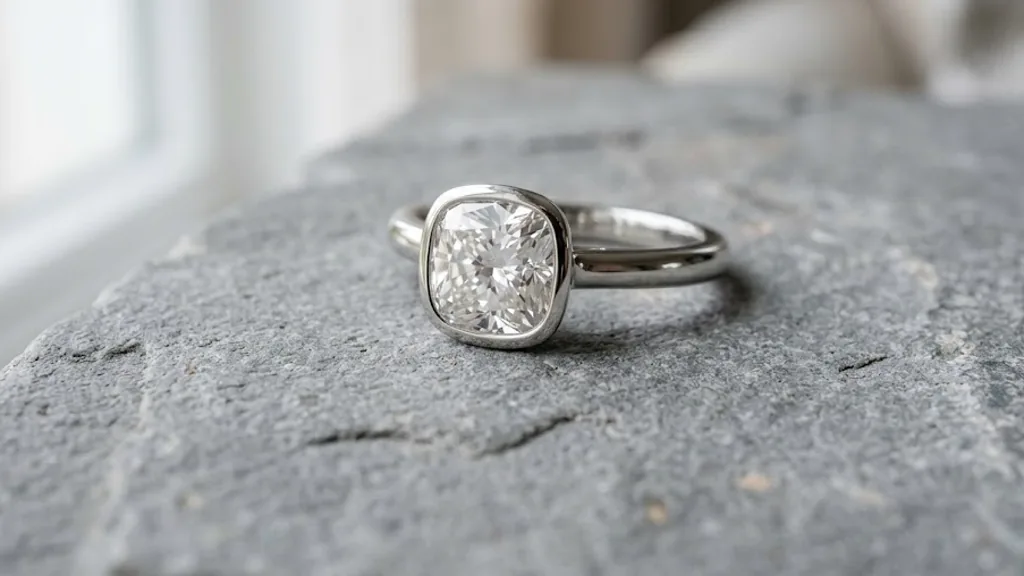
A cushion cut is a squarish or slightly rectangular diamond with rounded corners and gently curved sides. It looks a bit like a small pillow, which is where the name comes from.
It is one of the oldest shapes still in regular use. The original versions were cut by candlelight in the 1800s, with big chunky facets designed to glow rather than glitter. Modern cushions are cut with more, smaller facets, so they sparkle far more than their antique ancestors while keeping that soft, rounded outline.
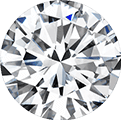
A round brilliant, by contrast, is a perfect circle cut to a strict mathematical formula — 57 or 58 facets in fixed positions, worked out over a century to bounce back as much light as possible.
Why the round costs more
Three things, and none of them is about quality.
1. Waste
Diamonds start as rough crystals, and the natural crystal shape is closer to two pyramids stuck base to base. Cutting a perfect circle from that shape means grinding away a great deal of material. Cutting a cushion, which is closer to the natural outline, wastes far less.
A rough stone that yields a 1 carat round might yield a noticeably heavier cushion. The cutter has to charge for what is lost, so rounds carry that cost.
2. Precision
A round brilliant has to be cut to tight tolerances or it simply does not sparkle properly. Every angle matters. That takes more time on the wheel and more skill, and both are paid for.
Cushions have far more room for interpretation. There is no single “correct” cushion, which makes them quicker to produce.
3. Demand
Round is by far the most requested shape for engagement rings. Everything else is grouped together in the trade as “fancy shapes” and priced below round. That is straightforward supply and demand, not a comment on beauty.
How much cheaper, in real terms
Here is a guide to the price difference for the stone alone, comparing equal weight, colour and clarity. These are lab-grown diamond figures — a lab-grown diamond is a real diamond with identical carbon, hardness and sparkle, grown in a laboratory instead of underground.
| Carat weight | Round (guide) | Cushion (guide) | Typical saving |
|---|---|---|---|
| 0.75ct | £180 – £300 | £140 – £240 | Around 20% |
| 1.00ct | £280 – £500 | £220 – £390 | Around 20–25% |
| 1.50ct | £480 – £850 | £360 – £650 | Around 25% |
| 2.00ct | £750 – £1,400 | £550 – £1,050 | Around 25% |
Diamond prices move constantly and lab-grown prices in particular have fallen sharply in recent years, so treat these as a sense of scale rather than a quotation. The pattern, though, is consistent: expect a cushion to save you roughly a fifth to a quarter on the stone.
With natural diamonds the percentages are similar but the pounds are far larger, because natural stones cost many times more to begin with.
The part most guides leave out: the saving is smaller than it looks
Here is where honesty matters more than a headline.
The diamond is only one line on the invoice. A finished ring also includes the gold or platinum, the setting work, the hallmarking, the certificate and the workshop’s time. Those costs are identical whether the stone is round or cushion.
So if a cushion saves you £80 on a 1 carat lab-grown stone, and the ring itself costs £550 to make, the saving on the finished piece is nearer 12% than 25%. Still worth having. Just not the transformation some websites suggest.
You can see this in real prices on our own site. The Bezel Cushion Cut Engagement Ring in Platinum costs more than several of our round designs, not because the stone is dearer, but because platinum is denser than gold and a bezel setting — a rim of metal wrapped all the way around the stone — uses far more metal and bench time than simple claws.
The lesson: the shape of the stone is rarely the biggest number in a ring’s price. Metal choice and setting complexity usually matter more.
Do you lose anything by choosing a cushion?
You lose a little sparkle efficiency, and you gain a different character. Whether that is a loss depends entirely on taste.
- Round brilliant: crisp, bright, lots of small flashes. The most light return of any shape. Reads as sharp and modern-classic.
- Cushion: softer, warmer, with larger and slower flashes of colour. Many people describe it as romantic or antique. It has a glow rather than a glitter.
There is also a practical difference. Cushions come in two broad families and they look quite different, so always ask which you are being shown:
| Standard cushion | Crushed ice cushion | |
|---|---|---|
| Facet look | Larger, clearly defined flashes | Lots of tiny scattered sparkles |
| Overall feel | Vintage, chunky, characterful | Busy, glittery, more modern |
| Hides inclusions? | Less well | Very well |
| Best for | Antique-inspired designs | Maximum sparkle on a budget grade |
Neither is better. But if you order online without checking, you can receive something quite unlike what you pictured.
Two more things that affect cushion pricing
Depth
Cushions are often cut deep, meaning a lot of the weight sits below the surface where you cannot see it. A deep 1 carat cushion can look smaller face-up than a 1 carat round, which quietly cancels out part of your saving.
Ask for the millimetre measurements, not just the carat weight. For a 1 carat cushion, look for something around 5.5mm or wider. Anything much under that is carrying hidden weight.
Colour tolerance
Because cushions have more colour-showing facets, warmth is slightly more visible than in a round. If you are buying towards the lower colour grades to save money, a round is more forgiving. In lab-grown this rarely matters, since high colour grades are inexpensive.
Getting the best of both
If you love the cushion outline but want more presence, add stones rather than weight. Two flanking diamonds widen the whole design for far less than upgrading the centre stone would cost. Our Three Stone Cushion Cut Engagement Ring does exactly that.
And if it is the soft pillow shape you are drawn to rather than a big centre stone, the Solitaire Cushion Cut Wedding Band is a gentler way into the shape, and it stacks well alongside an engagement ring.
Frequently asked questions
How much cheaper is a cushion cut than a round?
Expect roughly 20% to 25% less for the stone at the same weight, colour and clarity. Once the metal and the setting are added, the saving on the finished ring is usually smaller — often around 10% to 15%.
Does a cushion cut look bigger or smaller than a round?
Usually slightly smaller for the same carat weight, because cushions are often cut deeper. Always compare the millimetre measurements rather than the carat number.
Is a cushion cut less sparkly than a round?
It returns a little less light overall, but it sparkles differently rather than badly. Cushions give broader, warmer flashes with more visible colour. Plenty of people prefer that look.
Are cushion cuts out of fashion?
No. The cushion has been cut in some form for around two hundred years, which is a good sign of staying power. Fashions in facet style come and go, but the pillow outline endures.
Is a cushion cut hard-wearing?
Very. The rounded corners are its great practical advantage — there are no sharp points to chip, unlike a pear, marquise or emerald cut. It is one of the most everyday-friendly shapes there is.
Worth a look
If the price difference has caught your interest, the best next step is to see the two shapes side by side rather than reading about them. Browse the full engagement ring collection, or go straight to our cushion cut rings.
Every piece is hand-made to order in solid gold or platinum in our North Harrow workshop in London, with a free IGI certificate on the centre stone, free insured UK delivery and 30 days to change your mind. If you would like a cushion in a design you have only seen with a round stone, our bespoke service carries no extra design cost — just ask.
More guides on this topic
Ready to find your perfect ring?
Explore our lab-grown diamond collection or book a virtual appointment with our team.