Diamond Cut, Clarity and Colour: The Complete Plain-English Guide
Cut, clarity and colour explained in plain English, with grading tables and honest advice on where your money is best spent.
Walk into any jeweller and within a minute somebody will say the words “cut, clarity and colour”. They will say them quickly, as though you already know what they mean. Most people don’t, and there is no reason they should. Buying a diamond is something most of us do once or twice in a lifetime.
This guide explains those three words in ordinary English, with no jargon left unexplained. By the end you will know what each grade actually does to the way a diamond looks, which ones are worth paying for, and which ones quietly waste your money.
First, what a grading certificate is
A diamond certificate is a report written by an independent laboratory. The lab has no financial interest in the sale. It measures the stone, examines it under magnification, and records what it finds on a single sheet of paper.
The most common labs are IGI (the International Gemological Institute) and GIA (the Gemological Institute of America). For lab-grown diamonds, IGI is the most widely used. Every centre stone we set at CarbonstoneUK comes with a free IGI certificate, so you are never taking our word for the grade.
A certificate is not a valuation. It does not tell you what the diamond is worth. It tells you what the diamond is, and you decide what that is worth to you.
Cut: the one that actually makes it sparkle
Cut is the most misunderstood of the three, mainly because the word gets used for two completely different things.
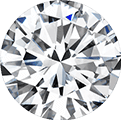
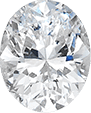
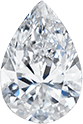
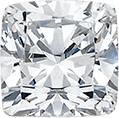
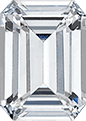
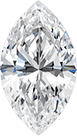
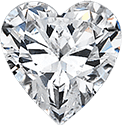
Shape means the outline: round, oval, pear, emerald, marquise and so on. Cut grade means how well the stone’s facets — the flat polished faces — have been angled and proportioned. A diamond can be a beautiful shape and still be badly cut.
To understand cut grade you need three words:
- Table — the large flat facet on the very top of the diamond. It is the window light goes in and out of.
- Crown — the sloping part between the table and the widest point of the stone.
- Pavilion — the cone-shaped bottom half that comes to a point underneath. This is the part that acts like a mirror.
Light enters through the table and crown, bounces off the inside walls of the pavilion, and comes back out at your eye. If the pavilion is cut too deep or too shallow, light escapes out of the bottom instead of returning. The stone goes dull or glassy in the middle. Cutters call this a “fish eye” or a “nail head”, and once you have seen one you never forget it.
Cut grades only exist officially for round brilliant diamonds, and they run like this:
| Cut grade | What you actually see | Worth paying for? |
|---|---|---|
| Excellent / Ideal | Bright, lively, sparkles across the whole stone | Yes — this is where the money belongs |
| Very Good | Still very bright; most people cannot tell it from Excellent | Yes, a sensible saving |
| Good | Noticeably less lively, some dark patches | Only if budget is very tight |
| Fair / Poor | Dull, glassy, or leaks light through the bottom | No |
For fancy shapes — pear, oval, marquise, emerald — the certificate will grade polish and symmetry but not overall cut. You judge those with your eyes. Look for even sparkle from end to end and no large dark band across the middle.
If you only remember one thing from this article: cut matters more than clarity and colour combined. A well-cut G colour, VS2 clarity diamond will outshine a badly cut D Flawless every single time.
Clarity: the tiny marks inside
Diamonds grow with small natural features inside them. Marks inside the stone are called inclusions. Marks on the outside surface are called blemishes. Both natural and lab-grown diamonds have them, because both are formed by crystal growth under heat and pressure.
Inclusions can look like tiny feathers, pinpoints, clouds, or faint dark specks. Almost all of them are invisible without magnification.
The clarity scale runs from FL down to I3:
| Grade | Full name | In plain English |
|---|---|---|
| FL | Flawless | Nothing at all under 10x magnification. Very rare, very expensive. |
| IF | Internally Flawless | Nothing inside; possibly a tiny surface mark. |
| VVS1, VVS2 | Very Very Slightly Included | An expert needs time to find anything. |
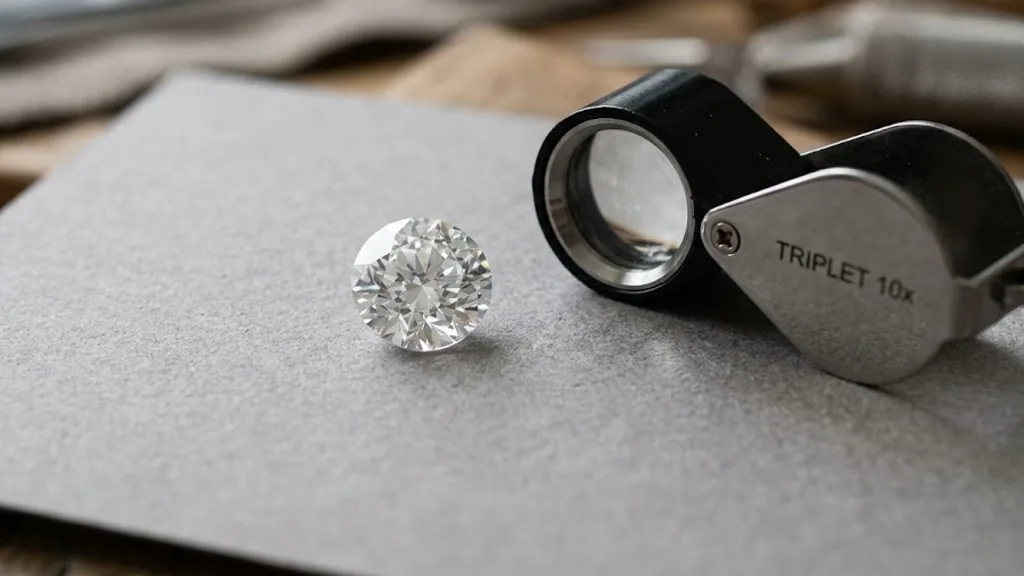
| VS1, VS2 | Very Slightly Included | Visible under 10x magnification, invisible to your eye. |
| SI1, SI2 | Slightly Included | Easy to see under magnification. SI1 usually still looks clean to the eye. |
| I1, I2, I3 | Included | Often visible without magnification. Can affect sparkle and durability. |
The phrase you want is eye-clean: no inclusions visible to a normal eye at normal viewing distance. For most shapes, VS1 and VS2 are reliably eye-clean, and many SI1 stones are too.
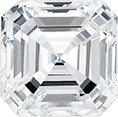
One exception matters. Step-cut shapes such as emerald and Asscher have long, open, mirror-like facets instead of lots of small sparkly ones. There is nowhere for an inclusion to hide. With those shapes it is worth going a grade higher — VS1 rather than SI1 — which is why we pay close attention to the stones in pieces like our Solitaire Emerald Cut Engagement Ring.
Colour: how white the diamond is
Colour grading measures the absence of colour. The scale starts at D and runs to Z. It starts at D purely because the older grading systems had already used A, B and C, and the new scale wanted a clean start.
| Range | Name | What you see face-up | Best metal |
|---|---|---|---|
| D, E, F | Colourless | Icy white | Platinum, white gold |
| G, H | Near colourless | Looks white to the eye; the value sweet spot | Any metal |
| I, J | Near colourless | Faintest warmth, often invisible once set | Yellow or rose gold |
| K to M | Faint | Gentle warm tint, visible to most people | Yellow gold, vintage styles |
| N to Z | Very light to light | Clearly tinted | Rarely used in fine jewellery |
Two practical points. First, colour is graded face-down against a white card, which is the hardest possible test. Face-up in a ring, a G looks the same as a D to almost everybody. Second, the metal changes everything. A warm-toned I colour stone set in yellow gold looks perfectly white, because your eye compares it to the gold. The same stone in platinum has nowhere to hide.
That is why yellow gold designs like our Vintage Round Cut Engagement Ring in Yellow Gold can take a slightly warmer stone without anyone noticing, while a platinum piece such as our Solitaire Round Cut Engagement Ring in Platinum rewards a colder, whiter grade.
Where the fourth C fits in
Carat is weight, not size. One carat is one fifth of a gram. Two diamonds of identical carat weight can look different sizes, because a deeply cut stone hides weight underneath the setting where nobody sees it. This is another reason cut quality matters: a well-proportioned stone spends its weight on the part you can see.
Prices also jump at round numbers. A 0.90ct and a 1.00ct look almost identical on a hand, but the 1.00ct costs more because of demand for the magic number.
How to spend a fixed budget
If you have one figure to work with, this order works for almost everyone:
- Cut first. Excellent or Very Good. Never compromise here.
- Clarity to eye-clean. VS2 or a well-chosen SI1. Anything above VS1 is paying for something only a microscope can see.
- Colour to match the metal. G or H for white metals, I or J for yellow and rose gold.
- Carat with whatever is left.
One extra term worth knowing: fluorescence. Some diamonds glow faintly blue under ultraviolet light. Faint or medium fluorescence is harmless and occasionally makes a slightly warm stone look whiter. Very strong fluorescence can very occasionally make a stone look hazy in bright sunlight. It is noted on the certificate, and it usually lowers the price — which can make it a bargain if you check the stone looks right in daylight.
Does any of this change for lab-grown diamonds?
No. A lab-grown diamond is chemically and optically the same material as a mined one, graded on exactly the same scales by exactly the same labs. What changes is what your budget buys. Because lab-grown stones are not constrained by mining supply, the same money reaches a better cut grade, a cleaner clarity and a whiter colour than it would with a mined stone.
Lab-grown diamonds are made two ways. HPHT stands for High Pressure High Temperature, which recreates the conditions deep underground. CVD stands for Chemical Vapour Deposition, where carbon is built up layer by layer from a gas. Both produce real diamond. The certificate records which method was used, and neither one is better or worse for beauty.
Frequently asked questions
Which of the three matters most?
Cut, by a wide margin. It controls sparkle, and sparkle is what people actually notice from across a room. Clarity and colour are quieter qualities that mostly show up on paper.
Is a D Flawless diamond worth the money?
For most buyers, no. Once a diamond is eye-clean and near-colourless, spending more on those two grades buys certificate wording rather than visible beauty. The same money put into cut quality or carat weight shows on the hand.
Can I see the difference between VS2 and SI1?
Usually not with your eyes. Under a 10x loupe, yes. The thing to check is not the grade but where the inclusion sits — one small mark near the edge is far better than one sitting directly under the table.
Do I need a certificate for a small diamond?
Centre stones, yes — always. The small accent diamonds set around a halo or along a band are normally sold as a matched parcel with a stated overall quality rather than individually certificated, which is standard practice across the trade.
What if I want a shape or grade combination you don’t stock?
We make bespoke pieces at no extra design cost. Tell us the shape, the grades and the budget, and we will build it. Everything is hand-made in solid gold or platinum in our North Harrow workshop.
Once these three words stop being jargon, choosing gets much easier. Browse our engagement rings or narrow straight to round diamonds if you want the classic. Every order comes with free insured UK delivery and 30 days to change your mind — and if you would rather talk it through before deciding, we are happy to do that too.
Ready to find your perfect ring?
Explore our lab-grown diamond collection or book a virtual appointment with our team.