Are Brilliant Cut Diamonds More Expensive? Exploring the Value of Diamond Cuts
Brilliant cut is a faceting style, not a quality grade. Here is when it costs more, when it does not, and what you actually get.
If you have been comparing diamonds online, you will have seen the phrase “brilliant cut” attached to almost everything. Round brilliant, oval brilliant, cushion brilliant, radiant. It sounds like a quality claim, and shoppers reasonably assume it means the good expensive ones.
It is not a quality claim. It is a description of how the facets are arranged — and understanding that tells you exactly when brilliant cut costs more and when it does not.
What “brilliant cut” actually means
Diamonds are faceted in one of three families.
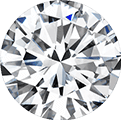
Brilliant cut uses a large number of small triangular and kite-shaped facets radiating out from the centre, designed to bounce light around inside the stone and fire it back at your eye in rapid flashes. The classic round brilliant has 57 or 58 facets.
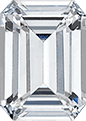
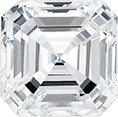
Step cut uses long, flat, parallel facets arranged like a set of stairs. Emerald, Asscher and baguette cuts are step cuts. They give broad, calm flashes of white light rather than glitter, and the effect is often described as a hall of mirrors.
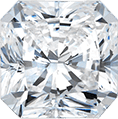
Mixed cut combines the two — for example a step-cut top with a brilliant-cut bottom. The radiant is the best known.
So “brilliant” describes the light effect, not the grade. A poorly proportioned brilliant cut is still a brilliant cut, and it will look dull.
| Cut family | Shapes | What you see |
|---|---|---|
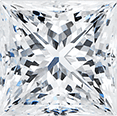
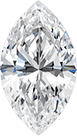
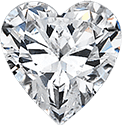
| Brilliant | Round, oval, pear, marquise, heart, princess, cushion | Rapid fire, coloured flashes, glitter |
| Step | Emerald, Asscher, baguette | Broad white flashes, mirror-like depth |
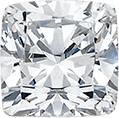
| Mixed | Radiant, some cushions | Bright and lively with a squarer outline |
Are brilliant cut diamonds more expensive?
Two answers, because the question hides two different comparisons.
Round brilliant versus everything else: yes
The round brilliant is the most expensive shape per carat in the diamond world, and it has been for a long time. There are two reasons.
Waste. Rough diamond crystals do not come out of the ground or the reactor as circles. Grinding a crystal down to a perfect round means throwing away a great deal of material — the trade has long reckoned the loss for a round brilliant at roughly half the rough weight. Everything ground away was bought and paid for.
Demand. Round brilliants are the most requested diamond shape on earth by a wide margin. Sustained demand keeps prices firm regardless of anything else.
There is a third, quieter reason. Round brilliants are the only shape the laboratories give an overall cut grade to, running from Excellent down to Poor. That grade is a public, comparable measure of quality, so the best examples command a clear premium — and stones that hit the very tightest proportions cost more again.
Brilliant faceting versus step faceting: not really
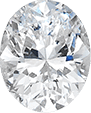
Compare a brilliant-cut oval with a step-cut emerald of the same weight and grades, and the difference in price is modest. Both are efficient shapes. Neither wastes as much as a round.
Where step cuts do get expensive is clarity. Those long open facets have nowhere for an inclusion — the small natural marks found inside every diamond — to hide. On the clarity scale, which runs from FL (flawless) down through IF, VVS, VS and SI to I3, a step cut usually needs to be VS1 or better to look clean to the eye, where a brilliant cut can be perfectly convincing at SI1.
So brilliant cuts are more forgiving of a lower clarity grade. In practice, that often means a brilliant-cut stone reaches an eye-clean result for less money than a step cut of the same size — even though the round itself costs more per carat.
The trade-offs nobody puts on the price list
Brilliant cuts hide flaws. All that scattered light disguises minor inclusions and a slightly warm body colour. You can buy a lower clarity grade and a warmer colour grade in a brilliant cut and get away with it.
Brilliant cuts hide depth. To achieve their sparkle, brilliant cuts carry weight below the setting where you cannot see it. A 1.00ct round brilliant looks smaller face-up than a 1.00ct emerald cut, which is shallow and spreads across the finger.
Step cuts show everything. Both the flaws and the clean elegance. They demand better stones and reward them.
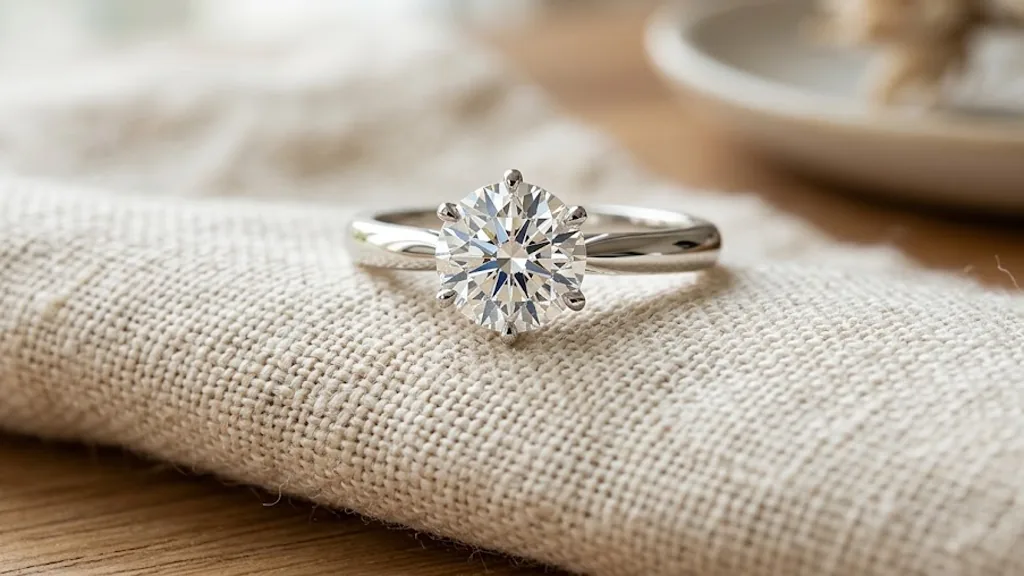
If sparkle is your priority, a round brilliant is unbeaten — pieces like our Solitaire Round Cut Engagement Ring exist precisely because nothing else does that job as well. If you want brilliant-cut fire but not the round-brilliant premium, an elongated brilliant is the smart middle path: our Solitaire Oval Cut Engagement Ring uses the same faceting family in a shape that costs less per carat and covers more finger.
What “ideal cut” means and whether it is worth it
You will meet grades like Excellent, Ideal, and marketing terms like “super ideal” or “hearts and arrows”. These refer to how closely a round brilliant hits a set of target proportions — the size of the table (the flat facet on top), the angle of the crown (the sloping sides above the widest point) and the depth of the pavilion (the cone underneath that acts as a mirror).
Hit those numbers and light entering the top comes back out of the top. Miss them and light leaks out of the bottom, leaving a dull patch in the middle.
Excellent and Very Good cut grades are genuinely worth paying for. Beyond that, the gains get very small and very expensive, and almost nobody can see them without instruments. Our honest advice is to buy Excellent or Very Good and put the saving into carat weight or a better setting.
Small brilliant cuts: where they really earn their keep
Brilliant faceting is not just for centre stones. The small diamonds used in halos, pavé bands and eternity rings are almost always round brilliants, because at tiny sizes you need every bit of light return you can get.
A ring of small brilliants around a centre stone also makes the whole design read considerably larger than the centre alone. It is one of the most cost-effective moves in jewellery design, and you can see it working in our Halo Round Cut Engagement Ring.
Does lab-grown change the answer?
Not the relationships, only the numbers. A lab-grown diamond is the same material as a mined one, cut from rough on the same wheels with the same losses, and graded on the same scales by the same laboratories. A round brilliant lab-grown stone still costs more per carat than an oval lab-grown stone of the same grades.
What changes is scale. When the entire stone budget is a few hundred pounds rather than a few thousand, the premium for choosing the shape you actually want stops being painful. Lab-grown prices have fallen a long way and continue to move, so treat any figure quoted online as a snapshot rather than a fixed rate.
There is one genuine bonus. Because lab-grown rough costs less, cutters can afford to sacrifice a little weight to hit ideal proportions rather than cutting for maximum carat. Well-cut lab-grown brilliants are widely available as a result. Every centre stone we set comes with a free IGI certificate so you can check the cut grade yourself.
Frequently asked questions
Is brilliant cut the same as round cut?
No. Round is the outline; brilliant is the faceting style. Ovals, pears, marquises and hearts are all brilliant cut too. “Round brilliant” simply means both together.
Why are round brilliants the most expensive shape?
Roughly half the rough crystal is lost cutting one, and demand is higher than for any other shape. Both push the price per carat up.
Do brilliant cuts sparkle more than step cuts?
They produce more rapid, coloured sparkle. Step cuts produce broader, calmer flashes of white light. It is a difference of character rather than quantity.
Can I save money by choosing a different brilliant shape?
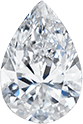
Yes. Oval, pear and marquise are all brilliant cuts, all cost less per carat than a round, and all look larger for their weight because they spread along the finger.
Should I pay extra for an ideal or super ideal cut?
Excellent or Very Good is where the visible value sits. Beyond that you are paying for measurements rather than something your eye can detect.
To compare the faceting styles properly, look at our round diamond pieces alongside the wider engagement ring collection. Everything is hand-made in solid gold or platinum in our North Harrow workshop, with free insured UK delivery and 30 days to return it.
More guides on this topic
Ready to find your perfect ring?
Explore our lab-grown diamond collection or book a virtual appointment with our team.