Cushion Cut Diamonds Explained: Vintage Character, Modern Choices
What a cushion cut is, the difference between cushion brilliant and crushed ice, a size chart, and how to choose one well.
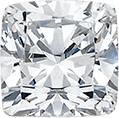
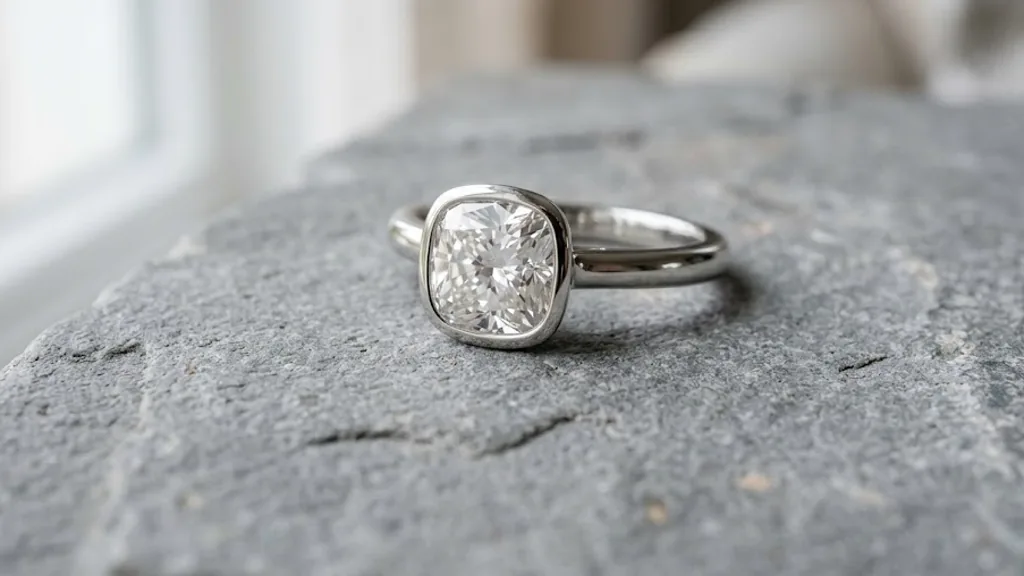
A cushion cut is a square or slightly rectangular diamond with rounded corners and gently curved sides — the shape of a small pillow, which is where the name comes from. It is one of the oldest shapes still in regular production, and one of the few that genuinely bridges antique and modern. This guide explains what it is, how it differs from the shapes people confuse it with, and how to choose one well.
Where the cushion cut comes from
The cushion is a direct descendant of the old mine cut, which was the standard diamond shape from roughly the 1700s through to the early 1900s. Old mine cuts were shaped by hand and by eye, before electric cutting equipment existed, so they were cut to follow the natural crystal — squarish, with a high crown, a small flat top and a large open facet at the bottom.
What survived into the modern cushion is the softened outline. What changed is the faceting underneath, which is now cut with modern precision to return far more light.
This history is why cushions read as warm and slightly antique even in a completely contemporary setting. They have candlelit, rounded flashes of light rather than the sharp white sparkle of a round brilliant.
The two kinds of cushion cut
This is the most useful thing to understand before you shop, and it is rarely explained clearly.
Cushion brilliant. Larger facets radiating from the centre. Gives broad, bold flashes of light. This is what most people picture and what most rings sold as “cushion” actually are.
Crushed ice. Many more, smaller facets. Gives a shimmering, scattered look, like light on broken glass. Some people love it; others find it busy and less defined.
Neither is better, but they look genuinely different in the hand and certificates do not distinguish between them. You have to look at the stone or a proper photograph. If you have a preference, say so when you enquire — we will tell you which one a stone is.
Cushion cut compared with other shapes
| Cushion | Round brilliant | Radiant | Oval | |
|---|---|---|---|---|
| Outline | Soft square, curved sides | Circle | Square or rectangle, cropped corners | Elongated circle |
| Character of sparkle | Broad, warm, rounded | Sharp, white, maximum | Bright and lively | Bright, elongated flashes |
| Face-up size per carat | Smaller than average | Average | Average | Larger than average |
| Hides a warmer colour grade | Less well — shows tint | Very well | Well | Moderately |
| Chip risk | Low, corners are rounded | Very low | Low | Low |
| Feel | Vintage, romantic | Classic | Modern | Elegant, elongating |
Cushion cut size chart
Cushions are cut deeper than most shapes, which means more of the weight sits below the setting where you cannot see it. A 1ct cushion generally looks smaller face-up than a 1ct round.
| Approximate carat weight | Typical face-up size |
|---|---|
| 0.50ct | around 4.5mm x 4.5mm |
| 0.75ct | around 5.0mm x 5.0mm |
| 1.00ct | around 5.5mm x 5.5mm |
| 1.50ct | around 6.5mm x 6.5mm |
| 2.00ct | around 7.0mm x 7.0mm |
| 3.00ct | around 8.0mm x 8.0mm |
These are working approximations used across the trade, not measured figures. Individual stones vary by a surprising amount depending on how deep they are cut, so read the millimetre measurements on the certificate.
What to look for when choosing a cushion
Colour matters more than usual
Because a cushion has larger facets and a slightly less efficient light return than a round, it shows body colour more readily. If you want a stone that reads as white, aim a grade or two higher than you would for a round. That said, many people deliberately choose a warmer stone for a cushion set in yellow or rose gold, because the warmth suits the vintage character.
Length-to-width ratio
A ratio of 1.00 to 1.05 gives a true square. Around 1.10 to 1.20 gives a subtle rectangle that elongates the finger a little. Above 1.25 the stone starts to look distinctly rectangular. All are valid; look at pictures before you decide.
Clarity
Cushion brilliants with larger facets hide inclusions less well than crushed-ice cushions, which are very forgiving. If you are buying a crushed-ice stone, you can usually go a grade lower on clarity without seeing anything.
Depth
Very deep cushions look small for their weight. If two stones have the same carat weight and one measures wider across the top, that is the better value in visible terms.
Cushion rings in our collection
We hold three cushion designs. It is a smaller group than round or pear, deliberately, because we would rather make a few well than list dozens.
The Bezel Cushion Cut Engagement Ring in Platinum surrounds the stone with a rim of metal instead of claws — the most protective setting there is, and a very clean, modern way to frame a vintage-feeling shape. It is £904 at the time of writing.
The Three Stone Cushion Cut Engagement Ring puts a cushion between two smaller stones, which adds width across the finger and suits the softened outline particularly well. It is £957 at the time of writing.
For a band rather than an engagement ring, the Solitaire Cushion Cut Wedding Band in Sterling Silver is a simpler, lower-cost way into the shape.
If you want a cushion in a design you cannot see listed — a halo, an east-west setting, a particular carat weight — we make bespoke pieces at no extra design cost. Every centre stone is a lab-grown diamond supplied with a free IGI certificate.
Frequently asked questions
Is a cushion cut the same as an old mine cut?
No, though they are related. Old mine cuts are antique stones cut by hand with a small table and a large open facet at the base. Modern cushions borrow the outline but use contemporary faceting. We do not stock old European or old mine cuts.
Do cushion cut diamonds sparkle as much as round?
Not quite. A round brilliant returns more light than any other shape. A cushion sparkles differently rather than less — broader, warmer flashes instead of rapid white flashes. Many people prefer that character.
Are cushion cuts cheaper than round?
Usually yes, per carat. Round brilliants waste more of the original crystal during cutting, so they carry a premium. As a rule of thumb in the trade rather than a measured figure, a cushion of equivalent quality typically costs less than a round. That pattern holds for lab-grown diamonds as well as natural ones.
Is a cushion cut good for an engagement ring?
Very. The rounded corners are far more durable than the sharp corners of a princess cut, the shape suits both plain solitaires and elaborate vintage settings, and it does not look like everybody else’s ring.
What clarity should I choose for a cushion?
For a crushed-ice cushion, a lower clarity grade is often invisible to the naked eye. For a cushion brilliant with larger facets, go a grade higher. Always judge by what you can see without magnification, not by the letters on the certificate.
Where to go from here
See the full cushion cut collection, or browse all engagement rings to compare it against the other shapes we make. Everything is hand-made in our North Harrow workshop, with free insured UK delivery and 30-day returns.
More guides on this topic
Ready to find your perfect ring?
Explore our lab-grown diamond collection or book a virtual appointment with our team.