How Big Should a Diamond Be on an Engagement Ring?
Carat weight in millimetres, why shape beats weight for size, and an honest look at the average diamond size question.
There is no correct size for a diamond on an engagement ring. There is a size that suits the hand, a size that suits the person, and a size that suits what you can comfortably spend. When those three overlap, that is your answer.
This guide gives you the measurements you need to picture it properly, explains why elongated shapes look bigger for the same money, and deals honestly with the question everyone asks: what is the average?
First, carat is weight, not size
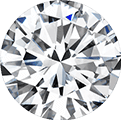
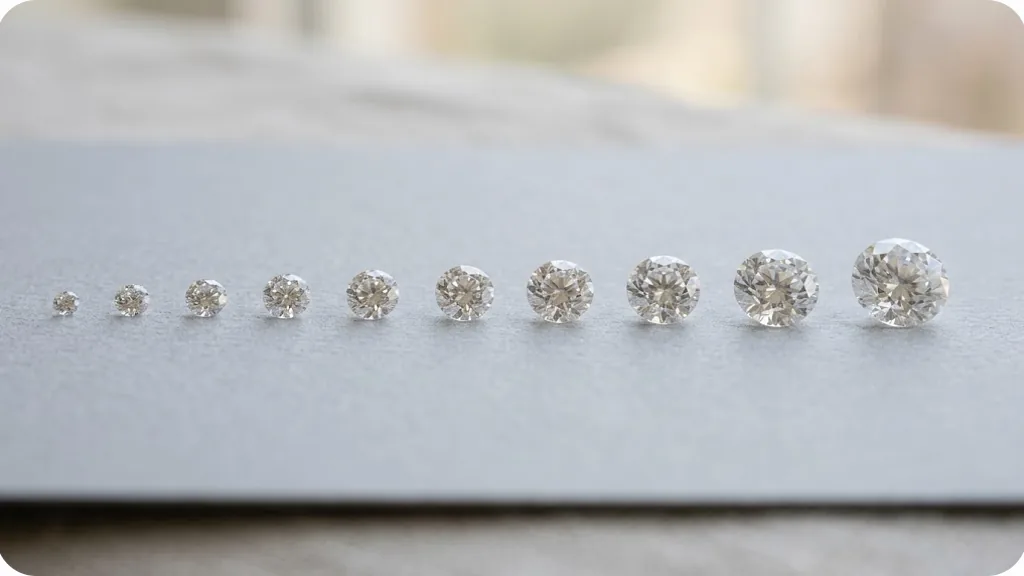
A carat is 0.2 grams. It tells you what the stone weighs, not how big it looks. Two stones of exactly the same weight can differ noticeably in how much finger they cover, depending on shape and how the stone was cut.
What you actually see is the diameter across the top. So when you are picturing a ring, think in millimetres rather than carats.
| Carat weight | Round brilliant diameter | Rough impression on an average finger |
|---|---|---|
| 0.25 ct | Around 4.1mm | Delicate, sparkles well, easy to wear daily |
| 0.50 ct | Around 5.1mm | Clearly visible, still understated |
| 0.75 ct | Around 5.8mm | Noticeable across a table |
| 1.00 ct | Around 6.5mm | The classic “proper engagement ring” scale |
| 1.50 ct | Around 7.4mm | Substantial, gets commented on |
| 2.00 ct | Around 8.1mm | A statement ring |
To use that table properly, get a ruler and mark the millimetres on your own finger. Almost everyone finds the real measurements smaller than the number in their head, and it saves a great deal of guessing.
What about the average?
You will find plenty of websites quoting a precise average carat weight for UK engagement rings. We are not going to add to them, because the figures in circulation come from retailer or wedding-website surveys with self-selected respondents and rarely any published methodology. They are marketing material, not measurement.
What we can tell you honestly is what we see in our own enquiries, and it is a wide spread. Plenty of people buy well under half a carat and are delighted. Plenty buy over a carat. There is no cluster tight enough to call a norm.
More usefully: nobody at your engagement party will know the carat weight. They will notice whether the ring sparkles and whether it suits your hand. Both of those are within your control regardless of budget.
Match the stone to the hand, not to a number
Finger size changes the apparent size of a stone a great deal. The same 1 carat round looks generous on a size J finger and moderate on a size R.
- Slim fingers (roughly UK sizes G to K). Smaller stones read larger. A 0.50 to 0.75 carat stone often looks like more than it is. Watch for overhang, where the ring is wider than the finger.
- Average fingers (roughly L to O). Almost anything works. This is where the classic 0.75 to 1.25 carat range earns its reputation.
- Broader fingers (P and above). A small stone can look lost. Either go a little larger, or choose a design with visual width, such as a halo, a three stone, or a wider band.
Band width matters too. A narrow band makes the stone look bigger by contrast; a wide band does the opposite. If you want maximum apparent size, a slim band with a slightly raised setting does more than an extra tenth of a carat.
Shape changes size more than weight does
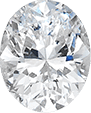
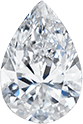
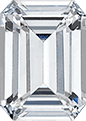
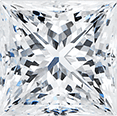
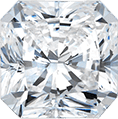
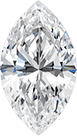
This is the most useful money-saving fact in this guide. Elongated shapes spread their weight over a longer outline, so they cover more of the finger.
A 1 carat marquise is around 10mm long. A 1 carat round is around 6.5mm across. Same weight, dramatically different presence. Oval and pear sit between the two.
Our Solitaire Marquise Cut Engagement Ring at £538 and our Solitaire Oval Cut Engagement Ring at £557, both correct at the time of writing, show this effect clearly next to a round of similar weight. You can filter to marquise or pear shapes to compare.
Ways to look bigger without buying bigger
- A halo. Adds roughly 1.5mm to 2.5mm of bright surface. The most effective single trick there is. See our guide to halo engagement rings.
- Side stones or a three stone design. Spreads brightness along the finger. Our Three Stone Oval Cut Engagement Ring, £1,021 at the time of writing, is a good example.
- A thinner band. Costs nothing and changes the proportion immediately.
- An excellent cut. A brilliantly cut stone returns more light, and a brighter stone reads as a bigger stone. This is the only trick that improves the diamond rather than the illusion.
Where size stops helping
Be honest with yourself about daily life. A large, high-set stone catches on jumpers, gloves, hair and car doors. If the ring is coming off several times a day because it is in the way, it will end up in a drawer.
A slightly smaller stone in a lower, well-made setting gets worn every day for forty years. That is worth more than a carat.
Frequently asked questions
Is a 1 carat diamond big?
It is around 6.5mm across, which is clearly visible from conversational distance and reads unmistakably as an engagement ring. Whether that counts as big depends entirely on what you are comparing it with.
Is half a carat too small?
No. A well-cut 0.50 carat stone sparkles just as brightly as a 2 carat one; there is simply less of it. On a slim finger it can look beautifully proportioned. Cut quality does more for how a ring is perceived than weight does.
Does a bigger diamond always cost more per carat?
Generally yes, and steeply so. Prices rise faster than weight, and there are sharp steps at round numbers. Buying at 0.90 rather than 1.00 carat is the classic way to save without a visible difference.
How do I find out what size she wants without asking?
Look at the jewellery she already wears. Someone who wears fine chains and small studs is telling you something. So is someone who wears bold pieces. If in doubt, buy a beautiful ring at a comfortable size and remember that upgrading later is straightforward.
Can I upgrade the centre stone later?
Often yes. A larger stone can be set into a rebuilt head on the same band, which keeps the ring you started with. We make bespoke pieces and alterations at no extra design cost from our workshop in North Harrow, London.
To see how different weights and shapes actually look, browse our engagement ring collection. Everything comes with a free IGI certificate on the centre stone, free insured UK delivery and 30 days to change your mind, so you can try a size on a real hand before committing.
More guides on this topic
Ready to find your perfect ring?
Explore our lab-grown diamond collection or book a virtual appointment with our team.