How Much Does It Cost to Insure a Wedding Ring?
Three ways to insure a UK wedding ring, what drives the premium, why you insure replacement cost not receipt price, and the small print to check.
A wedding ring is one of the few valuable things people wear every single day, in the shower, at the gym, up a ladder and on the beach. It is also one of the few valuable things that is genuinely irreplaceable in the emotional sense. Insuring it is sensible. Working out what that costs is where people get stuck, because the answer depends on choices you make rather than a fixed price list.
This guide explains how jewellery insurance is priced in the UK, the three routes available to you, and how to make sure a claim actually pays out. We are jewellers, not insurance brokers, so treat this as practical background and always get your own quotes.
The three ways to insure a wedding ring
1. Inside your home contents policy. Most home contents policies cover jewellery kept at home up to a limit, and often have a “single article limit” — the maximum they will pay for any one item. If your ring is worth more than that limit, it is not properly covered even though jewellery is technically included. This route is usually the cheapest because you are adding to a policy you already pay for.
2. As a specified item on your contents policy. You name the ring, give its value, and pay an additional premium. This is the most common route for wedding and engagement rings. Crucially, you also need personal possessions cover (sometimes called “away from home” or “all risks”) if you want the ring covered when you are out of the house — which, for a ring you wear, is most of the time.
3. A standalone specialist jewellery policy. A separate policy just for your jewellery, from an insurer who specialises in it. Usually costs more than adding to home contents, but tends to have better terms: worldwide cover as standard, cover for loss as well as theft, and no effect on your home insurance no-claims record if you claim.
| Contents only | Specified item | Specialist policy | |
|---|---|---|---|
| Typical cost | Included in existing premium | Small addition to existing premium | Highest of the three |
| Covered outside the home? | Usually not | Only with personal possessions cover added | Yes, normally worldwide |
| Covers simple loss (not just theft)? | Often not | Depends on the policy — check | Usually yes |
| A claim affects your home insurance? | Yes | Yes | No |
| Valuation required? | Rarely | Above a threshold set by the insurer | Almost always |
What actually drives the price
Insurers price jewellery cover on the risk of paying out, so the premium moves with these factors:
- The insured value. The single biggest factor. A £600 band and a £6,000 ring are not in the same bracket.
- Where you live. Postcode-level theft data drives a lot of it. London postcodes generally cost more than rural ones.
- Home security. Approved locks, an alarm and a safe can all reduce the premium. Some policies require a safe above a certain value.
- Cover level. Worldwide cover including accidental loss costs more than theft-from-the-home only.
- Your excess. The amount you pay towards a claim. A higher excess lowers the premium.
- Claims history. Previous jewellery claims push the price up.
Because these vary so widely, any single figure quoted online as “what jewellery insurance costs” is close to meaningless. Get three quotes — your existing home insurer, a comparison of specialist jewellery insurers, and your bank if you have a packaged account, which sometimes includes jewellery cover you are already paying for.
Insure the replacement cost, not what you paid
This is the mistake that ruins claims. Your ring should be insured for what it would cost to have it remade today, not what appeared on the receipt.
Gold and platinum prices move. A ring bought five years ago may cost noticeably more to replace now, purely because of metal prices. If you insure for the old figure and the ring is lost, you get the old figure, and you make up the difference yourself.
The replacement figure should include:
- The metal, at today’s price
- The diamonds, at the same carat weight, colour and clarity
- The making — the hours of hand work that turn materials into a ring
- Certification and hallmarking
Some real prices from our current collection, correct at the time of writing, to show the range you might be insuring:
- Solitaire Round Cut Engagement Ring in White Gold — £563
- Tiara Pear Cut Bridal Set in Platinum — £999 for the pair
- Stackable Emerald Cut Eternity Band in Sterling Silver — £2,121
You can see the full range in our wedding rings collection and bridal sets.
Do you need a valuation?
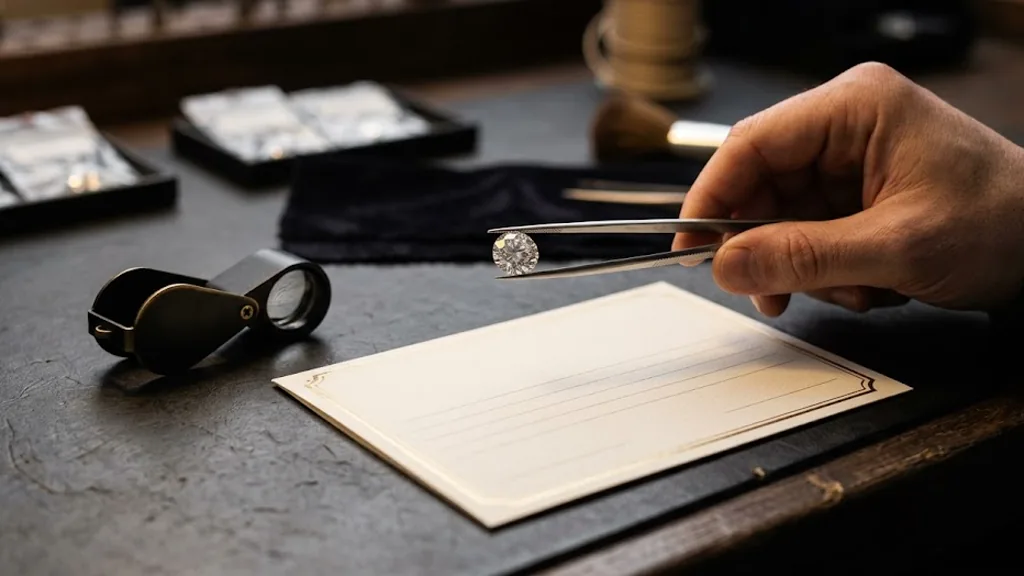
Most insurers ask for a written valuation above a certain value — the threshold varies, so check yours. Below that, a dated purchase receipt is often enough.
A valuation is a document from a qualified valuer stating what the item is and what it would cost to replace. It typically costs a fee, and insurers usually want it refreshed every few years so the figure keeps pace with metal prices.
Two things make a valuation easier and cheaper. First, a certificate for the centre stone: at CarbonstoneUK every centre stone comes with a free IGI certificate stating the carat weight, colour, clarity and cut, which is exactly the information a valuer needs. Second, your original receipt and any design drawings, which prove the specification if the ring ever has to be remade.
Reading the small print properly
Before you buy, check these five things. They decide whether a claim succeeds.
- Is accidental loss covered, or only theft? Rings are far more often lost than stolen — down a drain, off a beach, out of a glove. Theft-only cover misses the most likely event.
- Is the ring covered outside the home, and outside the UK? Honeymoons are a classic gap.
- Is there a “reasonable care” clause, and what does it exclude? Leaving a ring on a poolside is a common reason claims are refused.
- Is a lost stone covered, or only the whole ring? A diamond dropping out of a worn claw is a real risk, and some policies exclude it unless the ring has been professionally checked recently.
- Do you get a cash settlement or a replacement from the insurer’s own supplier? Many insurers replace rather than pay cash. If your ring is bespoke, ask in writing whether you can have it remade by the original maker.
That last point matters more than people expect. A hand-made ring replaced by a mass-produced equivalent of the same nominal value is not the same ring.
Cheap ways to lower the risk
Some of this costs nothing:
- Photograph the ring from several angles and keep the images with your receipt and certificate.
- Have the claws checked once a year. A loose claw is the single most preventable cause of a lost diamond, and a check costs nothing at most jewellers.
- Take the ring off for the gym, gardening, DIY and swimming — cold water shrinks fingers, and rings slide off in the sea every summer.
- Keep it in the same place every night. Most “lost” rings turn up in a coat pocket or a soap dish.
Frequently asked questions
Is my wedding ring already covered by my home insurance?
Possibly, but only at home and only up to the single article limit. Check that limit against your ring’s replacement value, and check whether personal possessions cover is included for when you are wearing it out of the house. If either answer is no, you have a gap.
How much should I insure my ring for?
The full cost of having it remade today, including metal, diamonds, making and certification — not the price on your original receipt. Review the figure every few years, because metal prices move.
Are lab-grown diamonds insurable in the same way as mined ones?
Yes. Lab-grown diamonds are real diamonds and are insured on the same basis. Make sure the policy schedule and the valuation both state clearly that the stone is laboratory-grown, so there is no dispute at claim time, and keep the IGI certificate with your documents.
Should I insure my engagement ring and wedding band separately?
Specify them as separate items even if they were bought as a set. If one is lost, you want to claim for that one without arguing about how the value was split.
Does insurance cover a ring I lose while travelling?
Only if the policy includes worldwide personal possessions cover. Check the number of days abroad it allows, as many policies cap it. Some travel insurance also covers jewellery, but usually with a low single-item limit.
If you need a written valuation or a replacement quote for an insurer, get in touch — we can provide the specification, certificate details and current replacement cost for anything we have made. It takes minutes and it saves a great deal of trouble later.
Ready to find your perfect ring?
Explore our lab-grown diamond collection or book a virtual appointment with our team.