Is Princess Cut More Expensive Than Round? Diamond Pricing Explained
Princess cut diamonds cost less per carat than round. Here is why, where a princess ring quietly costs more, and the square shapes we stock.
No. Princess cut diamonds are almost always cheaper than round diamonds of the same carat weight and quality. It is one of the most consistent patterns in diamond pricing, and it has nothing to do with which shape is more beautiful.
This guide explains why the price gap exists, how big it tends to be, and — just as importantly — the ways a princess cut can quietly cost you more than the sticker price suggests.
One thing up front, because we would rather be useful than pushy: we do not stock princess cut rings. Our collection is built around round, pear, emerald, marquise, cushion, oval, baguette, hexagon, heart, radiant and asscher. If you want a princess cut we can make one to order as a bespoke piece, and we will say so plainly rather than steer you toward something else.
What each shape is
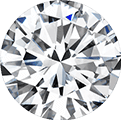
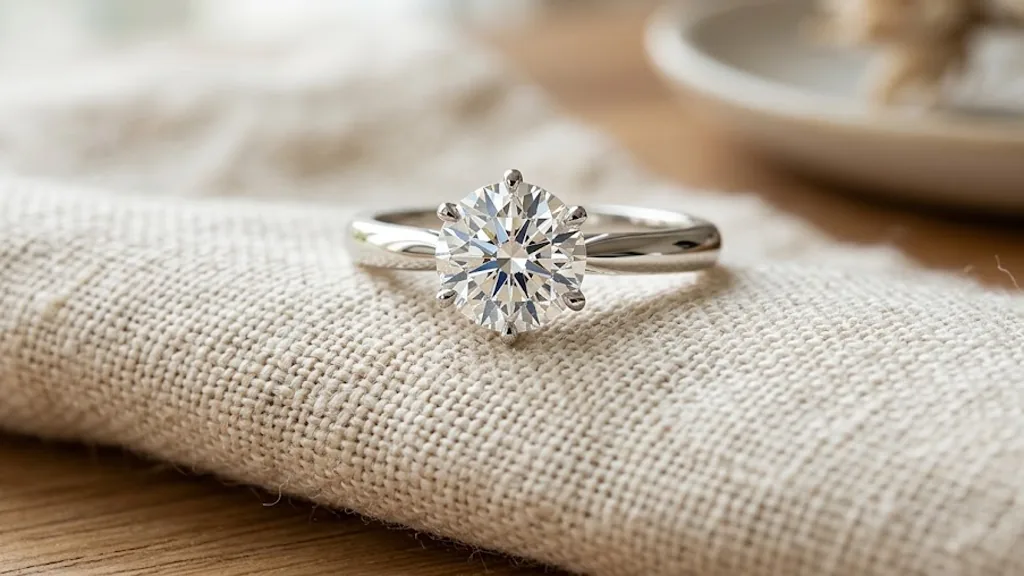
Round brilliant is a circle cut with 57 or 58 small facets, engineered over a century specifically to return the maximum amount of light to your eye. It is the sparkliest shape there is, and it is the default choice in Britain.
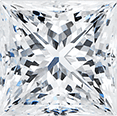
Princess cut is a square with sharp corners, faceted underneath in a brilliant pattern. It was designed to keep as much weight as possible from the original rough crystal while still sparkling brightly.
Is princess cut more expensive than round?
No, and the reason is in the cutting room.
Diamond rough often forms as an octahedron — imagine two square-based pyramids joined base to base. Slice that in half and you get two shapes that are already close to a princess cut. Very little material is thrown away.
Cutting a round from the same rough is the opposite. To get a circle out of an angular crystal, the cutter has to grind away a very large share of the material. All that lost weight is paid for by the person who buys the finished stone.
On top of that, round is the most requested shape in the country, and demand supports price. Princess is popular but it is a minority choice.
Both effects push in the same direction, which is why the answer is so consistent.
Are princess cut diamonds more expensive than round? Putting numbers on it
Same question, asked the other way round, so let us give it the practical answer.
The trade rule of thumb is that a princess cut of a given carat weight, colour and clarity will price meaningfully below a round of the same specification. That is a long-standing pattern, not a measured statistic, and the exact gap moves with the market.
What follows is broad guidance to help you orientate. It is not a quote.
| Stone at 1.00ct | Lab-grown, loose (guidance) | Natural, loose (guidance) |
|---|---|---|
| Round brilliant | Low hundreds of pounds | Low thousands of pounds |
| Princess cut | Below the round figure | Below the round figure |
The bigger lever, by a wide margin, is lab-grown versus natural. A lab-grown diamond is a real diamond — identical carbon crystal, identical hardness, identical sparkle — grown in a laboratory over weeks rather than formed underground. Nobody can tell the difference by eye, and neither can a jeweller with a loupe. Choosing lab-grown saves far more than choosing one shape over another ever will.
Where princess quietly costs more
The stone is cheaper. The ring might not be. Three reasons.
The corners need protecting
A princess cut has four sharp 90-degree corners, and those corners are the thinnest, most vulnerable part of any diamond shape. They chip. A princess setting needs V-shaped prongs — small claws shaped like a V that wrap over each corner — or a bezel, which is a rim of metal around the whole stone. Both are more work than the four simple prongs on a round.
It looks smaller than a round of the same weight
This surprises people. A one carat round measures about 6.4mm across. A one carat princess measures roughly 5.5mm along each side. The princess has more corner-to-corner reach, but the eye reads the side measurement, and it reads as smaller.
So part of the saving is not really a saving — you are buying a stone that looks less large. To match a round’s apparent size you may need to buy more weight, which gives the money back.
It shows colour at the corners
Princess cuts concentrate body colour in the corners. Warmth that hides completely in a round can be visible at the tips of a princess. Buyers who want a bright white stone often step up a colour grade, which costs more.
The honest comparison
| Round brilliant | Princess cut | |
|---|---|---|
| Price per carat | Highest of all shapes | Lower than round |
| Apparent size per carat | Larger to the eye | Smaller to the eye |
| Sparkle | The brightest available | Bright, with a sharper, more angular flash |
| Hides inclusions | Very well | Well |
| Hides colour | Very well | Less well — corners show warmth |
| Durability | Excellent, no weak points | Corners are vulnerable and must be covered |
| Wedding band fit | Straight band sits flush | Straight band usually sits flush too |
| In our collection | Yes — around twenty designs | No — bespoke order only |
What we do stock, if you like a square outline
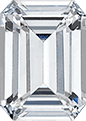
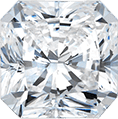
Two of our shapes give you the geometry people usually want from a princess cut, without the fragile corners.
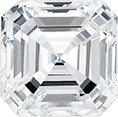
Asscher is a square with the corners cut off, faceted in long clean steps. It has an art deco character and no vulnerable points. Our Stackable Asscher Cut Wedding Band in Yellow Gold is £1,416, correct at the time of writing.
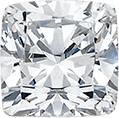
Cushion is a square or rectangle with softly rounded corners, faceted for sparkle. It is the safest square-ish shape you can wear.
And if round is where you land after all, these are the two ends of our range — both hand-made in solid metal with lab-grown diamonds, prices correct at the time of writing:
| Ring | Style | Price |
|---|---|---|
| Solitaire Round Cut Engagement Ring in White Gold | The classic single stone | £563 |
| Vintage Round Cut Engagement Ring in Yellow Gold | Pavé detailing, warmer and more ornate | £1,051 |
Browse the full round diamond collection, or see everything in engagement rings.
Frequently asked questions
Is princess cut more expensive than round?
No. At the same carat weight, colour and clarity, a princess cut normally costs less than a round. Cutting a princess wastes far less of the original rough crystal, and round carries the highest demand of any shape.
Are princess cut diamonds more expensive than round in a finished ring?
The stone will still be cheaper, but the setting can close the gap. Princess corners need V-prongs or a bezel to stop them chipping, and that is more work than a round’s simple prongs. A princess also looks smaller than a round of the same weight, so some buyers go up in carat and spend the saving anyway.
Do princess cut diamonds sparkle as much as round?
Nearly, but differently. A round produces fine, even sparkle in every direction. A princess produces a sharper, more angular flash. Round remains the brightest shape ever engineered; princess is a close and more geometric alternative.
Do you sell princess cut engagement rings?
Not from stock. Our shapes are round, pear, emerald, marquise, cushion, oval, baguette, hexagon, heart, radiant, rose cut and asscher. We will happily make a princess cut ring as a bespoke commission in solid gold or platinum, with no extra design cost — you pay for the materials and the making.
What is the closest shape you stock to a princess cut?
Asscher for the clean square geometry, or cushion if you want a square outline with soft corners and more sparkle. Cushion is also the more hard-wearing of the two.
If a square stone is what you have set your heart on, come and talk to us in North Harrow, or send us the design and we will price it honestly. Every order carries free insured UK delivery and 30 days to return.
More guides on this topic
Ready to find your perfect ring?
Explore our lab-grown diamond collection or book a virtual appointment with our team.