Do Cushion Cut Diamonds Look Larger Than Round? The Honest Answer
Cushion cuts usually look smaller than a round of the same carat. The real numbers, plus whether elongated cushions are rare.
You will read all over the internet that cushion cut diamonds “look bigger for the money”. It is one of those claims that gets repeated so often it stops being questioned. It is also, for the most common kind of cushion, the wrong way round.
Here is the honest version, with the numbers, and then what to do about it if you love the shape — which plenty of people rightly do.
The short answer
A classic square cushion of a given carat weight usually looks slightly smaller from above than a round brilliant of the same weight. An elongated cushion reads longer on the finger and often gives the impression of a bigger stone, even though the actual surface area barely changes.
So cushions do not cheat physics. What they do is change the shape of the space they fill, and that is a genuinely different thing.
Why a square cushion looks smaller than you expect
Carat is weight, not width. A cushion cut is typically cut deeper than a round brilliant, which means more of its weight sits below the girdle — the widest edge of the stone, the part that clamps into the setting. Weight down there is weight nobody sees.
Put the two side by side at one carat:
| Shape at 1.00ct | Typical measurements | Approximate face-up area |
|---|---|---|
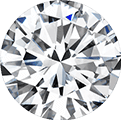
| Round brilliant | 6.4–6.5mm diameter | Around 33 square millimetres |
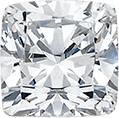
| Square cushion (ratio about 1.05) | 5.5 × 5.5mm | Around 27 square millimetres |
| Elongated cushion (ratio about 1.25) | 6.1 × 4.9mm | Around 27 square millimetres |
These are typical figures for well-proportioned stones and will shift a little from diamond to diamond. The pattern, though, holds: at the same weight, the round covers noticeably more finger.
There is one nuance in the cushion’s favour. A square cushion measuring 5.5 × 5.5mm has a diagonal of nearly 7.8mm, which is wider than the round’s 6.5mm. So the cushion is not small — it is simply distributed differently, and the eye reads corner-to-corner as well as edge-to-edge.
Where the “cushions look bigger” idea comes from
Three real effects get blurred together into one myth.
- Price per carat. Cushions generally cost less per carat than rounds, because cutting a cushion wastes less of the rough crystal. With a fixed budget you can often afford more carats in a cushion — so the cushion you end up buying is bigger. The shape did not make it look bigger; your budget went further.
- Soft corners. A cushion has no sharp points to catch the light and define an edge. Softly rounded corners blur where the stone stops, and a blurred edge can read as more generous than a hard one.
- Elongation. Longer stones sit along the finger and draw the eye down its length. That flatters the hand and genuinely reads as larger, even when the surface area is identical — we look at that effect in detail in do elongated cushion cuts look bigger.
Crushed ice versus chunky faceting
Cushions come in two broad faceting styles, and they behave very differently.
Crushed ice cushions have many small, disorganised facets under the table. They sparkle like a glitter ball — lots of tiny flashes, no big bold pattern. Because the sparkle is scattered evenly, they hide inclusions and slight colour well, but the outline can look softer and a touch smaller.
Chunky or antique-style cushions have fewer, larger facets that throw big broad flashes of light. They look more dramatic and more clearly defined at the edges, which helps the stone hold its size. They also show inclusions more readily, so clarity matters more.
Neither is better. But if apparent size is your priority, chunky faceting usually serves you better than crushed ice. Our fuller explanation of what cushion cut actually means covers the facet arrangements in more detail.
Are elongated cushion cut diamonds rare?
They are less common than square cushions, but “rare” overstates it — and it is worth being precise about what rarity means here, because the answer differs for mined and lab-grown stones.
With mined diamonds, the shape a cutter chooses is dictated by the shape of the rough crystal. Cutters aim to keep as much weight as possible, so most rough naturally yields a squarer cushion. Producing a well-proportioned elongated cushion usually means sacrificing weight, and weight is money. That is why elongated cushions have historically been a smaller share of what sits in a jeweller’s tray.
With lab-grown diamonds the constraint is different. The rough is grown to a planned shape, so cutters have far more freedom to produce elongated proportions deliberately. Elongated cushions are becoming steadily easier to source as a result.
We will not put a percentage on any of that. We have not seen a published, methodologically sound figure for what share of cushions are elongated, and inventing one would not help you.
What we can say plainly: our current cushion cut pieces are cut in classic near-square proportions. If you want an elongated cushion specifically, we make it bespoke at no extra design cost — just tell us the length-to-width ratio you want.
Length-to-width ratios, and what each one looks like
| Ratio | Description | Best suited to |
|---|---|---|
| 1.00 – 1.05 | Square cushion | Classic, symmetrical, vintage feel |
| 1.10 – 1.20 | Slightly elongated | Softens the square without looking stretched |
| 1.20 – 1.35 | Elongated cushion | Flatters shorter fingers; reads longer |
| Above 1.40 | Strongly elongated | A deliberate statement; starts to read as a soft radiant |
The ratio is on the certificate. Divide the length by the width and you have it. Every centre stone we set comes with a free IGI certificate, so you can check the ratio rather than take anyone’s word for it.
How to make a cushion look as big as possible
- Ask for the millimetre measurements, not just the carat. Two 1.00ct cushions can differ by half a millimetre across, which is visible.
- Watch the depth percentage. Cushions above roughly 70% depth are carrying a lot of hidden weight.
- Choose a slim band. A narrow shank makes the centre stone read wider by contrast.
- Consider a halo or a three stone design. Both widen the visual footprint without paying for a heavier centre stone.
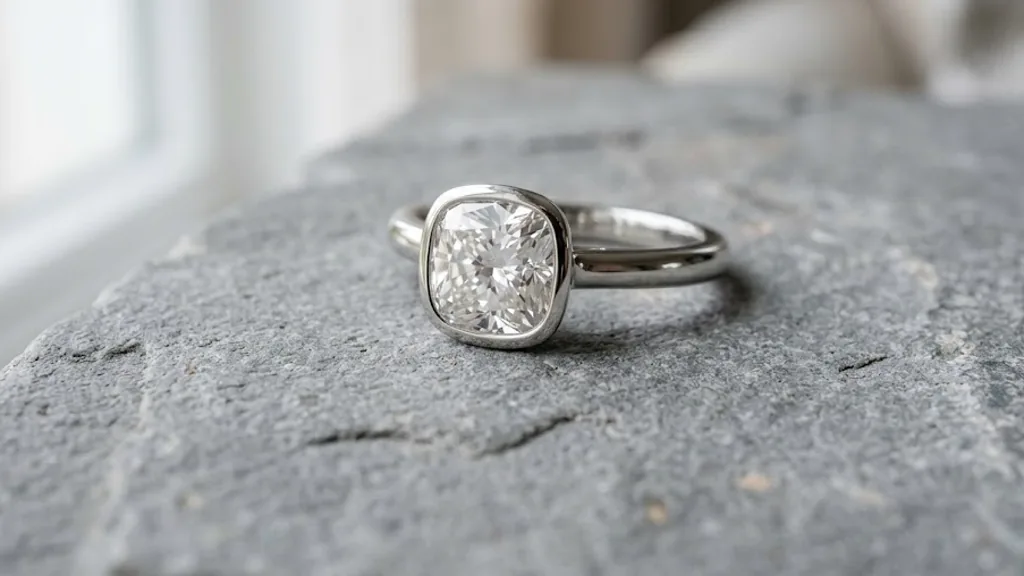
- Think about the setting style. A bezel — a rim of metal around the whole stone — adds a millimetre or two of visual width, though it also frames and contains the outline.
Our Three Stone Cushion Cut Engagement Ring (£957, correct at the time of writing) uses the widening trick well — the flanking stones stretch the design across the finger rather than piling weight into the centre.
If you like the framed look instead, the Bezel Cushion Cut Engagement Ring in Platinum (£904) sets the cushion inside a platinum rim, which protects the soft corners and gives the outline a crisp edge. For a matching band, the Solitaire Cushion Cut Wedding Band in Sterling Silver (£904) keeps the shape language consistent.
You can see everything cushion in our cushion cut collection, or compare shapes across the full engagement ring range.
Frequently asked questions
Do cushion cut diamonds look bigger than round diamonds?
Not at the same carat weight — a round generally covers more finger. Cushions can look bigger in practice because they cost less per carat, so buyers often end up with a heavier stone for the same budget.
Does an elongated cushion have a larger surface area?
Barely. Elongating the stone redistributes the same area into a longer, narrower footprint. What changes is the impression: a longer stone reads as more substantial on the hand and can make the finger look slimmer.
Are elongated cushions more expensive?
They can be, because cutting one from mined rough sacrifices weight. With lab-grown stones the premium is smaller and sometimes non-existent, since the rough is grown to a planned shape. Any figure beyond that would be guesswork, so we would rather quote you on the specific stone.
Which cushion faceting hides colour and inclusions best?
Crushed ice. The scattered sparkle breaks up the view into the stone, which masks small inclusions and slight warmth in the body colour. Chunky faceting looks bolder but demands better clarity.
Do you stock elongated cushions?
Not as ready-made pieces — our cushion rings are cut close to square. We will make an elongated cushion ring to your chosen ratio as a bespoke commission, with no extra charge for the design work.
Before you decide
Choose a cushion because you like how it looks: soft corners, a warm antique character, and sparkle that behaves quite differently from a round. Do not choose it because someone promised it would look bigger, because at equal weight it will not. Get the millimetres, get the ratio, and judge it on the hand rather than on a screen.
Everything we make is hand-made in solid gold, platinum or sterling silver, sent with free insured UK delivery, and covered by 30-day returns — so you can see it in daylight before you commit.
Ready to find your perfect ring?
Explore our lab-grown diamond collection or book a virtual appointment with our team.