Do Promise Rings Have Diamonds? What Goes In One, and What Does Not
Some promise rings have diamonds, many do not. What size actually suits one, what lab-grown changes, and the best stones if you skip diamonds.
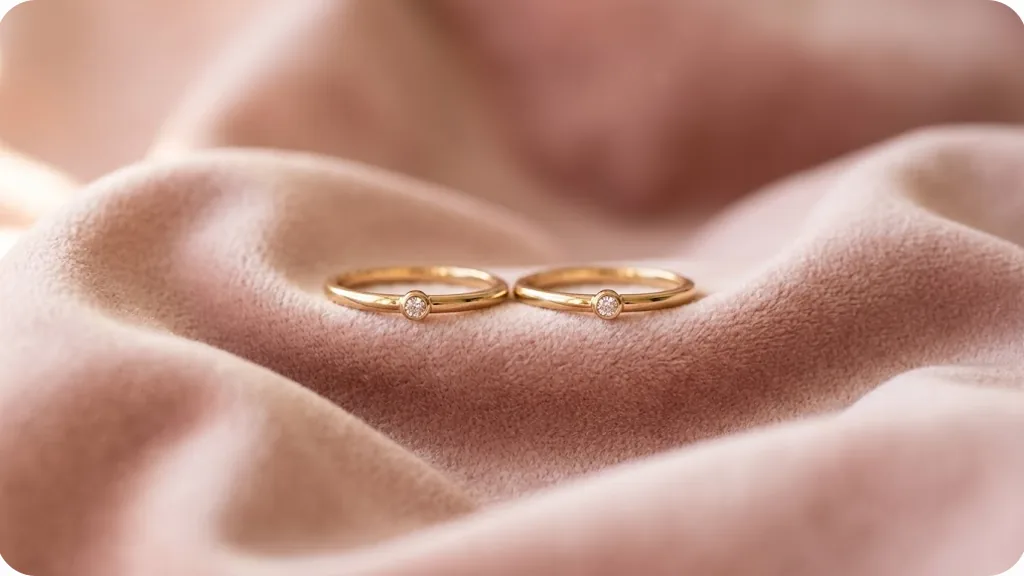
Some do, many do not, and neither version is more correct than the other. A promise ring is defined by why it is given, not by what is set into it. If you want a diamond in it, have a diamond. If you would rather spend the money on a better band, or on a coloured stone that means something to the two of you, that is an equally proper promise ring.
What follows is the practical version of that answer: when a diamond is worth it, what size actually suits a promise ring, what a lab-grown diamond changes about the maths, and what to choose instead if you skip the diamond entirely.
How often do promise rings have diamonds?
We cannot give you a percentage. Nobody publishes reliable figures on promise ring purchases, and any number you see quoted online is almost certainly invented. What we can tell you honestly is what we see: promise rings tend to be either a plain or textured band with no stone at all, or a band with small diamonds set into it, with a single large centre stone being the least common of the three.
The reason is simple. A big single stone reads as an engagement ring to most people in the UK. Buyers who want the promise ring to be understood as a promise ring instinctively step back from that look.
When a diamond is worth having
A diamond earns its place in a promise ring for three reasons, and none of them is showing off.
It survives. Diamond is the hardest material used in jewellery. A ring worn every day for years will get knocked against desks, car doors and gym equipment. A diamond will still look right at the end of that; a softer stone such as opal or emerald often will not.
It does not change colour. Some coloured gemstones fade in sunlight or dull with soap and hand cream. A diamond stays exactly as it was.
It gives a small ring presence. Even a modest stone catches light from across a room, which lets a slim, quiet ring still feel like an occasion.
What size of diamond suits a promise ring?
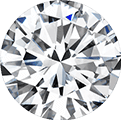
Smaller than you might expect. Most promise rings with a centre stone sit somewhere between roughly 0.15ct and 0.50ct. That is a guide from how these rings are usually made, not a rule, and there is nothing stopping you going larger.
| Centre stone weight | Roughly how wide (round) | How it reads on the hand |
|---|---|---|
| 0.15ct | about 3.4mm | A quiet detail; clearly not bridal |
| 0.25ct | about 4.1mm | Noticeable, still comfortably a promise ring |
| 0.50ct | about 5.2mm | Starts to look like a small engagement ring |
| 0.75ct and up | 5.9mm and up | Most people will assume you are engaged |
Millimetre sizes are the standard measurements for well-cut round diamonds and shift slightly with cut and shape.
Lab-grown diamonds change the sums
A lab-grown diamond is a diamond. Same carbon crystal, same hardness, same optical behaviour, graded on the same scale by the same laboratories. The difference is where it was formed, not what it is.
What that means for a promise ring budget is straightforward: you can have a genuine certified diamond in a solid gold setting at a price that would otherwise buy a mined stone so small it would be hard to see. Every centre stone we sell comes with a free IGI certificate, so the colour and clarity grades are documented rather than described by a salesperson.
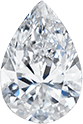
Prices in our own range start below £600 for stone-set designs. A stackable pear cut ring is £503 and a minimalist round cut solitaire is £587, both correct at the time of writing.
Several small diamonds instead of one
This is the option most people overlook, and it often looks better on a slim promise ring than a single stone does. Set a line of small diamonds along the top of the band and you get light across the whole finger rather than one bright point.
It also stacks neatly with anything you might add later. A baguette cut half eternity band at £672 gives a row of clean rectangular stones, which is a more architectural look than the usual round pavé and does not read as bridal at all.
If you skip the diamond
Perfectly good choices, in rough order of how well they survive daily wear:
- No stone at all. A well-made band in solid gold or platinum. Nothing to catch, nothing to lose, and the money goes into the metal.
- Sapphire or ruby. Hard-wearing coloured stones. A sapphire in particular takes daily wear well.
- Birthstones. Personal and meaningful, but check the stone. Some birthstones are soft and will scuff.
- Moissanite. Cheaper and durable, but it is a different material with a different, flashier sparkle. It is not a diamond and should never be sold to you as one.
Avoid anything soft or porous — opal, pearl and turquoise are lovely and completely wrong for a ring worn every day.
How the setting changes what a diamond looks like
Two rings can hold the same stone and look nothing alike. On a promise ring, where the stone is usually small, the setting does most of the visual work.
- Claw (or prong) setting. Small metal fingers hold the stone up, letting light in from the sides. It makes a stone look its largest, but it sits higher and can catch on wool.
- Bezel setting. A rim of metal wraps the whole stone. Nothing sticks up, nothing snags, and the ring survives rough treatment better than any other style. It reads as modern rather than bridal, which suits a promise ring well.
- Pavé. Rows of tiny stones set into the band itself. Maximum sparkle for the money, and completely flat to wear.
- Hidden halo. A ring of small stones sits under the centre stone where only the wearer really sees it. A quietly personal detail.
For a ring that will be worn to work every day without being taken off, we would steer most people towards bezel or pavé.
Colour and clarity: what actually matters at this size
Diamond grading covers colour (how little tint the stone has, D being the whitest) and clarity (how few internal marks it has). At promise ring sizes, the sensible advice is different from the advice for a two-carat engagement stone.
Below about 0.30ct, tiny inclusions are effectively invisible without magnification, so paying for the top clarity grades buys you a certificate rather than a visible difference. Colour is worth a little more attention, especially in white gold or platinum, where a warmer stone can look slightly yellow against bright white metal. In yellow or rose gold, a warmer grade often looks better, not worse.
Whatever you choose, insist on a certificate. Ours are IGI, free on centre stones, so the grades are checked by an independent laboratory rather than described by whoever is selling you the ring.
Where the money is best spent
If your budget is tight, our honest order of priority for a promise ring is: fit first, then metal, then stone. A ring that fits properly in solid gold with a small diamond will be worn for years. A larger stone in a thin, hollow band will bend, and you will be paying to fix it.
Frequently asked questions
Is it strange to give a promise ring with no diamond at all?
Not at all. Plain bands are one of the most common promise ring choices, and a good one is not a compromise.
Will a small diamond look mean?
Only if it is set on a band that is out of proportion with it. A 0.2ct stone on a slim 1.8mm band looks deliberate and elegant. The same stone on a wide band looks lost.
Can I upgrade the stone later?
Often yes, depending on how the ring is made. Ask before you buy if that matters to you — a setting designed to hold one size of stone may not take a larger one without rebuilding.
Do lab-grown diamonds hold up as well as mined ones?
Yes. Hardness is a property of the crystal, and the crystal is identical.
Can you make a promise ring with a stone I already own?
Yes. We design bespoke pieces at no extra design cost and can set a stone you already have, including an inherited one.
To see what different stone sizes actually look like on a slim band, browse our stone-set ring collection, or the plain and eternity band collection if you have decided against a centre stone. Free insured UK delivery and 30-day returns apply to everything we sell.
Ready to find your perfect ring?
Explore our lab-grown diamond collection or book a virtual appointment with our team.