What Costs More: the Engagement Ring or the Wedding Ring?
The engagement ring usually costs more, but a full eternity band can beat it. Real UK prices compared, plus how to split your budget.
In almost every case the engagement ring costs more than the wedding ring. The reason is simple: the engagement ring carries one large centre diamond, and a single big stone costs disproportionately more than several small ones of the same total weight.
There are real exceptions, though, and they are worth knowing before you set your budget — because a full eternity wedding band can comfortably outprice a modest solitaire.
Why the engagement ring is usually the expensive one
Diamond prices do not rise in a straight line with size. A single one-carat stone costs considerably more than four quarter-carat stones, even though they add up to the same carat weight, because large rough crystals of good quality are far rarer than small ones.
An engagement ring puts its whole budget into one such stone. A traditional wedding band puts nothing into a centre stone at all — it is metal, and possibly a row of small diamonds.
That single structural difference explains most of the price gap. Everything else — metal, making, setting — is broadly comparable between the two rings.
The exceptions, where the wedding ring wins
The wedding ring costs more when:
- It is a full eternity band. Diamonds run the entire circumference, so you are buying twenty to forty stones instead of none.
- The engagement ring is a small or simple solitaire. A modest centre stone in a plain setting is not an expensive ring.
- The wedding band is much wider or in a heavier metal. Platinum at 6mm contains a lot more material than gold at 2mm.
- There is no engagement ring at all, and the couple put the whole budget into the bands.
A direct comparison, with real prices
These are our own lab-grown diamond rings, hand-made in solid gold and platinum. All prices correct at the time of writing.
| Ring | Type | Price |
|---|---|---|
| Solitaire round cut engagement ring in white gold | Engagement | £563 |
| Minimalist round cut engagement ring | Engagement | £587 |
| Halo marquise cut engagement ring in white gold | Engagement | £1,143 |
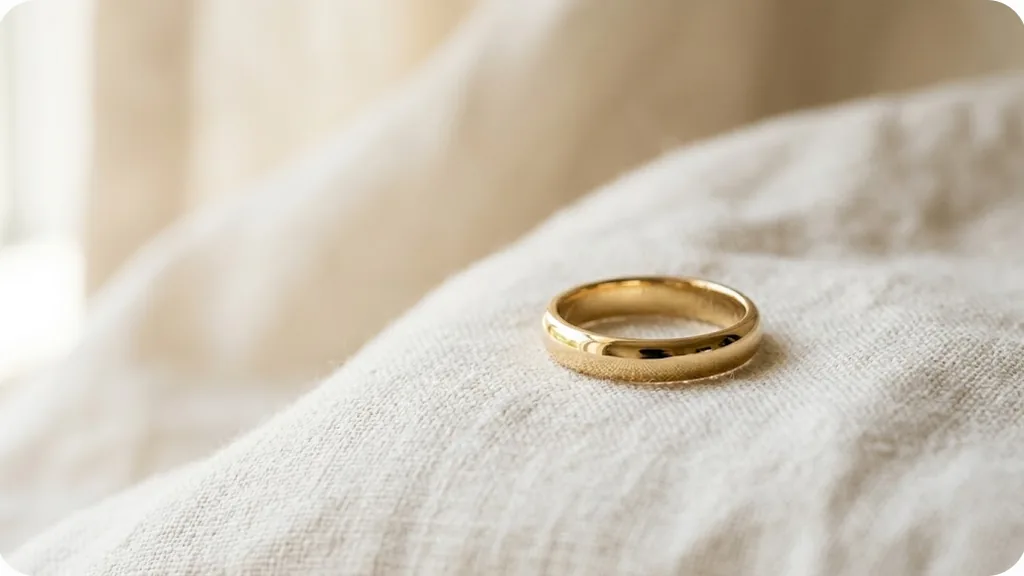
| Minimalist round cut wedding band | Wedding | £687 |
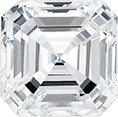
| Stackable emerald cut half eternity band | Wedding | £770 |
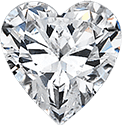
| Stackable heart cut eternity band in rose gold | Wedding, full eternity | £2,450 |
Look at the range within each column. A plain wedding band at £687 costs more than a simple solitaire at £563 — so the “engagement ring always costs more” assumption falls apart quickly once you compare specific rings rather than categories.
The general pattern still holds: a diamond-set engagement ring with a substantial centre stone will usually beat a plain band. But the tail of the range on each side overlaps far more than people expect.
The three-ring problem
People often forget there are usually three rings to pay for, not two:
- The engagement ring.
- The wearer’s wedding band.
- The other partner’s wedding band.
The third one gets left out of the budget surprisingly often. Add it in at the start, because it is a real cost even if it is a plain band.
Many couples also add an eternity band later — commonly at a first anniversary or the birth of a child — which is a fourth ring for the same finger. Worth thinking about at the beginning if you want them all to stack neatly.
How to split a total budget between the two
There is no rule here either, but there are patterns that work.
| If you want | Sensible split | Why |
|---|---|---|
| A statement engagement ring | Most of the budget to the engagement ring, a plain band alongside | The band’s job is to sit quietly next to it |
| Rings that read as one piece | Roughly even split, chosen as a matched set | The two are designed to nest, so neither dominates |
| Diamonds you can see every day | More to the wedding band, less to the centre stone | A row of small stones reads as sparkle across the finger |
| Nothing fussy at all | Two plain bands, no engagement ring | Perfectly common, and no less valid |
If you like the matched-set route, our bridal sets pair an engagement ring with a band cut to sit flush against it — which also removes the risk of buying two rings that will not sit together.
Timing: you do not pay for both at once
Worth remembering when the total looks alarming. The engagement ring is usually bought months or years before the wedding bands, so the two costs rarely land in the same month.
That gap is also useful practically. Once the engagement ring exists, you can choose a wedding band that genuinely fits against it, rather than guessing. Take the engagement ring with you when you choose the band, or measure it carefully if you are ordering online.
Does lab-grown change the answer?
It changes the numbers but not the pattern. A lab-grown diamond is the same material as a mined one — same carbon structure, same hardness, same optical properties, graded on the same scales — and it costs substantially less.
Because the engagement ring is the diamond-heavy ring, it is the one that benefits most from choosing lab-grown. The proportional saving on a single large centre stone is greater than on a handful of small ones.
So going lab-grown narrows the gap between the two rings. It does not usually reverse it.
The hidden costs on top of both rings
Neither ring’s price tag is the whole bill. Budget for these too, because they arrive whether you planned for them or not.
| Cost | When it lands | Notes |
|---|---|---|
| Resizing | Within the first few months | Often free or cheap in the first year with the original jeweller; check before you buy |
| Insurance | Annually | Usually a small addition to home contents, or a standalone policy for higher values |
| Rhodium re-plating | Every couple of years, white gold only | Platinum never needs it, which is part of why platinum costs more upfront |
| Claw checks and re-tipping | Every year or two | Far cheaper than replacing a lost diamond |
| Engraving | At purchase | Cheaper done before the stones are set |
The engagement ring generates more of these ongoing costs than the wedding band, because it has more claws, a larger stone and usually a more complex setting. That is another sense in which it is the more expensive ring — not just at the till.
A quick way to sanity-check any quote
If you are comparing two rings and cannot see why one costs twice as much, work through these four questions in order. They account for most of the difference on almost any ring.
- Is there a centre stone, and how big? This dominates everything on an engagement ring.
- Lab-grown or natural? The same stone specification costs very differently depending on the answer.
- How much metal? Width, thickness and whether it is platinum or gold.
- How many small stones, and how are they set? Pavé and channel work is labour, and labour is a real cost.
If two rings look similar and the prices differ sharply, the answer is almost always in question one or two. Ask the seller directly — a straight answer on stone origin and size is a reasonable thing to expect.
Frequently asked questions
Which costs more, the engagement ring or the wedding ring?
Usually the engagement ring, because a single large centre diamond costs far more than the same carat weight split into small stones. A full eternity wedding band is the main exception.
Should the wedding band cost less than the engagement ring?
There is no rule. Buy each ring for what it needs to be. If the wedding band is the one you will look at every day, it is perfectly reasonable to spend more on it.
Do the two rings need to be the same metal?
Not strictly, but it helps. Rings worn together rub against each other, and a softer metal will wear faster against a harder one. Matching the metal keeps them ageing at the same rate.
What is the cheapest way to get both rings?
A simple solitaire engagement ring with a lab-grown centre stone, plus a plain band. That combination gives you a proper diamond ring and a hard-wearing band without the cost of pavé work on either.
Can I buy the wedding band first?
Yes, though it is easier the other way round. If you buy the band first, keep the design simple so the engagement ring can be chosen to sit against it later.
In short
Budget for three rings, expect the engagement ring to be the largest single item, and remember that a full eternity band can change that entirely. Compare specific rings rather than categories — that is where the real numbers are.
All our rings use lab-grown diamonds and are hand-made in solid gold and platinum, with a free IGI certificate on centre stones, free insured UK delivery and 30-day returns. Have a look at the engagement rings and the wedding rings side by side to see how the prices really compare.
More guides on this topic
Ready to find your perfect ring?
Explore our lab-grown diamond collection or book a virtual appointment with our team.